

You are using an out of date browser. It may not display this or other websites correctly.
You should upgrade or use an alternative browser.
You should upgrade or use an alternative browser.
Grado Timbre Series Opus3
- Thread starter cratz2
- Start date

Ilikevinyl
Cool Breeze
Wonder if a Hagerman Humbucker would fit and work on a Thorens. I've ordered one for a Rega but have a Thorens too, although have never had a Grado hum on mine. Definitely have the Grado hum on the Rega.
That's a good question. Would like to know if it works on a Thorens too.

Ilikevinyl
Cool Breeze
Just got this to my Inbox from Grado. Opus 3 is named 2021 Product of the Year by The Absolute Sound.
View attachment 2434423
Read that from an email Grado sent. Enjoying my Grado Opus3 more and more everyday!
 A Bargain!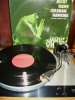

Punk_oldie
Active Member
Sorry to dredge up an old thread, but it seemed precisely relevant so rather than start a whole new one..............
I took delivery of an Opus 3 a week or so ago, mounted it on my ADC LMG headshell on my Jelco SA370H tonearm, with damping dialled to 'Max'. This is connected to an Atoll P200SE phono pre, then through a Primare I22 class D amp. My immediate reaction once the needle landed was that, compared to the AT VM750SH which it replaced on that arm, the overall sound was noticeably rounder and fuller, but the top end was 'tamed' particularly and especially for vocals, which sounded very closed in. Now I know that to some extent going from an AT cartridge that's to be expected, but this wasn't subtle, on some records the vocals sounded quite veiled and dare I say it a bit dull. The other thing I noticed was that it's much quieter than the VM750SH at the same amp volume (more on that later).
So I looked at compliance - the arm and headshell together is 17.6g, which I know is at the top end for the weight of this cart, but with the damping I think it shouldn't be a gross mismatch, and it plays well on my most warped records, and tracking seems fine - certainly good enough for listening to records pleasurably without obsessing about 'torture tracks'.
The Atoll has a number of user adjustable settings: Gain 40, 46 or 52db, Loading 47k or 100 ohms, Capacitance 0 or 100pf (capacitance should I believe be irrelevant on Grados). Given the Opus 3 I have is (supposedly) the High Output version I initially left the settings as per they'd been for the VM750SH - 40db, 47K and 0pf.
I had set the cartridge exactly perpendicular for VTA, so I tried it a tad 'tail-up' - no difference, still veiled. Next I tried upping the gain to 46db, and this did seem to improve things slightly, but to my ears there was still no sparkle in the vocals. And still it was a bit quieter than the same tracks played using the VM750SH (I wanted to make sure my ears weren't tricking me so using Audacity I compared the Opus 3 playing to rips I'd made of the same tracks with the VM750SH). So I upped the Gain to 52db, and this time things were much better, but there's no way I'd describe the sound as crisp or sparkling or sharply detailed. Certainly there is detail, and on jazz and classical it sounds really nice and smooth, and instrumentals are excellent, but still the vocals seem a little flat - is this the 'Grado' sound I'm hearing? Also, it seems strange that at a gain of 52db the Opus 3 is only slightly louder than my VM750SH was at 40db (given on paper the output of both is the same at 4.0mV). Is it possible I have a Low Output version by mistake? And if not, is there any issue running a cart at significantly higher gain than it should need?
I'd certainly like to keep this cartridge because overall it really gives some body and heft to the sound, so if I can get it to open out a bit more I think it would definitely be a 'keeper'. It's also one of the quietest carts I've ever had in terms of groove noise, which is another reason I'm inclined to stick with it. As such, what do people think, is there anything else worth trying in terms of set-up tweaks, or is this just to be expected from a Grado cart?
I took delivery of an Opus 3 a week or so ago, mounted it on my ADC LMG headshell on my Jelco SA370H tonearm, with damping dialled to 'Max'. This is connected to an Atoll P200SE phono pre, then through a Primare I22 class D amp. My immediate reaction once the needle landed was that, compared to the AT VM750SH which it replaced on that arm, the overall sound was noticeably rounder and fuller, but the top end was 'tamed' particularly and especially for vocals, which sounded very closed in. Now I know that to some extent going from an AT cartridge that's to be expected, but this wasn't subtle, on some records the vocals sounded quite veiled and dare I say it a bit dull. The other thing I noticed was that it's much quieter than the VM750SH at the same amp volume (more on that later).
So I looked at compliance - the arm and headshell together is 17.6g, which I know is at the top end for the weight of this cart, but with the damping I think it shouldn't be a gross mismatch, and it plays well on my most warped records, and tracking seems fine - certainly good enough for listening to records pleasurably without obsessing about 'torture tracks'.
The Atoll has a number of user adjustable settings: Gain 40, 46 or 52db, Loading 47k or 100 ohms, Capacitance 0 or 100pf (capacitance should I believe be irrelevant on Grados). Given the Opus 3 I have is (supposedly) the High Output version I initially left the settings as per they'd been for the VM750SH - 40db, 47K and 0pf.
I had set the cartridge exactly perpendicular for VTA, so I tried it a tad 'tail-up' - no difference, still veiled. Next I tried upping the gain to 46db, and this did seem to improve things slightly, but to my ears there was still no sparkle in the vocals. And still it was a bit quieter than the same tracks played using the VM750SH (I wanted to make sure my ears weren't tricking me so using Audacity I compared the Opus 3 playing to rips I'd made of the same tracks with the VM750SH). So I upped the Gain to 52db, and this time things were much better, but there's no way I'd describe the sound as crisp or sparkling or sharply detailed. Certainly there is detail, and on jazz and classical it sounds really nice and smooth, and instrumentals are excellent, but still the vocals seem a little flat - is this the 'Grado' sound I'm hearing? Also, it seems strange that at a gain of 52db the Opus 3 is only slightly louder than my VM750SH was at 40db (given on paper the output of both is the same at 4.0mV). Is it possible I have a Low Output version by mistake? And if not, is there any issue running a cart at significantly higher gain than it should need?
I'd certainly like to keep this cartridge because overall it really gives some body and heft to the sound, so if I can get it to open out a bit more I think it would definitely be a 'keeper'. It's also one of the quietest carts I've ever had in terms of groove noise, which is another reason I'm inclined to stick with it. As such, what do people think, is there anything else worth trying in terms of set-up tweaks, or is this just to be expected from a Grado cart?
Last edited:

Redd House
If she dont love me no more I know her sister will
Some Grados seem to sound best with half or more of the 47k loading. 10 to 21k.
I'd contact Grado and ask for a replacement. Of all of the things that Grados do well, voices are near the top. It has been said that when the original Grado designed cartridges he was trying to capture what he heard at Opera performances. With Grado carts I've owned (never a woodie) there was sometimes a taming of the extreme upper registers but even that tended toward something along the lines of omission compared to a sharp-sounding AT cartridge. Voices have always been one of the things I loved about Grado cartridges, so you finding them to be dulled sounds not right to me, although it has also been said that Grados can be finicky with tonearm matching, so there's that.
Still, I'd contact Grado and ask for a replacement because what you describe sounds as much like a potential defect as anything else. If a replacement sounds awful, then I would think along the lines of tonearm mismatch, sell it off and chalk it up to experience.
Still, I'd contact Grado and ask for a replacement because what you describe sounds as much like a potential defect as anything else. If a replacement sounds awful, then I would think along the lines of tonearm mismatch, sell it off and chalk it up to experience.

Also, it seems strange that at a gain of 52db the Opus 3 is only slightly louder than my VM750SH was at 40db
I'm using a Grado Statement Sonata 3 (1mv output) with an Audio Research PH3 (54 dB gain).
It sounds like you got the low output version.
As far as the "Grado Sound"... could be that you're unfamiliar with its "voice" if you're more familiar with the AT.
There's a difference between "different" and "better". Different is always easier to notice.
They say Grado's take about 50 hours to "open up", maybe so.
I think every Grado "Woodie" I've owned has been very sensitive to VTA. I use shims at the back of my tonearm to gradually dial in the sound I feel is most natural for my taste. My shims are sheet rock blades, I think about 0.5mm thick at the back.
Call Grado, ask them where to find the serial number, if they can identify it and if you got a low output version by mistake.
Me personally...I had both the low output and high output versions of the Sonata 1. I thought the low output version was much better.
Punk_oldie
Active Member
Thanks all, I've spent a few more hours with it and as I say, for classical and instrumental it is a nice sounding cart, so I don't think it's faulty. I suspect what I'm hearing is a combination of being used to the brighter tone of the AT cart, the 'house Grado sound', and probably a bit of old age hearing deficiencies! I shall give it at least 50 hours, maybe play around with loading and VTA some more, and perhaps try it through one of my other preamps (a Sutherland Ph3D and an ifi Zen Phono). Overall I'm warming to it now, so I expect it will continue to improve for me.
My Statement Sonata3 is loaded as Grado recommends (47K).
When I set the VTA I do it by ear, gradually.
I choose an album I know well, maybe even compare it to a CD version and shim the rear piller of the tonearm up and down till the "voice" of the recording sounds right. The rear edge of sheetrock blades are consistent, they make excellent shims.
The LP I like to use is an original copy of Sgt. Pepper.
When I set the VTA I do it by ear, gradually.
I choose an album I know well, maybe even compare it to a CD version and shim the rear piller of the tonearm up and down till the "voice" of the recording sounds right. The rear edge of sheetrock blades are consistent, they make excellent shims.
The LP I like to use is an original copy of Sgt. Pepper.
Redd House
If she dont love me no more I know her sister will
Are they the trapezoid shaped utility knife blades? I'm wondering how do you cut the blades to the size you need for a shim? With a Dremel?My Statement Sonata3 is loaded as Grado recommends (47K).
When I set the VTA I do it by ear, gradually.
I choose an album I know well, maybe even compare it to a CD version and shim the rear piller of the tonearm up and down till the "voice" of the recording sounds right. The rear edge of sheetrock blades are consistent, they make excellent shims.
The LP I like to use is an original copy of Sgt. Pepper.
Yes, the trapezoid shaped blades.
I use the flat, notched back edge.
In the attached image I'm holding one with an extension magnet to demonstrate where it goes.
Only 1 blade in this photo, many more blades to fill the gap.
The notched back edge of the blade is not beveled. They stack up nicely.

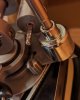
I use the flat, notched back edge.
In the attached image I'm holding one with an extension magnet to demonstrate where it goes.
Only 1 blade in this photo, many more blades to fill the gap.
The notched back edge of the blade is not beveled. They stack up nicely.
Redd House
If she dont love me no more I know her sister will
I see now. You're using the whole blade.Yes, the trapezoid shaped blades.
I use the flat, notched back edge.
In the attached image I'm holding one with an extension magnet to demonstrate where it goes.
Only 1 blade in this photo, many more blades to fill the gap.
The notched back edge of the blade is not beveled. They stack up nicely.
View attachment 2761290
View attachment 2761291
Just be careful sticking your fingers back there! 
Punk_oldie
Active Member
Just a quick update, having played with VTA and loading I found that, for my system, the most pleasing balance between veiled and overly bright is with a very slight 'tail up' VTA, but most noticeably of all, setting impedance to 100k ohms. This has really seemed to open the cart up without making it too harsh, as well as increasing the output, so I've dropped it back down to 46db gain. I'm now going to leave it at this for an extended time as from first impressions set up like this this cartridge is indeed a very enjoyable performer.
Ilikevinyl
Cool Breeze
Just a quick update, having played with VTA and loading I found that, for my system, the most pleasing balance between veiled and overly bright is with a very slight 'tail up' VTA, but most noticeably of all, setting impedance to 100k ohms. This has really seemed to open the cart up without making it too harsh, as well as increasing the output, so I've dropped it back down to 46db gain. I'm now going to leave it at this for an extended time as from first impressions set up like this this cartridge is indeed a very enjoyable performer.
Have my Opus3 (high output) at 44db gain. Standard input impedance is 50K on my Musical Surroundings Phonomena II phono preamp. I can also adjust for 100K too! Sounds very nice at 50K. Will have to try it at 100K. VTA is tail up just a bit.
I think you should mount your Opus3 on a Jelco headshell. Your ADC headshell might be the problem.
Ilikevinyl
Cool Breeze
Just a quick update, having played with VTA and loading I found that, for my system, the most pleasing balance between veiled and overly bright is with a very slight 'tail up' VTA, but most noticeably of all, setting impedance to 100k ohms. This has really seemed to open the cart up without making it too harsh, as well as increasing the output, so I've dropped it back down to 46db gain. I'm now going to leave it at this for an extended time as from first impressions set up like this this cartridge is indeed a very enjoyable performer.
Just checked, already have the phono preamp set to 100K.

@IlikevinylI think you should mount your Opus3 on a Jelco headshell. Your ADC headshell might be the problem.
Like the Op, I'm using an ADC LMG-1 on my SME 3009 because my Grado Statement Sonata3 wouldn't fit into any of my SME headshells. I'm not having any problems.
What version Jelco headshell are you using with your Opus3 and why do you think the ADC LMG-1 could have caused any problems for the OP?
Ilikevinyl
Cool Breeze
@Ilikevinyl
Like the Op, I'm using an ADC LMG-1 on my SME 3009 because my Grado Statement Sonata3 wouldn't fit into any of my SME headshells. I'm not having any problems.
What version Jelco headshell are you using with your Opus3 and why do you think the ADC LMG-1 could have caused any problems for the OP?
Yes. Was using a SME 3009 "Improved" tonearm before the Jelco. Asked Grado if Opus3 would fit headshell and they said no. So, I bought a Grado Gold3 for the SME. Then I bought the Jelco tonearm and decided to get the Opus3. Using a Jelco HS-25 headshell with Opus3. Sounds wonderful!
ADC headshell is lightweight. Grado likes medium mass tonearms 11-13 mass. By switching to a Jelco HS-25 headshell on the OP's Jelco tonearm, Opus3 will sound better. Plus, the HS-25 has an azimuth adjustment screw for precise azimuth. Too light of tonearm, Grado sound thin and veiled like the OP is experiencing.
Now I understand, thanks.
My tonearm is the SME 3009 Series ii (Unimproved) which I think has an average effective mass of 12.5gm. The improved version had a much lower effective mass (Avg 6.5gm).
Everything seems to work well as is for my system. I'll work the numbers the next time I have the spare time.
Thanks again.
My tonearm is the SME 3009 Series ii (Unimproved) which I think has an average effective mass of 12.5gm. The improved version had a much lower effective mass (Avg 6.5gm).
Everything seems to work well as is for my system. I'll work the numbers the next time I have the spare time.
Thanks again.
Ilikevinyl
Cool Breeze
Now I understand, thanks.
My tonearm is the SME 3009 Series ii (Unimproved) which I think has an average effective mass of 12.5gm. The improved version had a much lower effective mass (Avg 6.5gm).
Everything seems to work well as is for my system. I'll work the numbers the next time I have the spare time.
Thanks again.
The SME 3009 II (12.5 grams) will be perfect for Grado cartridges.