

You are using an out of date browser. It may not display this or other websites correctly.
You should upgrade or use an alternative browser.
You should upgrade or use an alternative browser.
Grid and Anode Chokes
- Thread starter SET12
- Start date

SET12
Super Member
Hey SET, suggestion for yu,
Try putting the plate choke on the plate of your driver instead of the cathode, then
adjust the cathode resistor to get current your after, then connect the output tube
grid to the plate of the driver instead of the cathode, now that you have those grid
chokes the cathode follower connection may no longer be a benefit or wanted there.
(curious if you try this and how well it works out)
Theres a problem here though Kegger! to much gain! Your talking about a combined gain for the 6EM7 of 300! Gain of my 811-10 is about 6.7 and I only need about 37 volts into the 811-10.
For 10 watts out I need 223 on the primary.
If I were to switch it over to the 811-3 It certainly could be done but there would be some work there.
It would sort of like be a favorite combo of mine like a medium gain tube driving a 300B then the 300B driving a transmitting tube.
Another thing you can try, replace the C4S with a plate choke, Quite often the plate
chokes are preferred over the solid state ccs load as far as "sound quality" goes here.
(not necessarily technically better but the subjective and better "sounding" one)
That could be, But the C4S has had a lot of voicing done with it. And I have no complaints about the sound. And in its application (direct coupled to the next stage) the tubes dynamic conductance #'s are far greater than what an Anode choke would provide. I suspect when the next stage is a substantially lower impedance I feel the benefits of the CCS are substantially less dynamically. And in this case I wouldn't doubt the Choke would sound better as I don't put anything past this hobby of ours! at least try not to!
Also as far as loads go, only so much is going to make a difference for the output, in
that I mean once you load to certain point times the plate resistance of the tube yu
get no extra performance going any larger on the load, only so much gain can be had.
(I tend to build with low plate resistance tubes so there loads are easy to fill out to)
----------------------------
On amps like yours and many transmitting tube amps the grid choke can be utilized to
to a nice improvement over the low value resistor quite often needed there instead..:thmbsp:
On the output tube, its not the gain necessarily that I'm interested in. Its the dynamic conductance #'s (Trans-conductance x load) its a dynamic generator that I'm interested in!
Audio Note I'm certain, is very aware of its implication with their Ongaku amplifier. I don't know if you know this but its output tranny is using a 20K primary! For some real slam! And for nearly $100,000 it ought to do something special! And its dynamic conductance #'s are 3-4 times higher than your average SET amp.
I have a PSET amp that I'll be starting in the near future that will surpass even the Ongaku by a factor of 10. I don't think anything has ever been built like it other than Tom Evans Linear A Amplifier.
Also there is lower distortion from higher primaries but of course they are expensive to!
So yeah the grid choke is a huge benefit to the transmiting tube no doubt about it! And it should be very interesting on there effect on my input stage as well. And if I don't hear much well, they can always be used elsewhere.
Thanks for your input Kegger!
:thmbsp:
Cheers
SET12
SET12
Super Member
Very interesting. That's all I need now, more reasons to spend tweaking my amp!
Hey Vincei, How are you?
Yeah, Its been a wake up call for me! How's that Sony X77 of yours? Wish you could hear my Burson-Sony X77ES now! Its been just astounding! With these Grid and Anode Coke mods to the amps.
SET12

vincei
aka MasterControlMedia
Hey Vincei, How are you?
Yeah, Its been a wake up call for me! How's that Sony X77 of yours? Wish you could hear my Burson-Sony X77ES now! Its been just astounding! With these Grid and Anode Coke mods to the amps.
SET12
Doing fine...I no longer have my CDP-X77ES, instead I am now using exclusively (gasp) my hard drive and WAV files.

Kegger
R.I.P. 1/12/1966 - 6/1/2017
Quote:
Originally Posted by Kegger
Hey SET, suggestion for yu,
Try putting the plate choke on the plate of your driver instead of the cathode, then
adjust the cathode resistor to get current your after, then connect the output tube
grid to the plate of the driver instead of the cathode, now that you have those grid
chokes the cathode follower connection may no longer be a benefit or wanted there.
(curious if you try this and how well it works out)
______________________________________________________________________________
(Posted by Set12)
Theres a problem here though Kegger! to much gain! Your talking about a combined gain for the 6EM7 of 300! Gain of my 811-10 is about 6.7 and I only need about 37 volts into the 811-10.
For 10 watts out I need 223 on the primary.
If I were to switch it over to the 811-3 It certainly could be done but there would be some work there.
It would sort of like be a favorite combo of mine like a medium gain tube driving a 300B then the 300B driving a transmitting tube."
Thing is though you run an 8BD pinout dual triode, there are a lot of tubes that can
sub in there like 6BX7, 6BL7, 6DN7, Heck 6SN7, so you can try different gain combos.
(also I was just meaning to "test" it to see if it sounded better, worry on gain later)
Kegger
R.I.P. 1/12/1966 - 6/1/2017
Quote:
Originally Posted by Kegger
Also as far as loads go, only so much is going to make a difference for the output, in
that I mean once you load to certain point times the plate resistance of the tube yu
get no extra performance going any larger on the load, only so much gain can be had.
(I tend to build with low plate resistance tubes so there loads are easy to fill out to)
----------------------------
On amps like yours and many transmitting tube amps the grid choke can be utilized to
to a nice improvement over the low value resistor quite often needed there instead..
__________________________________________________________________________________
(Posted by Set12)
On the output tube, its not the gain necessarily that I'm interested in. Its the dynamic conductance #'s
(Trans-conductance x load) its a dynamic generator that I'm interested in!
Thing is though gain and trans-conductance go hand and hand, without gain you have no trans-conductance.
(you lower the gain you lower the "trans-conductance properties" in that stage, on that specific tube that is)
I like trans-conductance as well, it's definitely something I look for in small signal tubes, I tend to go for ones
that have a relatively low plate resistance so they are easy to load and provide decent voltage to as well..
Kegger
R.I.P. 1/12/1966 - 6/1/2017
Quote:
Originally Posted by Kegger
Another thing you can try, replace the C4S with a plate choke, Quite often the plate
chokes are preferred over the solid state ccs load as far as "sound quality" goes here.
(not necessarily technically better but the subjective and better "sounding" one)
______________________________________________________________________
(Posted by Set12)
That could be, But the C4S has had a lot of voicing done with it. And I have no complaints about the sound. And in its application (direct coupled to the next stage) the tubes dynamic conductance #'s are far greater than what an Anode choke would provide. I suspect when the next stage is a substantially lower impedance I feel the benefits of the CCS are substantially less dynamically. And in this case I wouldn't doubt the Choke would sound better as I don't put anything past this hobby of ours! at least try not to!
At one point I heard a 12B4 linestage using the C4S, then that same linestage using a plate choke there
instead, myself I preferred the plate choke version, much smoother but seemed to keep the same detail..

SET12
Super Member
Quote:
Originally Posted by Kegger
Hey SET, suggestion for yu,
Try putting the plate choke on the plate of your driver instead of the cathode, then
adjust the cathode resistor to get current your after, then connect the output tube
grid to the plate of the driver instead of the cathode, now that you have those grid
chokes the cathode follower connection may no longer be a benefit or wanted there.
(curious if you try this and how well it works out)
______________________________________________________________________________
(Posted by Set12)
Theres a problem here though Kegger! to much gain! Your talking about a combined gain for the 6EM7 of 300! Gain of my 811-10 is about 6.7 and I only need about 37 volts into the 811-10.
For 10 watts out I need 223 on the primary.
If I were to switch it over to the 811-3 It certainly could be done but there would be some work there.
It would sort of like be a favorite combo of mine like a medium gain tube driving a 300B then the 300B driving a transmitting tube."
Thing is though you run an 8BD pinout dual triode, there are a lot of tubes that can
sub in there like 6BX7, 6BL7, 6DN7, Heck 6SN7, so you can try different gain combos.
(also I was just meaning to "test" it to see if it sounded better, worry on gain later)
Yeah Kegger, Dah!!!
:scratch2: 6BX7 looks to be my best bet for gain and I know it has a great reputation! So I'm considering it!!! It would put me at about a 1/3 of a volt in approx.
SET12
SET12
Super Member
Quote:
Originally Posted by Kegger
Also as far as loads go, only so much is going to make a difference for the output, in
that I mean once you load to certain point times the plate resistance of the tube yu
get no extra performance going any larger on the load, only so much gain can be had.
(I tend to build with low plate resistance tubes so there loads are easy to fill out to)
----------------------------
On amps like yours and many transmitting tube amps the grid choke can be utilized to
to a nice improvement over the low value resistor quite often needed there instead..
__________________________________________________________________________________
(Posted by Set12)
On the output tube, its not the gain necessarily that I'm interested in. Its the dynamic conductance #'s
(Trans-conductance x load) its a dynamic generator that I'm interested in!
Thing is though gain and trans-conductance go hand and hand, without gain you have no trans-conductance.
(you lower the gain you lower the "trans-conductance properties" in that stage, on that specific tube that is)
I like trans-conductance as well, it's definitely something I look for in small signal tubes, I tend to go for ones
that have a relatively low plate resistance so they are easy to load and provide decent voltage to as well..
Basically yes,
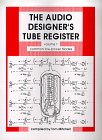
I am very familiar with the concepts of trans-conductance and gain my self as I have Tom Mitchells Tube Designers Register Manual which is a very detailed look at all operation conditions for rp,trans-conductance,gain and so on for signal tubes. It has data that is not in typical tube manuals. It will plot Ib vs gm which varies considerably with Ib. It also has plots for Eb vs rp at a given Ec or bias, lots of charts and curves! Its one of the best tube books I have ever purchased!
The Mu of a tube is fairly consistent, it can change but not like rp and trans-conductance so when rp is high trans-conductance is low for the same tube. Basically the Mu of a tube is Transconductance x Rp.
Funny thing about Dynamic Conductance and resistor loading!
Most operating conditions yield pretty close to a dynamic # of 100!
With current sources and Anode Chokes its possible to get into the 1000's!!!
I learned plenty from Tom Mitchell's Book! I highly recommend it :thmbsp:
SET12
SET12
Super Member
Quote:
Originally Posted by Kegger
Another thing you can try, replace the C4S with a plate choke, Quite often the plate
chokes are preferred over the solid state ccs load as far as "sound quality" goes here.
(not necessarily technically better but the subjective and better "sounding" one)
______________________________________________________________________
(Posted by Set12)
That could be, But the C4S has had a lot of voicing done with it. And I have no complaints about the sound. And in its application (direct coupled to the next stage) the tubes dynamic conductance #'s are far greater than what an Anode choke would provide. I suspect when the next stage is a substantially lower impedance I feel the benefits of the CCS are substantially less dynamically. And in this case I wouldn't doubt the Choke would sound better as I don't put anything past this hobby of ours! at least try not to!
At one point I heard a 12B4 linestage using the C4S, then that same linestage using a plate choke there
instead, myself I preferred the plate choke version, much smoother but seemed to keep the same detail..
Kegger, I have to wonder about operating conditions or how it was implemented!!!
Certainly Subjectivity means a lot in my book!
:scratch2: I think I'm going to have to check that out!!! As I like to say nothing is written in stone in this hobby!!! The Choke sure makes it easy!!
BTW I am running 500VDC on the 6EM7 hi mu section with the C4S with 200VDC across it and 300VDC across the tube if memory serves. I thought it was a serious improvement dynamically over the resistor I was using!
SET12
Kegger
R.I.P. 1/12/1966 - 6/1/2017
BTW I am running 500VDC on the 6EM7 hi mu section with the C4S with 200VDC across it and 300VDC across the tube if memory serves.
I thought it was a serious improvement dynamically over the resistor I was using!
SET12
I wouldn't doubt that 1 bit, with that high mu section wanting say 200K+ resistors
you'd be loosing a fair amount of supply voltage getting over it, those "high" plate
resistance tubes sure do like large plate loads, I'd bet the CCS or the plate choke
wouldn't have to much trouble beating out the resistor in that scenario..:thmbsp:
I'll be curious if u try 1 of the other tubes, 6BX7/6BL7 are some nice beefy mofo's!