• The move to the new server is done. There are some software and database maintenance updates in process. This has us passing the hat around to help out. We appreciate any donations. Seriously, even a dollar helps. The payment page may be found here - https://www.audiokarma.org/support.html

Grundig Box 100 (LS100) Crossover question

Adam White

New Member
Hello,

I recently purchased a really nice pair of Grundig Box 100s from the child of the original owners. The speakers were purchased while they were stationed in Germany in the 60s. The speakers are lovely, they sound great, and I would like to get them fit for consistent use. I want to replace the crossover components and I'm a little stumped on the best path. I see in the below schematic that the caps indicate polarization and I don't know if I need to stick with a polarized cap (electrolytic) or if I can go with a film cap of the indicated value.

Looking at Mundorf options:

Electrolytic- https://www.mundorf.com/audio/en/shop/capacitors/audio_caps_ecap/ECap100/?card=2041

Film- https://www.mundorf.com/audio/en/shop/capacitors/audio_caps_evo/MCap-EVO/?card=2458

There's a big price difference with the film caps, but I'm not opposed to spending the money if it's the right thing.

Thoughts?

Also, does the voltage rating of caps in a crossover mostly relate to power handling? It seems like the 100v electrolytic would probably be sufficient, but that's another element that adds to my confusion.

Thanks,

Adam
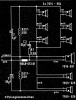
Grundigbox100schematic.PNG

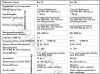
GrundigBox100specs.PNG
 
Register to hide this ad
You can always use a non-polarized cap in place of a polarized one, but usually not the other way around, depending on the application.

Voltage rating of capacitors should just be greater than what is reasonable to expect in the circuit so that it doesn't arc internally and fail. A capacitor is basically two plates close to each other. If you've ever gotten a static shock you understand that electricity can travel through air or a dielectric. The closer the "air gap" the lower the voltage has to be to jump across and arc.
Capacitors that can withstand higher voltages are bigger and/or more expensive to manufacture.
Most people don't get nervous handling speaker wires connected to amplifiers because the voltages are generally not very high.
If you check the max rated voltage of the big caps in your amp's power supply, you'll see they are probably never more than 100V. The actual power supply DC voltage is close to half that.
 
There are many fervent opinions about what caps to use when recapping. Mystical properties seem to be attached to various types and brands of caps, and typically the more expensive the cap, the less moderate the opinion.
My opinion is that if you are spending more on caps than you spent on the speaker, or more than it is worth, you might do better with that amount of money simply to buy a better speaker.
But here are a couple of factual thoughts: If you are replacing caps that had died or gone significantly off spec (not all have - plenty of old caps are still just fine) you will almost certainly hear an improvement regardless of what type of cap you have used.
The ESR (equivalent series resistance) of film caps tend to be lower than that of electrolytics. So you recap a pair of speakers with film caps, the speaker very well may sound brighter than it originally did. This may or may not please you. If you want to preserve the original sound of the speakers, using electrolytics may be the correct (and cheaper) way to go.
It is well known that anything spend a lot of money or effort on sounds great, at least at first. It is later that the excitement of the new wears off and your judgement settles in. Usually, the more money or effort you expend, the harder it is to admit a mistake. I recognize this in myself, so I tend to be a little wary of unreasonable praise for ultra expensive equipment and parts.

Finally, your speaker appears to have a large number of tweeters - film caps might make it brighter and peakier than you wish. There aren't a lot of components in the crossover, so as long as you don't go for very expensive caps, there isn't much downside to recapping with films and seeing if you like or dislike the change - you can always replace them with electrolytics if needed. Likewise, if you love them so much that you simply must try boutique caps, you can always go for them later.
 
Looking at Mundorf options:
Thoughts?

Also, does the voltage rating of caps in a crossover mostly relate to power handling? It seems like the 100v electrolytic would probably be sufficient, but that's another element that adds to my confusion.
There is a correlation between capacitor voltage rating and power handling. But consider that SL100 is rated for 20W continuous and only 25W peak. Reputable manufacturers have over the years built many speaker models having much greater power capacity while using NPE caps rated no higher than 50V.

You seem to be drawn to Mundorf caps, and I can appreciate the desire to preserve provenance of manufacture when sourcing restoration parts. Their ECaps would be a good choice. They spec quite well -- 5% tolerance is exceptional for NPE. They typically fit into existing assemblies with less fuss compared to much larger film caps, and restore reliable service without significantly altering original performance.

North American supplier Parts Connexion stocks a good assortment, including 4.7µF, and two choices of 33µF: ECap70 and ECap100.

With Mundorf's global market presence, these are probably available most anywhere.
 
Last edited:
Back
Top Bottom