
• The move to the new server is done. There are some software and database maintenance updates in process. This has us passing the hat around to help out. We appreciate any donations. Seriously, even a dollar helps. The payment page may be found here - https://www.audiokarma.org/support.html

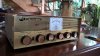
Hamlin's Audio 20-20/Trio W45 Integrated Amp

hob

Member
Trio w45.jpg Hi All-

Well I am not an "under the hood" electronics tech like many of you here, but am a lifelong AV integrator and music lover. So my audio knowledge stops abruptly as soon as you get under the hood! Play guitar, so have owned tons of all varieties of tube amps for that. And in tube hi fi, just one chi-fi EL34 Class A amp, which sounded pretty nice for the 1 year it lasted!

Wanted to try the tubes again for a little office stereo and luckily got aware of the vintage hi fi possibilities. In my profession, I already have a great old school repair shop in Seattle we use that can fix about anything electronic. In fact, a shout out to them in case anyone local is looking for a great repair place: AM Stereo and Video in Shoreline. They sometimes have a long backlog, but are reasonable and always do a nice job. The plan was if I found something worthwhile, I would just take it to AM Stereo for a rebuild estimate and if it penciled out go for it.

Looked forever, and ended up sort of "accidentally" winning on Ebay a kind of hard to find integrated set, the Hamlin Audio 20-20, which many here know is a rebadged Trio W-45 from Japan, imported by Hamlin's Audio from Seattle. I had no idea how it would sound, not much info out there on this piece. Received the unit finally, replaced the disintegrated feet, popped the hood and did a bit of cleaning/ inspection and decided it was likely a viable candidate. Knew better than to even connect to AC power, just dropped it at AM Stereo for an estimate ASAP. As suspected, many parts out of tolerance and it was just roasting EL84 output tubes. So had to deliver my tech a new set of Tung Sols for use when working on it and then got a quad of Sylvania NOS 7189 to run in it when it was complete. Twas a difficult redo for AM, they had to do quite a bit more than planned including new ceramic tube sockets. Rebuild difficulty + the delays in me getting them tubes equalled one unbearably long shop time for an audio freak that was almost dying to hear what this little amp was like!

Which brings me to the reason for this post: a quick assessment of this units sound quality. Well, it was late friday when i got the call, "I have your amp done, it sounds good". Picked it up, connected to a pair of Event 20/20 PAS studio monitors that have been collecting dust here. OMG!! This little amp sounds so nice for the $$ invested! The Events are just a leftover from my now-defunct studio, I would describe them as reasonably accurate near/midfield cheap monitors. The SQ this amp delivers is so musical, detailed and accurate I see no need to go speaker shopping. And I have plenty of nice subs laying around I was planning on integrating with this, but the bass is already there, so I think I will just save the trouble of that and just listen! Trio TT pre seems pretty good as well so far, my TT is pretty modest, just a 70's Sansui SR-212 running Ortophon Red cart, but sounds great. The system sounds so nice I am definitely considering a cart upgrade for further enjoyment.

For a low wattage application, my weigh in is that this PP EL 84 amp sounds very good indeed to a level that surprised me! Not to mention it looks super cool. It's a keeper and cosmetics are only 70/100 on my particular one so I plan on taking the time to pretty it up as well.
 
Register to hide this ad
I had one of those. Always thought it had cool styling. A friend had one that was silver and black on the front panel. I liked that look even better. It's the only one I've seen in that color combo. Glad to hear you enjoy it. It might sound even better with the preamp section bypassed with just the volume control at the input. It would be fairly easy to try and readily reversed. Many of these old integrated amps don't seem to have very good preamp sections.

BTW, I think I have a scan of the owner's manual with a schematic for this. Won't be home for a few days but can check then if you would like a copy.

My opinion only.
Have fun,
John
 
Last edited:
Great 1st post, hob, and welcome to AK. Listening to my PP 7189 powered integrated now. The styling on that unit is really cool and thanks for sharing your story. Glad you're enjoying it.

Mark
 
The big head scratcher with this amp is the large meter in the faceplate. IIRC, it is used to indicate balance between channels. On my unit, the needle really doesn't move very much at all. Seems quite odd to invest in a meter with very little actual usefulness. Maybe there is some other way to use it that would make more sense, but i have not found what that may be.
 
Great story, thanks. If you haven't already found it, this thread mentions other owners and has links to schematics. http://audiokarma.org/forums/index.php?threads/trio-w-45-integrated-el84-amplifier.63153/
Thanks Dandy-

Yes, I had come across that very informative thread and do have schematics, manual etc downloaded offline, lots of good info there. That thread is the main reason I had to join to make a post to get a little more info out there online on the SQ of this piece. Not too much info anywhere online about that! Thanks!
 
I had one of those. Always thought it had cool styling. A friend had one that was silver and black on the front panel. I liked that look even better. It's the only one I've seen in that color combo. Glad to hear you enjoy it. It might sound even better with the preamp section bypassed with just the volume control at the input. It would be fairly easy to try and readily reversed. Many of these old integrated amps don't seem to have very good preamp sections.

BTW, I think I have a scan of the owner's manual with a schematic for this. Won't be home for a few days but can check then if you would like a copy.

My opinion only.
Have fun,
John
Nerdorama, thanks for the reply and I agree silver + black looks sweet. I did run across online pix of a very minty silver/black. Thanks!
 
Great 1st post, hob, and welcome to AK. Listening to my PP 7189 powered integrated now. The styling on that unit is really cool and thanks for sharing your story. Glad you're enjoying it.

Mark
Macgolf- Yep in all of my tube travels mainly with guitar amps was mostly in the 6L6/EL34 land and only recently had some EL84/7189 units to be introduced to the great capabilities of this tube. Thanks!
 
The big head scratcher with this amp is the large meter in the faceplate. IIRC, it is used to indicate balance between channels. On my unit, the needle really doesn't move very much at all. Seems quite odd to invest in a meter with very little actual usefulness. Maybe there is some other way to use it that would make more sense, but i have not found what that may be.
Primosounds- Thanks for the weigh-in. While waiting for the repair guys, I did compulsively scour the web for any and all info on this piece I could find and I think the balance function is the use for the meter. Do you think that might be because in those early days of stereo the format and it's capabilities weren't really well understood yet even by the recording engineers, let alone gear designers?
Mike the main tech at AM Stereo who got this going for me had seen at least the Trio model of this before and was just laughing about the balance meter and that he had also needed to redo components in the circuit for it to make it work. I do not find it at all useful for my use, balance pot at 50/50 and hear those tracks the way they were intended! He was talking about plenty of other brands from the era that had similar balance thingies, so maybe everyone back then thought it was very important!

Sort of like graphic EQs on home and car stereo in 70's and 80's. I was always fiddling with the curves on those, presenting myself with all sorts of inaccurate response I was listening too, but it was also interesting and neat! Idea: maybe the meter was added by the marketing dept to make this piece appeal to HAM radio dudes! Thanks.
 
I got one of these, great amp, I agree, very musical.
Frankie's- Yes, late to the game here and it was a pleasant surprise to me! Even though I have always worked in the audio industry, was ignorant that they even designed and built full frequency capable amplification back in the day, mostly because my exposure to vintage was lower end all-in-ones with full range drivers that wouldn't reproduce full frequency anyway. Or whizzer cones! I can see by your sig line you are quite familiar with great older gear, what a cool hobby! which I have always pursued, but the gear from hi-fi days adds a whole other aspect of satisfaction to the fun. From what I see, vintage stereo is very similar to guitar world in that so much of this wonderful gear ended up in dumpsters as the manufacturers seriously pushed SS as the future. It's pretty hard to find either guitar or stereo pieces for any reasonable price today, but it happens on a good day I guess. We did it with guitar gear, went to the music store and bought all brand new everything that sounded HORRIBLE but loud, and just ignored all of those wonderful old 50's tweed amps that kind of looked like your grandparents luggage! It took a long time to figure out that even your friend's grandpa's Silvertone tube amp with a 5w power rating and one volume knob they ordered from Sears Roebuck had infinite quality tonal capabilities compared to your brand new Yamaha 100w SS amp with built in distortion/phaser and 3 band EQ! Thanks!
 
I had one of those. Always thought it had cool styling. A friend had one that was silver and black on the front panel. I liked that look even better. It's the only one I've seen in that color combo. Glad to hear you enjoy it. It might sound even better with the preamp section bypassed with just the volume control at the input. It would be fairly easy to try and readily reversed. Many of these old integrated amps don't seem to have very good preamp sections.

BTW, I think I have a scan of the owner's manual with a schematic for this. Won't be home for a few days but can check then if you would like a copy.

My opinion only.
Have fun,
John
Nerdorama-

Missed replying to your suggestion on bypassing the pre section, that might be something to try. I was originally looking for an SE power amp only as at first the main source was to be an Arcam rPlay which has a nice analog VC section built in. But ended up with more than I bargained for with an integrated. (never check your Ebay when you are partying with your favorite brother at a wedding and are trying to fend off the spins before crashing out!) But I did wonder about that, don't know if you had seen the under chassis of these but they have a very high component count in there compared to an Eico and some of the gtr amps I have. That is possibly not good. Maybe should've asked the techs to put in a pre out/power in jack loop so it would run either way huh?

By the way, in case anyone is considering and sees this, I can't recommend rPlay even though it has nice SQ with lossless digital sources. The DTS PlayFi app which runs it is the likely culprit here. Super glitchy and unreliable streaming even when hardwired. I would think that a standards-creating corp like DTS would have at least OK support, but that is next to non existent. Not a good trend as many current manufacturers of quality gear offer PlayFi capability and it is for sure not ready for primetime, their streaming architecture seems to be a failed model that I doubt will be corrected anytime soon. Thanks.
 
I can't access the schematic via th public wifi link I'm on right now, but adding a power input is simple, just adding an input to the grid of the driver tube for each channel. Your tech would know how to do it.
 
I can't access the schematic via th public wifi link I'm on right now, but adding a power input is simple, just adding an input to the grid of the driver tube for each channel. Your tech would know how to do it.
Thanks Dandy-

Yes, I could possibly even do one like that myself. Am good at soldering and do it daily. Just have pretty much a total lack of component level knowledge. That seems more like a simple repair? Thanks again!
 
Just got home. It's not a very clear schematic.

Input the signal at pin 7 of V3a (and same for other channel). It's where the signal goes in after the balance control. Control the signal from a log pot and remember to ground the grounds.
 
Primosounds- Thanks for the weigh-in. While waiting for the repair guys, I did compulsively scour the web for any and all info on this piece I could find and I think the balance function is the use for the meter. Do you think that might be because in those early days of stereo the format and it's capabilities weren't really well understood yet even by the recording engineers, let alone gear designers?
Mike the main tech at AM Stereo who got this going for me had seen at least the Trio model of this before and was just laughing about the balance meter and that he had also needed to redo components in the circuit for it to make it work. I do not find it at all useful for my use, balance pot at 50/50 and hear those tracks the way they were intended! He was talking about plenty of other brands from the era that had similar balance thingies, so maybe everyone back then thought it was very important!

Sort of like graphic EQs on home and car stereo in 70's and 80's. I was always fiddling with the curves on those, presenting myself with all sorts of inaccurate response I was listening too, but it was also interesting and neat! Idea: maybe the meter was added by the marketing dept to make this piece appeal to HAM radio dudes! Thanks.
Yeah, i think you are right. I must say that the large meter was an eye catcher! I mean when i saw the amp for the very first time I had to get a better look and see what it was about. At first i assumed a VU meter like the Sansui AU70 has twin level meters. But, that is not the case. Audio made in Japan at this time, was tending towards, a lot whizz bang, gee whiz, eye candy, the more knobs the better type of thinking. Which is probably most of what the meter represents. That is an effort to separate this amp from others. But in terms of audio it is quite good.
 
Yeah, i think you are right. I must say that the large meter was an eye catcher! I mean when i saw the amp for the very first time I had to get a better look and see what it was about. At first i assumed a VU meter like the Sansui AU70 has twin level meters. But, that is not the case. Audio made in Japan at this time, was tending towards, a lot whizz bang, gee whiz, eye candy, the more knobs the better type of thinking. Which is probably most of what the meter represents. That is an effort to separate this amp from others. But in terms of audio it is quite good.
Primosounds-

Yep, I think you have it that it was mostly a style thing. The only way I could see it as useful is if you fed a stereo test tone to inputs to adjust and I doubt if most end users would do that. Seems like if you were concerned channel levels are imbalanced it's time to take it in for a tuneup!
 
Back
Top Bottom