kurorin
New Member
I´m starting this thread to share my experience about two topics:
1. A new valve RIAA Phono Pre Amplifier, working on LCR technology that we will explain.
2. Alternative valves for the popular 12AT7 that brought me a new sound (and aesthetic surprise).

Disclaimer: Im writing this post as a user not like a professional. Please check your circuit design before changing any valve or to handle the valve amplifier. Thanks for your opinions and new knowledge. Sorry about mistakes, english is not my original language.
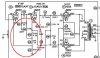
This Phono Pre Amplifier is a special machine because it makes the RIAA equalization passively, with transformers. This old technology is original from Western Electric in the 1930s. LCR is refered about the triad of: transformers, capacitors and resistors. At present, what we almost just have is CR-type RIAA equalization, that is, only capacitors and resistors, having eliminated transformers. Of course there are more LCR RIAAs outside, just no easy to find and very expensive. Why were they removed? For the same reason that tubes DHT + transformer technology was largely lost in amplification: cost, efficiency, effectiveness, ease of implementation, lowering the weight of the equipment and the need to gain more and more power with a good sound. Almost pure advantages… except that along the way something was lost in the presentation of the sound: the even harmonics, among the most important.
The use of Noise Feedback NFB is used especially in topologies that are not Single Ended Triode, SET (that is, 99.99% of the amplifiers or perhaps more), specially to handle distortion. As a negative externality it cancels the even harmonics that, according to psychoacoustic studies, they are the most attractive to the human ear. Perhaps that is why it is so seductive for many to listen to a well-implemented SET: we are hearing the even harmonics that accompany the Fundamental of the sound, perhaps for the very first time, as in "Reality", and even with increased gain (what is called “distortion” of the SETs). A DHT triode has the most linear behavior and can work with no or very low NFB. It was the first form of electronic amplification invented by man and is already 100 years old.
Making a CR phono preamplifier is easy: all components fit on one board, which is also cheap and easy to implement. From there it is possible to improve to more complex machines, but always CR, it means without transformers. Output transformers are the key to tube equipment in general; they galvanically isolate, clean and modulate the audio signal that is built by the amplifier. The speaker cables connect directly to the output transformers, which in turn are physically isolated from the rest of the equipment; only electrons pass through the air, obviously as electromagnetism. It is a phenomenon that happens only with transformers and the sound depends on the transformers (McIntosh is a company that even in solid state amplification continues to use transformers for its sound, without the need to do it electronically, although they are more "basic" transformers because they do not fulfill the same function as with the tubes). So, the point is: the quality of transformers makes the final sound quality (not only but you already understand). And there is a lot of difference in quality. For example, at a technical level, many japanese transformers (Tango, Tamura and others) can deliver between 20Hz and 80,000KHz, or even more (10Hz-90,000KHz). Awesome! This in itself doesn't say what the amp sounds like but it does show the technical expertise of the finish. Check out how far the other common audio transformers can go, but let's face it if they get to half of this it's already a feat. Each one has its particular sound. In my opinion I prefer Tango and Tamura second, there are other very good ones like Noguchi (cheaper but very good for audio, only possible to buy them in Akihabara traditionally, now in GTrans). ISO and Hatt are new and I have good recommendations, but I haven't listened to them. Some Hashimoto and some Luxman have also been very good, according to those who know, although I have heard very few and those have not been my favorites.
We are going to make it clear that LCR does not necessarily mean that it is tubes; there are some LCR that are also transistorized or that can be, although it is mostly associated with tubes by its very nature and genesis.
Since much of this knowledge has been lost in western world, it was the japanese who mostly rescued and maintained it. Today some manufacturers make LCR but they are usually very expensive. It is said that very few in the world can successfully make this system, well implemented for HiFi and outperform a CR design; if it doesn't sound better there is no point in wasting time on something so complicated and expensive. In addition, it is not easy to get the transformers (they are two different from each other per channel). And as I have heard the Japanese say: the price of an amplifier is the price of its transformers. Maybe cruel.
One of the keys of the LCR circuit is the low output impedance, set at 600 ohms, which allows the tubes to work at their best performance. This technology has many difficulties associated mainly with the enormous amplification that must be made from the negligible voltage of a cartridge: if a line source (such as a CD Player) delivers 2V to the amplifier, a phono preamplifier must raise from 2mV with an MM capsule (and a MC from about 0.2 mV), that is, we multiply by a thousand! So along with raising the signal from the capsule, it amplifies any other parasitic noise nearby, which in tubes is very easy to have as associated contamination. That is why the difficulty and the need for experience and knowledge of those who manufacture it. And since very few manufacturers do it, prices easily skyrocket, as HiFi usually is, otherwise.
In particular, this is my first Phono LCR although I have heard others excellent ones, first class. The best of the best phono preamps I've ever heard (and often hear because it's from an excellent friend) is a model Western Electric type RA1474 LCR made by Master Shindo ("shindou laboratory"). It's just MC albeit broad spectrum. Through several years it has always been the best of all, by a long shot, but at the moment there is a model of Master Kanno that is waiting to be listen, and if it is Master Kanno… it really shows promise.
This "RIAA amplifier" as its designer calls it, I ordered it to pair with my tube 45-2A3 amplifier. Since the amp was named Porco Rosso by me, the RIAA was renamed the Porco Rosso RIAA LCR, very originally. I've tried and listened to many phono preamps over the years, but none that I could afford really satisfied me. After almost a decade I decided to go back to Master Mizuhima San and ask him to make one for me. It wasn't easy because - as all serious amp designers say - a new design takes at least three years to be completely finished. Why didn't Mizushima San take an existing earlier design and replicate it as is? I don't have that answer, but I do know that good things are always more expensive or take longer. And besides, he only gave it to me when he was totally satisfied with the performance of its sound. I was interested in it being the best possible machine, not the fastest to arrive. But now that the prototype exists, mine, the next RIAA amplifiers will surely be much faster, just not was my case. It was a test of eastern patience.
It has a phono input and a line input, just for convenience since the line input has no gain. The fader is 23 steps and is used fully open, or nearly so, in its phono position. Includes a Perke Drive design for low frequencies, originally developed by Tetsu Kimura. Decca equalization is also available for old pre-RIAA records from that british company. It is dedicated to Moving Magnet, MM cartridges. If I want MC, obviously it is done with a Step Up transformer with the specific gain and impedance of each cartridge. The transformers are Japanese craftsmanship commissioned by the builder, former Noguchi.
The tubes used are 12AT7 (ECC81) as voltage amplification, 6BL8 (ECF80) as driver and 6CA4 as rectifier. Which leads us to the next point: substitutes or interchangeables for the 12AT7 tube in voltage amplification, where we are going to experience more changes in sound depending on the tube.
12AT7 TUBE SUBSTITUTES
My hobby in HiFi I like to describe it as the search and knowledge of the sound of tubes. Tubes are my leitmotiv, apart of the music itself. I like specially DHT (Direct Heating Triodes) what are my favorites. In this case we talk about indirect heating double triodes, and even as we will see, double triodes-diodes.
Therefore, as soon as I knew that my gear was ready, I started looking for different substitutes for the 12AT7, what is the recommended tube, in order to listen and find the one that I like the most, or in the plural, different tubes that I would like them. And I found many and there are still more arriving.

Let's explain to contextualize that I can use the entire range that goes between 12AU7 – 12AT7 – 12AX7. The 12AU7 has a gain factor of 20, the 12AT7 has a gain factor of 70 and the 12AX7 has a gain factor of 100. And having more gain is critical when we need to pull up from 2 mV. The machine has the necessary autobias to fit the tube so I can not only use the direct substitute but also the close equivalents electrically.
However, it is not to come and add more gain because it also has implications, for example, with headroom management and ultimately with the perceived "quality" of the sound. In electronics, every decision has its compromises and HiFi is a matter of fine finishes. All this "hassle" is to recreate a certain beauty that we seek. On the contrary, there are also very good machines on the market that make our lives easier; and for all budgets.
Among the tubes I got of course is the direct European replacement for the 12AT7, the ECC81. In addition, there are the substitutes with military purposes and denomination, basically similar tubes with a higher construction standard and that ensure a longer useful life, which often translates to the perceived quality of the sound, not always. The military did not buy them for being audiophiles but for amplification especially for transmission.
Also, since we are talking about double triodes, two triodes in the same tube, it sounds reasonable to think that a double triode can be changed for two simple triodes: I did that. Instead of a single voltage tube per channel use two that would do the work of a single 12AT7 (or AU7 or AX7).
Finally, there are always the tubes that are electrically equivalent but have other connection pins. Instead of a 12AT7 I can use a Western Electric 420A, but it has other feet and other connections. If it's just that difference, connections, then we have the adapters (purchased if they exist or handcrafted).
After having tried tubes from the USA for a long time, I am now particularly interested in European tubes. It is said that one of the charms of european tubes is that each factory, as well as each country, has its own construction different from the others, which also means different sound. In the USA, quality approval and standardization were quickly reached. In Europe it depended on each manufacturer, so the magic of their valves is in the surprise that each different tube express. This is specially true I think for older tubes.
The tubes that I have with me to try, learn and enjoy are the following by now, and some more are always appearing:

12AT7WA Sylvania USA
12AU7 branded Baldwin (2 Japan & 2 USA)
12AX7 branded Baldwin USA
6Q7 Ultron, apparently are french Mazda manufacture (with adapter)
420A Western Electric USA (with adapter)
5751 International (GE) USA
5963 Sylvania USA
5965 Telefunken deutsch
5965 branded Telefunken > Philips ECG USA
5965 JAN USA (RCA?)
6201 Philips ECG USA
6201 Branded Hewlett Packard british
6679 General Electric USA
CK6201 Raytheon USA (with adapter)
CV455 Brimar british
CV1055 Mullard british
CV4024 Brimar british
ECC81 Siemens deutsch
ECC81 United Electron british
ECC801S Telefunken deutsch (not with me yet)
Other valves will be added as they appear.

The star of all 12AT7 replacements is said to be the Telefunken ECC801S ("the best ECC81 made on planet Earth"). I don't have it with me now, it's borrowed and they're going to send it to me from abroad. But it is very, very valuable and in these troubled days the shipments are chaotic and the courier has already lost things to me.
The ECC801S Telefunken was made to a special standard for special technical equipment from a German factory. It was not made for HiFi like almost all tubes at that days. Originally it already cost five times more than its similar ECC81 from the same factory. There is no patent, I understand, so Telefunken did not disclose the processes, chemicals and materials used. Nowadays nobody knows exactly how to build it and due to its high technical standard it is considered unrepeatable.
>>Fake Tubes
Perhaps many have already read Jac van de Walle and his experience with fake tubes. In short: virtually all expensive tubes that appear as a good deal on ebay, other portals, and even in stores, are fake. They are relabelled, they are rebranded, they are reprinted, they are renamed. The Telefunken could have their base diamond lasered and very similar to the original. And magically Chinese or Russian tubes that cost a few dollars bought for hundreds, are transformed into tubes up to hundreds of dollars. Buying tubes myself I found a factory that sold wholesale: the tube you wanted printed with the brand you chose! If you don't have some experience building tubes in-house, it's best to avoid tempting offers. Especially in small tubes the market is overcrowded with counterfeits. And now that there is a tube crisis due to the fire at the Shuguang plant and the exit of the Russian from the tube market, prices are shooting up even more, making pressure on counterfeiting. Anyway, a fact for Telefunken: if the base diamond is convex, it is original. If it's concave it's lasered and fake (but you can also take an original Telefunken and relabel it for a more expensive one, for example).
To avoid fakes, I bought the tubes mostly from Japan, as well as from reliable German and English sellers. Other tubes I simply checked the construction hoping to identify the fake tubes. I hope I am not also prey to fraud.

One of the advantages of tubes is that by having different sounds - sometimes obvious, sometimes subtle, sometimes indistinguishable - it's like having different machines in one. Different sound presentations. And by combining different valves between power, driver and voltage, better or worse performances are also produced to our liking. Over the years of use I learned that for example the Radiotron UX245 power tube I like with the 6U8A preamp tube, and not with the original 6BL8-ECF80 (it's still very good sound but it fades a bit, but just enough to lose attractiveness). On the other hand, the Emission Labs 45 (flat plate) in reverse, I like it with 6BL8 and if I use it with 6U8A it is too much bright: that happened to me when I tried it for the first time and I decided not buy it, being a really excellent tube. Which one is better? It depends on how you combine it. And it depends on your amplifier and your circuit. That's just my experience with the behavior of my amplifier.
Finally, tuning a tube amp also requires dedication if you want to push it to its full potential. That is why this desire to test valves. And because it is our hobby: to achieve the best possible sound with the means we have.
The review of the performance and sounds will come in another thread since it will require prolonged listening. The arrival of an RIAA amplifier of this type requires several fine adjustments now in my system, which can also take time. I'm just going to advance a few things that were obvious to me: a) I'm not going to go back to a phono preamplifier other than LCR, the jump in quality seems too significant (I'm referring to the main audiophile system); b) the dynamic range was considerably expanded, which leads to another way of understanding what we listen (something as well like “liquid transients“); c) the harmonics now fly and the beauty that was hidden before, appeared; d) I had the sound filling the room again, projecting towards the listening position, and not in the line of the speakers, like DHT are; e) the dull and flat albums before now acquire other, much more expressive finishings; f) classical music finally has “grace”, it has substance as well as definition and different layers; the improved dynamic range and the handle of tones made this type of music appears; e) Did I tell you about the harmonics? If you don´t have a SET without NFB I think you don´t have even harmonics, the ones that our ears love, because they are canceled in push pull designs. That is more evident than ever in this right moment in my listening room.

I've only listened to a few albums so far, I´m just sarting, but there was one in particular that I want to highlight because I found it directly on the Transamericas label (a recent Chilean label). I thought it sounded great and that's why I bought it, I don't have space for a lot of records so I select only the vinyls I like the most and the rest of the music I'm going to play with digital files or streaming. When I listened to it with this RIAA preamplifier in addition to a very good sound, it seemed Beautiful to me; that is what I mean, the transition in between Very Good Sound and Beauty, fine art. And beauty is revealing, epiphanic, emotional. I'm not the biggest fan of quiet electronic music so is an example how the beauty sounds open our listening, mind and taste. I´m sticking with it (https://www.discogs.com/release/16235130-Archimboldos-Exactomondo)


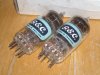
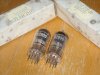
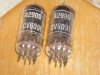
The 6Q7 valves (I think these metallic black ones are Mazdas made in France and sold by the German company Ultron) and CV1055s (british Brimar, shielded glass 1968 construction) are simple triode tubes, so I need two to replace a single 12AT7. They seduced me immediately, they are the quietest of all and with a captivating sound in my opinion. It is a triode tube (top) and diode (bottom) although in these models you cannot see the internal construction. Original design from the 30's. They look cool on the amp, at least to my taste. I´ll listen much more before to undestand and share an reasoned opinion of the sound. The review of valves on the LCR amplifier sounds needs weeks and months, but is coming.


Finally I want to thank to master Mizushima San for his particular dedication. I've only just begun to listen to his work and the finesse of the gear forces me to make adjustments to my system, mainly improving the electrical network and acoustics at home to have the deathly silence that this RIAA needs and deserves. Thank you Kenji San. Long live the music!
1. A new valve RIAA Phono Pre Amplifier, working on LCR technology that we will explain.
2. Alternative valves for the popular 12AT7 that brought me a new sound (and aesthetic surprise).
Disclaimer: Im writing this post as a user not like a professional. Please check your circuit design before changing any valve or to handle the valve amplifier. Thanks for your opinions and new knowledge. Sorry about mistakes, english is not my original language.
This Phono Pre Amplifier is a special machine because it makes the RIAA equalization passively, with transformers. This old technology is original from Western Electric in the 1930s. LCR is refered about the triad of: transformers, capacitors and resistors. At present, what we almost just have is CR-type RIAA equalization, that is, only capacitors and resistors, having eliminated transformers. Of course there are more LCR RIAAs outside, just no easy to find and very expensive. Why were they removed? For the same reason that tubes DHT + transformer technology was largely lost in amplification: cost, efficiency, effectiveness, ease of implementation, lowering the weight of the equipment and the need to gain more and more power with a good sound. Almost pure advantages… except that along the way something was lost in the presentation of the sound: the even harmonics, among the most important.
The use of Noise Feedback NFB is used especially in topologies that are not Single Ended Triode, SET (that is, 99.99% of the amplifiers or perhaps more), specially to handle distortion. As a negative externality it cancels the even harmonics that, according to psychoacoustic studies, they are the most attractive to the human ear. Perhaps that is why it is so seductive for many to listen to a well-implemented SET: we are hearing the even harmonics that accompany the Fundamental of the sound, perhaps for the very first time, as in "Reality", and even with increased gain (what is called “distortion” of the SETs). A DHT triode has the most linear behavior and can work with no or very low NFB. It was the first form of electronic amplification invented by man and is already 100 years old.
Making a CR phono preamplifier is easy: all components fit on one board, which is also cheap and easy to implement. From there it is possible to improve to more complex machines, but always CR, it means without transformers. Output transformers are the key to tube equipment in general; they galvanically isolate, clean and modulate the audio signal that is built by the amplifier. The speaker cables connect directly to the output transformers, which in turn are physically isolated from the rest of the equipment; only electrons pass through the air, obviously as electromagnetism. It is a phenomenon that happens only with transformers and the sound depends on the transformers (McIntosh is a company that even in solid state amplification continues to use transformers for its sound, without the need to do it electronically, although they are more "basic" transformers because they do not fulfill the same function as with the tubes). So, the point is: the quality of transformers makes the final sound quality (not only but you already understand). And there is a lot of difference in quality. For example, at a technical level, many japanese transformers (Tango, Tamura and others) can deliver between 20Hz and 80,000KHz, or even more (10Hz-90,000KHz). Awesome! This in itself doesn't say what the amp sounds like but it does show the technical expertise of the finish. Check out how far the other common audio transformers can go, but let's face it if they get to half of this it's already a feat. Each one has its particular sound. In my opinion I prefer Tango and Tamura second, there are other very good ones like Noguchi (cheaper but very good for audio, only possible to buy them in Akihabara traditionally, now in GTrans). ISO and Hatt are new and I have good recommendations, but I haven't listened to them. Some Hashimoto and some Luxman have also been very good, according to those who know, although I have heard very few and those have not been my favorites.
We are going to make it clear that LCR does not necessarily mean that it is tubes; there are some LCR that are also transistorized or that can be, although it is mostly associated with tubes by its very nature and genesis.
Since much of this knowledge has been lost in western world, it was the japanese who mostly rescued and maintained it. Today some manufacturers make LCR but they are usually very expensive. It is said that very few in the world can successfully make this system, well implemented for HiFi and outperform a CR design; if it doesn't sound better there is no point in wasting time on something so complicated and expensive. In addition, it is not easy to get the transformers (they are two different from each other per channel). And as I have heard the Japanese say: the price of an amplifier is the price of its transformers. Maybe cruel.
One of the keys of the LCR circuit is the low output impedance, set at 600 ohms, which allows the tubes to work at their best performance. This technology has many difficulties associated mainly with the enormous amplification that must be made from the negligible voltage of a cartridge: if a line source (such as a CD Player) delivers 2V to the amplifier, a phono preamplifier must raise from 2mV with an MM capsule (and a MC from about 0.2 mV), that is, we multiply by a thousand! So along with raising the signal from the capsule, it amplifies any other parasitic noise nearby, which in tubes is very easy to have as associated contamination. That is why the difficulty and the need for experience and knowledge of those who manufacture it. And since very few manufacturers do it, prices easily skyrocket, as HiFi usually is, otherwise.
In particular, this is my first Phono LCR although I have heard others excellent ones, first class. The best of the best phono preamps I've ever heard (and often hear because it's from an excellent friend) is a model Western Electric type RA1474 LCR made by Master Shindo ("shindou laboratory"). It's just MC albeit broad spectrum. Through several years it has always been the best of all, by a long shot, but at the moment there is a model of Master Kanno that is waiting to be listen, and if it is Master Kanno… it really shows promise.
This "RIAA amplifier" as its designer calls it, I ordered it to pair with my tube 45-2A3 amplifier. Since the amp was named Porco Rosso by me, the RIAA was renamed the Porco Rosso RIAA LCR, very originally. I've tried and listened to many phono preamps over the years, but none that I could afford really satisfied me. After almost a decade I decided to go back to Master Mizuhima San and ask him to make one for me. It wasn't easy because - as all serious amp designers say - a new design takes at least three years to be completely finished. Why didn't Mizushima San take an existing earlier design and replicate it as is? I don't have that answer, but I do know that good things are always more expensive or take longer. And besides, he only gave it to me when he was totally satisfied with the performance of its sound. I was interested in it being the best possible machine, not the fastest to arrive. But now that the prototype exists, mine, the next RIAA amplifiers will surely be much faster, just not was my case. It was a test of eastern patience.
It has a phono input and a line input, just for convenience since the line input has no gain. The fader is 23 steps and is used fully open, or nearly so, in its phono position. Includes a Perke Drive design for low frequencies, originally developed by Tetsu Kimura. Decca equalization is also available for old pre-RIAA records from that british company. It is dedicated to Moving Magnet, MM cartridges. If I want MC, obviously it is done with a Step Up transformer with the specific gain and impedance of each cartridge. The transformers are Japanese craftsmanship commissioned by the builder, former Noguchi.
The tubes used are 12AT7 (ECC81) as voltage amplification, 6BL8 (ECF80) as driver and 6CA4 as rectifier. Which leads us to the next point: substitutes or interchangeables for the 12AT7 tube in voltage amplification, where we are going to experience more changes in sound depending on the tube.
12AT7 TUBE SUBSTITUTES
My hobby in HiFi I like to describe it as the search and knowledge of the sound of tubes. Tubes are my leitmotiv, apart of the music itself. I like specially DHT (Direct Heating Triodes) what are my favorites. In this case we talk about indirect heating double triodes, and even as we will see, double triodes-diodes.
Therefore, as soon as I knew that my gear was ready, I started looking for different substitutes for the 12AT7, what is the recommended tube, in order to listen and find the one that I like the most, or in the plural, different tubes that I would like them. And I found many and there are still more arriving.
Let's explain to contextualize that I can use the entire range that goes between 12AU7 – 12AT7 – 12AX7. The 12AU7 has a gain factor of 20, the 12AT7 has a gain factor of 70 and the 12AX7 has a gain factor of 100. And having more gain is critical when we need to pull up from 2 mV. The machine has the necessary autobias to fit the tube so I can not only use the direct substitute but also the close equivalents electrically.
However, it is not to come and add more gain because it also has implications, for example, with headroom management and ultimately with the perceived "quality" of the sound. In electronics, every decision has its compromises and HiFi is a matter of fine finishes. All this "hassle" is to recreate a certain beauty that we seek. On the contrary, there are also very good machines on the market that make our lives easier; and for all budgets.
Among the tubes I got of course is the direct European replacement for the 12AT7, the ECC81. In addition, there are the substitutes with military purposes and denomination, basically similar tubes with a higher construction standard and that ensure a longer useful life, which often translates to the perceived quality of the sound, not always. The military did not buy them for being audiophiles but for amplification especially for transmission.
Also, since we are talking about double triodes, two triodes in the same tube, it sounds reasonable to think that a double triode can be changed for two simple triodes: I did that. Instead of a single voltage tube per channel use two that would do the work of a single 12AT7 (or AU7 or AX7).
Finally, there are always the tubes that are electrically equivalent but have other connection pins. Instead of a 12AT7 I can use a Western Electric 420A, but it has other feet and other connections. If it's just that difference, connections, then we have the adapters (purchased if they exist or handcrafted).
After having tried tubes from the USA for a long time, I am now particularly interested in European tubes. It is said that one of the charms of european tubes is that each factory, as well as each country, has its own construction different from the others, which also means different sound. In the USA, quality approval and standardization were quickly reached. In Europe it depended on each manufacturer, so the magic of their valves is in the surprise that each different tube express. This is specially true I think for older tubes.
The tubes that I have with me to try, learn and enjoy are the following by now, and some more are always appearing:
12AT7WA Sylvania USA
12AU7 branded Baldwin (2 Japan & 2 USA)
12AX7 branded Baldwin USA
6Q7 Ultron, apparently are french Mazda manufacture (with adapter)
420A Western Electric USA (with adapter)
5751 International (GE) USA
5963 Sylvania USA
5965 Telefunken deutsch
5965 branded Telefunken > Philips ECG USA
5965 JAN USA (RCA?)
6201 Philips ECG USA
6201 Branded Hewlett Packard british
6679 General Electric USA
CK6201 Raytheon USA (with adapter)
CV455 Brimar british
CV1055 Mullard british
CV4024 Brimar british
ECC81 Siemens deutsch
ECC81 United Electron british
ECC801S Telefunken deutsch (not with me yet)
Other valves will be added as they appear.
The star of all 12AT7 replacements is said to be the Telefunken ECC801S ("the best ECC81 made on planet Earth"). I don't have it with me now, it's borrowed and they're going to send it to me from abroad. But it is very, very valuable and in these troubled days the shipments are chaotic and the courier has already lost things to me.
The ECC801S Telefunken was made to a special standard for special technical equipment from a German factory. It was not made for HiFi like almost all tubes at that days. Originally it already cost five times more than its similar ECC81 from the same factory. There is no patent, I understand, so Telefunken did not disclose the processes, chemicals and materials used. Nowadays nobody knows exactly how to build it and due to its high technical standard it is considered unrepeatable.
>>Fake Tubes
Perhaps many have already read Jac van de Walle and his experience with fake tubes. In short: virtually all expensive tubes that appear as a good deal on ebay, other portals, and even in stores, are fake. They are relabelled, they are rebranded, they are reprinted, they are renamed. The Telefunken could have their base diamond lasered and very similar to the original. And magically Chinese or Russian tubes that cost a few dollars bought for hundreds, are transformed into tubes up to hundreds of dollars. Buying tubes myself I found a factory that sold wholesale: the tube you wanted printed with the brand you chose! If you don't have some experience building tubes in-house, it's best to avoid tempting offers. Especially in small tubes the market is overcrowded with counterfeits. And now that there is a tube crisis due to the fire at the Shuguang plant and the exit of the Russian from the tube market, prices are shooting up even more, making pressure on counterfeiting. Anyway, a fact for Telefunken: if the base diamond is convex, it is original. If it's concave it's lasered and fake (but you can also take an original Telefunken and relabel it for a more expensive one, for example).
To avoid fakes, I bought the tubes mostly from Japan, as well as from reliable German and English sellers. Other tubes I simply checked the construction hoping to identify the fake tubes. I hope I am not also prey to fraud.
One of the advantages of tubes is that by having different sounds - sometimes obvious, sometimes subtle, sometimes indistinguishable - it's like having different machines in one. Different sound presentations. And by combining different valves between power, driver and voltage, better or worse performances are also produced to our liking. Over the years of use I learned that for example the Radiotron UX245 power tube I like with the 6U8A preamp tube, and not with the original 6BL8-ECF80 (it's still very good sound but it fades a bit, but just enough to lose attractiveness). On the other hand, the Emission Labs 45 (flat plate) in reverse, I like it with 6BL8 and if I use it with 6U8A it is too much bright: that happened to me when I tried it for the first time and I decided not buy it, being a really excellent tube. Which one is better? It depends on how you combine it. And it depends on your amplifier and your circuit. That's just my experience with the behavior of my amplifier.
Finally, tuning a tube amp also requires dedication if you want to push it to its full potential. That is why this desire to test valves. And because it is our hobby: to achieve the best possible sound with the means we have.
The review of the performance and sounds will come in another thread since it will require prolonged listening. The arrival of an RIAA amplifier of this type requires several fine adjustments now in my system, which can also take time. I'm just going to advance a few things that were obvious to me: a) I'm not going to go back to a phono preamplifier other than LCR, the jump in quality seems too significant (I'm referring to the main audiophile system); b) the dynamic range was considerably expanded, which leads to another way of understanding what we listen (something as well like “liquid transients“); c) the harmonics now fly and the beauty that was hidden before, appeared; d) I had the sound filling the room again, projecting towards the listening position, and not in the line of the speakers, like DHT are; e) the dull and flat albums before now acquire other, much more expressive finishings; f) classical music finally has “grace”, it has substance as well as definition and different layers; the improved dynamic range and the handle of tones made this type of music appears; e) Did I tell you about the harmonics? If you don´t have a SET without NFB I think you don´t have even harmonics, the ones that our ears love, because they are canceled in push pull designs. That is more evident than ever in this right moment in my listening room.
I've only listened to a few albums so far, I´m just sarting, but there was one in particular that I want to highlight because I found it directly on the Transamericas label (a recent Chilean label). I thought it sounded great and that's why I bought it, I don't have space for a lot of records so I select only the vinyls I like the most and the rest of the music I'm going to play with digital files or streaming. When I listened to it with this RIAA preamplifier in addition to a very good sound, it seemed Beautiful to me; that is what I mean, the transition in between Very Good Sound and Beauty, fine art. And beauty is revealing, epiphanic, emotional. I'm not the biggest fan of quiet electronic music so is an example how the beauty sounds open our listening, mind and taste. I´m sticking with it (https://www.discogs.com/release/16235130-Archimboldos-Exactomondo)
The 6Q7 valves (I think these metallic black ones are Mazdas made in France and sold by the German company Ultron) and CV1055s (british Brimar, shielded glass 1968 construction) are simple triode tubes, so I need two to replace a single 12AT7. They seduced me immediately, they are the quietest of all and with a captivating sound in my opinion. It is a triode tube (top) and diode (bottom) although in these models you cannot see the internal construction. Original design from the 30's. They look cool on the amp, at least to my taste. I´ll listen much more before to undestand and share an reasoned opinion of the sound. The review of valves on the LCR amplifier sounds needs weeks and months, but is coming.
Finally I want to thank to master Mizushima San for his particular dedication. I've only just begun to listen to his work and the finesse of the gear forces me to make adjustments to my system, mainly improving the electrical network and acoustics at home to have the deathly silence that this RIAA needs and deserves. Thank you Kenji San. Long live the music!