• The move to the new server is done. There are some software and database maintenance updates in process. This has us passing the hat around to help out. We appreciate any donations. Seriously, even a dollar helps. The payment page may be found here - https://www.audiokarma.org/support.html

Headphones for speaker comparisons

Shinjitsu A

New Member
Any thoughts on headphones for comparisons of loudspeaker tonality? I'm comparing loudspeakers vs headphone overall frequency response. I do realize its apples vs oranges but I've yet to find a pair of headphones locally and under $300 that don't sound peaked at bass and high treble.
 
Register to hide this ad
With a pair of headphones you know intimately, you should be able to pick up slight differences. Depending on the quality and resolution of the recording of course. I'd like to emphasize that you'll only hear differences. You won't be hearing either of the speakers, you'll just be hearing your headphones playing back two slightly different recordings. Even the recordings themselves will prevent big variables. If the volumes between the two speakers are not the same you'll find yourself unconsciously preferring the louder one.
 
As a side note: Watched a video recently with Jason Stoddard (Schiit Audio). He said .. at his home during his own relaxing listening time .. he prefers to listen to Speakers vice Headphones ... BUT .. he said, it's because he's just old school .. what he grew up with. He also said that many of his young customers .. do not like Speakers and in fact .. think they don't sound right. Not surprising since many young folks are coming of age where headphone audio is the norm.
 
Last edited:
My problem with headphones is their lack of a soundstage. People talking about hearing a soundstage with headphones is one of those "audio" terms that bother me. This opinion does not apply to binaural recordings. By their very nature they produce a soundstage through headphones.
 
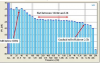
Considered by rtings.com to be a neutral sounding headphone: The AKG 702: "The AKG K702 have excellent sound quality for neutral listening". "Bass mids and treble are well balanced", This frequency response would never be tolerated in a loudspeaker. Yes I know of the Harmon curve for headphones yet when I measure my speakers with a calibrated MIC and they measure fairly flat to 20 K I find my headphones (AKG 702) sound bright to me even though they follow the Harmon curve fairly closely. Do headphone users prefer bright sounding cans or is it a function of room acoustics vs direct to ear sound?
 
Considered by rtings.com to be a neutral sounding headphone: The AKG 702: "The AKG K702 have excellent sound quality for neutral listening". "Bass mids and treble are well balanced", This frequency response would never be tolerated in a loudspeaker. Yes I know of the Harmon curve for headphones yet when I measure my speakers with a calibrated MIC and they measure fairly flat to 20 K I find my headphones (AKG 702) sound bright to me even though they follow the Harmon curve fairly closely. Do headphone users prefer bright sounding cans or is it a function of room acoustics vs direct to ear sound?

They don't follow harman too closely. Especially not in the lower registers.

K702 Oratory.jpg
 
I don't listen a lot with headphones, but I suspect what's missing from the headphone experience is the interaction between the loudspeakers and the room. I've listened to so much live jazz that I have the characteristics of that live sound indelibly burned in my brain, and my "holy grail" reference for evaluating sound on my 2-channel system is to close my eyes and evaluate how close jazz sounds like it's being performed live in that room. That "live in the room" evaluation doesn't work at all for rock (for me at least), but it works really well for jazz. The closer I get to being happy with the system, the more it sounds like the speakers are interacting with the room in the exact same way the sound from the musicians' sound would interact if they were sprawled across the stage from left to right speaker. It's kind of difficult to explain, and maybe completely nonsensical to some since you want typically want to reduce room interactions -- but musicians playing in the room would absolutely interact with the room reflections and I feel speakers must interact in the same way to recreate that "live" feel.

I guess the short version of this is that listening to headphones is more like listening to a performance in the studio, and listening on speakers is more like a live performance with the musicians sitting in your room with you. I guess with room treatments, you could probably narrow the differences loudspeaker and headphone sound. That would certainly measure better and may be the technically better solution -- but I'm not sure it would help my personal preference of having it sound like it's live in my individual room.

 
Thank you for pointing that out. The Harmon curve however is far from flat. The ideal Harmon speaker curve is flatter with a treble decrease past 2.5 K. Just wondering why this is...
View attachment 2472851

My understanding of the research leading to the Harman curve, is that a ton of people were focus grouped on what sound profiles they preferred, and the Harman curve is an average of that. This could be an oversimplification, or it could be absolute dog water, but that was my take away. I have the AKG N400nc TWS headphones. Their signature is based on Harman in-ear, and I think they sound pretty good for Bluetooth headphones.

You might want to look into something based on diffused field tuning. DF was developed, again to my understanding, to try and replicate a pair of speakers or monitors in a flat room.
 
My problem with headphones is their lack of a soundstage. People talking about hearing a soundstage with headphones is one of those "audio" terms that bother me. This opinion does not apply to binaural recordings. By their very nature they produce a soundstage through headphones.
I've always felt the same way. I just never heard much in the way of sound stage with headphones. Years ago I was given a pair of quad headphones and I split the two pairs of drivers to two 1/4" plugs. I wired a box with two stereo 1/4" jacks and some resistors. The front drivers in the headphones were connected to the "A" speaker terminals and the rear drivers connected to the (+) side only on the "B" terminals. I then had a pair of headphones with a Phantom channel.
It did add some depth with some recordings.
 
IMHO, my vintage Sennheisser HD424's are fairly neutral and provide great sound/soundstage. At the time I bought them in '78, I certainly think they were better than the Koss, Realistic, etc. closed systems that were popular.
 
My Stax Lambda ear speakers match my voiced Mcintosh XrT 28's pretty closely above 50 HZ. The speakers win easily below that. I will say they headphones above 10 khz or so are just a little different, not better or worse.
 
Back
Top Bottom