• The move to the new server is done. There are some software and database maintenance updates in process. This has us passing the hat around to help out. We appreciate any donations. Seriously, even a dollar helps. The payment page may be found here - https://www.audiokarma.org/support.html

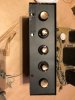
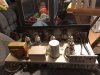
Heathkit AA-20 preamplifier (I think?)

zim bida

AK Subscriber
Subscriber
Hi All,

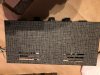
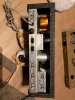
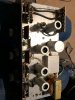
I picked up a lot of heathkit gear recently and amongst the two mono preamps and heathkit w-4am and AA-40 was a stereo preamp, however all identifying information was wiped clean from the faceplate. I've gone through old threads and looks at many many pictures on google - I think it is a Heathkit AA-20, given the fact of 5 knobs rather than 6, stereo and preamp - and I can't imagine there were too many units produced with the power switch on the b-channel treble pot!

Can anyone confirm this? I think I'd like to get the stereo units in the lot restored, and it seems like knowing what is being worked on might be a good start

I did post a WTB for a faceplate in the parts forum, but it seems like I might get more feedback on the unit in the main area.

anyone have experience with this preamp? Good? Bad? meh?

thanks
 

Attachments

  • b6e85658ffa94445dc523a6336a39ab047d44ba7-1.jpg
    b6e85658ffa94445dc523a6336a39ab047d44ba7-1.jpg
    45.2 KB · Views: 93
  • b6e85658ffa94445dc523a6336a39ab047d44ba7-2.jpg
    b6e85658ffa94445dc523a6336a39ab047d44ba7-2.jpg
    125.4 KB · Views: 80
  • b6e85658ffa94445dc523a6336a39ab047d44ba7-3.jpg
    b6e85658ffa94445dc523a6336a39ab047d44ba7-3.jpg
    60.9 KB · Views: 86
  • 8d90f5c6da944febe8aa63df161887bf53d4c6c3-1.jpg
    8d90f5c6da944febe8aa63df161887bf53d4c6c3-1.jpg
    53.3 KB · Views: 80
  • 77965587822f4cb889965a7c942660122ae827b1-1.jpg
    77965587822f4cb889965a7c942660122ae827b1-1.jpg
    81.3 KB · Views: 85
Register to hide this ad
The AA-20 morphed into the AA-141 (non-A version) when they moved the power switch to become its own, dedicated knob, located under, and centered between the Volume and Function controls. In the AA-141, they also moved the Tape Out jacks to be over with the main output jacks, which then allowed all the input jacks to appear on the rear apron of the main chassis, without the need for the additional input jack plate used on the AA-20. Otherwise, and besides the physical updating to the new appearance of the AA-141, the two units are electrically identical. Therefore, if you find a manual or schematic for an AA-141, it will serve for servicing your AA-20 just fine.

There are problems inherent within the design however. Most notably, the high level inputs overload with anything over a .50 vac rms input voltage applied -- making it a problem to use this preamp with a fixed output level CD player, whose output is typically on the order of about 2.0 vac. Therefore, appropriate input attenuators will be required when this type of source is used with this preamp. I also found the hum and noise and frequency response measurements to be well off of published specifications as well.

Dave
 
Thanks Dave - the depth of knowledge here always amazes me.

if you were fixing up one of these, any modifications to the stock circuitry you might suggest to mitigate the limitations you noted above?
 
On mine, I scrapped a good bit of the original circuit, although I kept much the same basic topology. The high points include:

1. The phono preamp circuit now handles only phono signals, with the circuit hard wired into permanent phono preamp operation. No more injecting high level inputs into the second stage of the phono preamp circuit.

2. The selector switch now appears at the input of the first Line Amp stage, with no reduction networks needed any more. High level inputs go straight to the selector switch, and from the switch to the first Line Amp stage.

3. The Tape Output jacks now receive their signal from the output of the selector switch.

4. The first Line amp stage is modified to include its own NFB loop to prevent overloading, and lower distortion.

5. The tone controls are as they were before, but the active stage serving them has been modified to operate with much lower distortion.

6. The cathode follower output stage is modified to allow for greater headroom and lower distortion.

7. There were a number of things also done to lower hum and noise as well, like operating the pilot lamp from DC, using shielded cable instead of twisted wires, and shielding the back side of the power switch to name a few.

Also, you will also want to either reduce the AC voltage applied to the unit to match that required, or simply add a 75Ω 2W resistor in series with one side of the AC line. This will produce the proper heater voltages which otherwise are rather high when operated directly off of today's typical AC line voltage levels.

The results were light years from that of the stock unit, but it was quite a bit of work to accomplish as there were a significant number of details to attend to in addressing the the general points mentioned above.

Dave
 
Last edited:
Wow, thanks Dave .

That's quite a daunting list. Let me talk to my guy (as my skills lie more in seeing things and saying "I want it" than in fixing them up)

After all that, how do you rate the preamp?
 
From a user's standpoint, I give it a B-, lacking a loudness control, balance control, or Tape Monitoring facilities -- but remember that this was billed as an economy/intro offering in its day, so it's lack of features beyond any basic needs are understood. And, the volume control is of the concentric type that turns like a common shaft, but allows for adjustment of the individual channels to accommodate balancing needs. As long as these limitations are understood and work within your installation needs, then it functionally performs very well.

From an audible presentation based on the original design, I have never used the RIAA phono preamps, so I can't comment on them -- other than to say that they are of an active EQ design (versus passive), which is pretty unique for Heath, whose designs are typically based on passive EQ designs. I found the original design of the line/tone stages to be notably rolled off on the high end -- in keeping with the measured response generated as well. Because of this, the notable hum and noise (I uses 101 db speakers and a 1.0 volt sensitivity Heath power amp with this preamp), and the gross overload my CD player caused, the unit didn't stay in stock form for very long, with the re-design occurring shortly after I got the unit. I felt the modification work was worth it because my unit was in excellent physical shape, and the darn thing is kind of cute.

In modified form, the unit is now presents a very flat response from 20 Hz to 20 kHz (Now +/- .25 db), and has a much more appropriate high level gain of 6 with the controls set for flat performance, and overload does not occur until a healthy 5.0 volts are applied to any high level input. Hum and noise is now a negligible issue. This all translates now into very satisfying performance from such an economical unit. The HF roll off is gone as is any sense of dynamic strain. Large dynamic signals are handled with ease now, and present with a uniform appearance across the audio spectrum -- but physically, the unit still retains every bit of its original AA-141 appearance (my unit did not come with its original cover, so it is installed in a very nice walnut cabinet that happens to work perfectly).

This unit took a lot of work to bring it to this level of performance, but used with my Heath AA-30 (also modified as presented here: http://www.audiokarma.org/forums/in...e-rough-polishing-heaths-aa-30-aa-111.663199/ ), the combination now returns very satisfying performance that is clear, dynamic, balanced, full range, and, quiet! Audibly I now give it A, which is a far cry from where it started from!

Dave
 
Thanks Dave for the detailed breakdown .I'm going to see what I can get accomplished with my set.
 
On mine, I scrapped a good bit of the original circuit, although I kept much the same basic topology. The high points include:

1. The phono preamp circuit now handles only phono signals, with the circuit hard wired into permanent phono preamp operation. No more injecting high level inputs into the second stage of the phono preamp circuit.

2. The selector switch now appears at the input of the first Line Amp stage, with no reduction networks needed any more. High level inputs go straight to the selector switch, and from the switch to the first Line Amp stage.

3. The Tape Output jacks now receive their signal from the output of the selector switch.

4. The first Line amp stage is modified to include its own NFB loop to prevent overloading, and lower distortion.

5. The tone controls are as they were before, but the active stage serving them has been modified to operate with much lower distortion.

6. The cathode follower output stage is modified to allow for greater headroom and lower distortion.

7. There were a number of things also done to lower hum and noise as well, like operating the pilot lamp from DC, using shielded cable instead of twisted wires, and shielding the back side of the power switch to name a few.

Also, you will also want to either reduce the AC voltage applied to the unit to match that required, or simply add a 75Ω 2W resistor in series with one side of the AC line. This will produce the proper heater voltages which otherwise are rather high when operated directly off of today's typical AC line voltage levels.

The results were light years from that of the stock unit, but it was quite a bit of work to accomplish as there were a significant number of details to attend to in addressing the the general points mentioned above.

Dave
From a user's standpoint, I give it a B-, lacking a loudness control, balance control, or Tape Monitoring facilities -- but remember that this was billed as an economy/intro offering in its day, so it's lack of features beyond any basic needs are understood. And, the volume control is of the concentric type that turns like a common shaft, but allows for adjustment of the individual channels to accommodate balancing needs. As long as these limitations are understood and work within your installation needs, then it functionally performs very well.

From an audible presentation based on the original design, I have never used the RIAA phono preamps, so I can't comment on them -- other than to say that they are of an active EQ design (versus passive), which is pretty unique for Heath, whose designs are typically based on passive EQ designs. I found the original design of the line/tone stages to be notably rolled off on the high end -- in keeping with the measured response generated as well. Because of this, the notable hum and noise (I uses 101 db speakers and a 1.0 volt sensitivity Heath power amp with this preamp), and the gross overload my CD player caused, the unit didn't stay in stock form for very long, with the re-design occurring shortly after I got the unit. I felt the modification work was worth it because my unit was in excellent physical shape, and the darn thing is kind of cute.

In modified form, the unit is now presents a very flat response from 20 Hz to 20 kHz (Now +/- .25 db), and has a much more appropriate high level gain of 6 with the controls set for flat performance, and overload does not occur until a healthy 5.0 volts are applied to any high level input. Hum and noise is now a negligible issue. This all translates now into very satisfying performance from such an economical unit. The HF roll off is gone as is any sense of dynamic strain. Large dynamic signals are handled with ease now, and present with a uniform appearance across the audio spectrum -- but physically, the unit still retains every bit of its original AA-141 appearance (my unit did not come with its original cover, so it is installed in a very nice walnut cabinet that happens to work perfectly).

This unit took a lot of work to bring it to this level of performance, but used with my Heath AA-30 (also modified as presented here: http://www.audiokarma.org/forums/in...e-rough-polishing-heaths-aa-30-aa-111.663199/ ), the combination now returns very satisfying performance that is clear, dynamic, balanced, full range, and, quiet! Audibly I now give it A, which is a far cry from where it started from!

Dave

On mine, I scrapped a good bit of the original circuit, although I kept much the same basic topology. The high points include:

1. The phono preamp circuit now handles only phono signals, with the circuit hard wired into permanent phono preamp operation. No more injecting high level inputs into the second stage of the phono preamp circuit.

2. The selector switch now appears at the input of the first Line Amp stage, with no reduction networks needed any more. High level inputs go straight to the selector switch, and from the switch to the first Line Amp stage.

3. The Tape Output jacks now receive their signal from the output of the selector switch.

4. The first Line amp stage is modified to include its own NFB loop to prevent overloading, and lower distortion.

5. The tone controls are as they were before, but the active stage serving them has been modified to operate with much lower distortion.

6. The cathode follower output stage is modified to allow for greater headroom and lower distortion.

7. There were a number of things also done to lower hum and noise as well, like operating the pilot lamp from DC, using shielded cable instead of twisted wires, and shielding the back side of the power switch to name a few.

Also, you will also want to either reduce the AC voltage applied to the unit to match that required, or simply add a 75Ω 2W resistor in series with one side of the AC line. This will produce the proper heater voltages which otherwise are rather high when operated directly off of today's typical AC line voltage levels.

The results were light years from that of the stock unit, but it was quite a bit of work to accomplish as there were a significant number of details to attend to in addressing the the general points mentioned above.

Dave
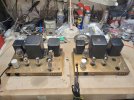
Dave, you wouldn't happen to have a modified schematic would you? I'd like to match this up with the pair of W4-AM I just finished.
 
Dave, you wouldn't happen to have a modified schematic would you? I'd like to match this up with the pair of W4-AM I just finished.
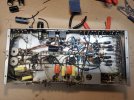
I guess I'm just a sucker for a lost cause. I already bought the AA-20 before I read all the comments in this thread. It really seems like vintage tube gear is expensive to buy, but doesn't seem to bring much when selling. The W4-AMs were finished and it looks like I'll give the AA-20 a try tomorrow after cleaning up the faceplate.
 

Attachments

  • 20250705_134629.jpg
    20250705_134629.jpg
    142.9 KB · Views: 6
  • 20250802_215457.jpg
    20250802_215457.jpg
    154.3 KB · Views: 5
Back
Top Bottom