• The move to the new server is done. There are some software and database maintenance updates in process. This has us passing the hat around to help out. We appreciate any donations. Seriously, even a dollar helps. The payment page may be found here - https://www.audiokarma.org/support.html

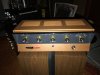
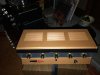
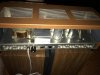
Heathkit AA141 preamp 5 - 12AX7 version - anyone with experience

biscuithead

Me likes the eargasm retroplasm...
I've had a Dynaco Pas 2 for a little while, and have been very happy with it. It has the tone controls out and a new rectifier and new caps and all the hoop-lah ... I use it with a Bob Latino ST70 and an original ST70.


I just picked up a Heathkit AA141 and hope to emulate the mods/updates that were done on the PAS 2.
It came with 5 vintage Daystrom Mullard 12AX7s, I might 'bay those to pay for the cost of the pre...
I will post pics as soon as I get it detailed.

Is there any advice as far as something specific to the AA141 ? Thanks !
 
Register to hide this ad
Biscuit -- I've waited to see if anyone else would chime in, but they apparently have not, so I will give you my experience with the AA-141. Please bear in mind that this is just one man's opinion, but unfortunately, I found the AA-141 to be quite poor -- and for a number of reasons, although you certainly do have a wonderful looking example of one, at least by outward appearances.

One huge issue with the unit is that the high level inputs overload with any signal level over .50 vac applied to them. Therefore, a typical CD player with a fixed output of 2.0 volts easily overloads the AA-141. As a result, really any high level source you use with it must have it's own output level control, allowing its output to be attenuated to prevent from overloading the AA-141.

The build uses extensive twisted leads, but this is still insufficient to reduce hum to satisfactory levels for me. As a disclaimer, I hate hum, and using 101 db Cornwall speakers, I will go to the ends of the earth to eliminate it. In the AA-141, that's about what you have to do, too. For example, just some of the things I did: (1) AC wiring to the power switch is now shielded. (2) A shield cap is now installed over the rear of the AC power switch. (3) The pilot lamp now operates from DC instead of AC. (4) The PS now uses silicon rectifiers, and the HV doubler caps are increased to 47 uF each, with an additional dropping resistor installed between the output of the doubler, and first filter cap for increased filtering. There's more, but you get the idea.

With the tone controls set for flat, I found the HF response of the unit to be quite poor, being -6 db at 20 kHz as measured with the volume control up full, and signal applied through the line level inputs.

The design is just quirky, with the high level inputs first passing through reduction networks (a source of channel imbalance), and then on to the second stage of the RIAA phono preamps. Finally, AC is used to power all the heaters, so positioning leads and components for lowest hum is mandatory.

By comparison, the Dynaco PAS is a very good design, with a high level stage that is virtually impossible to overload, DC used to power all the audio tube heaters, and a design layout that has any properly built example displaying little to no hum. Its measured adherence to the RIAA response curve and flat performance when set as such has been documented to adnausium the world over. In short, from a design, function, and delivered performance standpoint, there is simply no comparison between the Heath AA-141, and the Dynaco PAS preamplifiers. I'm hardly trying to say that the PAS preamplifier is perfect -- it is not (but then, what is?). Be that as it may however, there is still a universe of performance difference between these two units. It is little wonder then that the AA-141 was rather quickly replaced by the AA-141A, which took a number of steps to correct the flaws of the earlier unit.

My AA-141 has ended up being a very nice unit. But the extensive reworking and modifying of the circuit and build of the unit to achieve that condition is significant. Again, just one man's opinion, but I hope it helps!

Dave

 
Biscuit -- I've waited to see if anyone else would chime in, but they apparently have not, so I will give you my experience with the AA-141. Please bear in mind that this is just one man's opinion, but unfortunately, I found the AA-141 to be quite poor -- and for a number of reasons, although you certainly do have a wonderful looking example of one, at least by outward appearances.

One huge issue with the unit is that the high level inputs overload with any signal level over .50 vac applied to them. Therefore, a typical CD player with a fixed output of 2.0 volts easily overloads the AA-141. As a result, really any high level source you use with it must have it's own output level control, allowing its output to be attenuated to prevent from overloading the AA-141.

The build uses extensive twisted leads, but this is still insufficient to reduce hum to satisfactory levels for me. As a disclaimer, I hate hum, and using 101 db Cornwall speakers, I will go to the ends of the earth to eliminate it. In the AA-141, that's about what you have to do, too. For example, just some of the things I did: (1) AC wiring to the power switch is now shielded. (2) A shield cap is now installed over the rear of the AC power switch. (3) The pilot lamp now operates from DC instead of AC. (4) The PS now uses silicon rectifiers, and the HV doubler caps are increased to 47 uF each, with an additional dropping resistor installed between the output of the doubler, and first filter cap for increased filtering. There's more, but you get the idea.

With the tone controls set for flat, I found the HF response of the unit to be quite poor, being -6 db at 20 kHz as measured with the volume control up full, and signal applied through the line level inputs.

The design is just quirky, with the high level inputs first passing through reduction networks (a source of channel imbalance), and then on to the second stage of the RIAA phono preamps. Finally, AC is used to power all the heaters, so positioning leads and components for lowest hum is mandatory.

By comparison, the Dynaco PAS is a very good design, with a high level stage that is virtually impossible to overload, DC used to power all the audio tube heaters, and a design layout that has any properly built example displaying little to no hum. Its measured adherence to the RIAA response curve and flat performance when set as such has been documented to adnausium the world over. In short, from a design, function, and delivered performance standpoint, there is simply no comparison between the Heath AA-141, and the Dynaco PAS preamplifiers. I'm hardly trying to say that the PAS preamplifier is perfect -- it is not (but then, what is?). Be that as it may however, there is still a universe of performance difference between these two units. It is little wonder then that the AA-141 was rather quickly replaced by the AA-141A, which took a number of steps to correct the flaws of the earlier unit.

My AA-141 has ended up being a very nice unit. But the extensive reworking and modifying of the circuit and build of the unit to achieve that condition is significant. Again, just one man's opinion, but I hope it helps!

Dave

My gosh... you just saved me from blood-sweat-N-tears! Thanks!
I have many preamps, and I really don't need another. This particular Heath came to me and was so cosmetically devine, that I figured it deserved a decent resurrection, but now I shall just shelf it as a display piece or pass it on .
I really appreciate your input and your reply was exactly what I was hoping for! Thanks Dave!
 
Back
Top Bottom