• Please note that Audiokarma will be offline briefly for updates early on Monday morning, September 28th.

Heavy tracking carts - am I damaging my records?

Running a cart-needle combination too lightly, allows the needle to bounce around in the groove--THAT will cause damage. What is important is proper set-up: best cartridge alignment, proper Vertical Tracking Angle, optimum Vertical Tracking Force for that needle. I personally wouldn't worry about record wear if those things have all been dialed in properly, even if the VTF needs to be up close to 3.5 or 4 grams, though I don't currently run anything that goes over 3.

If people get old records that have a lot of wear, it is a lot more likely that those records were torn up because some previous owners didn't replace needles when they were worn, than that they were damaged by the too-heavy VTF of cheap (possibly non-adjustable) record changers the previous owners used. They heard somewhere that diamonds were forever, and sapphires were for almost-forever. A needle worn to a chisel-like profile will tear up a groove, even if it is run at a light VTF.
 
The pressure on a record groove wall at 1g tracking force has been calculated to vary between 13.5 and 30 tonnes per square inch (2 to 4.5 tonnes per square cm). So it does cause wear and heat during every playing, despite some people thinking that it doesn’t.

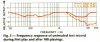
Below is a graph from an article by the late engineer and audio expert Leonard Feldman. (He designed and reviewed hi-fi equipment over many decades, wrote seven books and hundreds of articles on electronics and hi-fi, was involved in setting hi-fi technical standards, and was inducted into the Audio Hall of Fame in 1980.) This was taken of the frequency response of an untreated CBS test record at first play, and after 100 plays at 1.5g with an elliptical stylus (source Audio magazine, May 1979). While you may think that the frequency response is rather lumpy, I should point out that the graph is rather expanded on the ‘y’ axis, and the initial ±0.5dB frequency response across the full audio range was actually very flat, and would have only been available from the very best cartridges (then or now).

Record wear effect on frequency response - Audio May 79.jpg

You can see that after 100 playings (over several weeks), the frequency response has deteriorated by up to 2.5dB between 10 and 20kHz, with damage evident above about 2kHz. Distortion and noise also increased with that wear.

There was also research by various cartridge manufacturers, which found that the amount of wear was proportional to the stylus tracking force, with a three times higher tracking force more than doubling record and stylus wear.

However, as long as you keep the records clean and don’t play them too often (or with a damaged stylus), you shouldn’t notice any difference in the sound. In fact, because your ears deteriorate as you age, you may never notice it, because the damage to them may be more than that on your records, and your brain will adapt to it….:)
 
Which explains the horrible condition of all my records that I picked up from radio stations liquidation sales over the years. The vast majority are freebies from record companies with a 'NOT FOR RESALE' label and it seems like nobody cared and they were treated as freebies. Radio stations requirements back in the day were totally different than the vinyl enthusiast's today.

FWIW my heaviest tracker, a Denon DL103R is doing so at 2.75g VTF. My Stans (681eee/881S) are scraping 1.0g VTF from bellow and my Ortofon VMS20E @ 1.2g

utRvqN0.jpg

Stations had to be bass heavy to compensate for over the air loss, plus they got the releases as promo (free); totally understandable. Every R/S promo I own obviously wasn't popular play material, they play sweet as heck.
 
Fortunately at both radio stations I frequented the engineers were sticklers about the handling of records. The Morning DJ's which were in charge of the others were very insistent that the records be kept clean as both stations had oldies broadcasts and request programs. The station I worked at was CW. The other station played pop stuff starting in the early forties and late thirties, which mean a lot of 78's and reissues to be kept clean in their libraries. My first LP library was over half radio station discs for POP music. I love big and Swing bands, The rest was classical, Wind Band, and brass groups and full Symphony Recordings. I did keep my Direct to Discs from the first Library, and because of that when I trashed my last Stanton 981 Hzl stylus, Frank Gow from Audio Classics sent me a 10X4 HO un announced. I liked the sound so well I started my second collection and am now using a 20X 2 HO Dynavector with. a 10X 5 as back-up. The 20 X 2 sounds like my favorite Ortofons from the 70's, but with out all the mis-tracking issues the Ortofons had. I like you chart showing the HF roll off with age. And audio Philes say they don't need tone controls 2 db boost with my 10 KHZ pot on my C-34 would almost bring things back to as good as new.
 
after 100 playings (over several weeks)
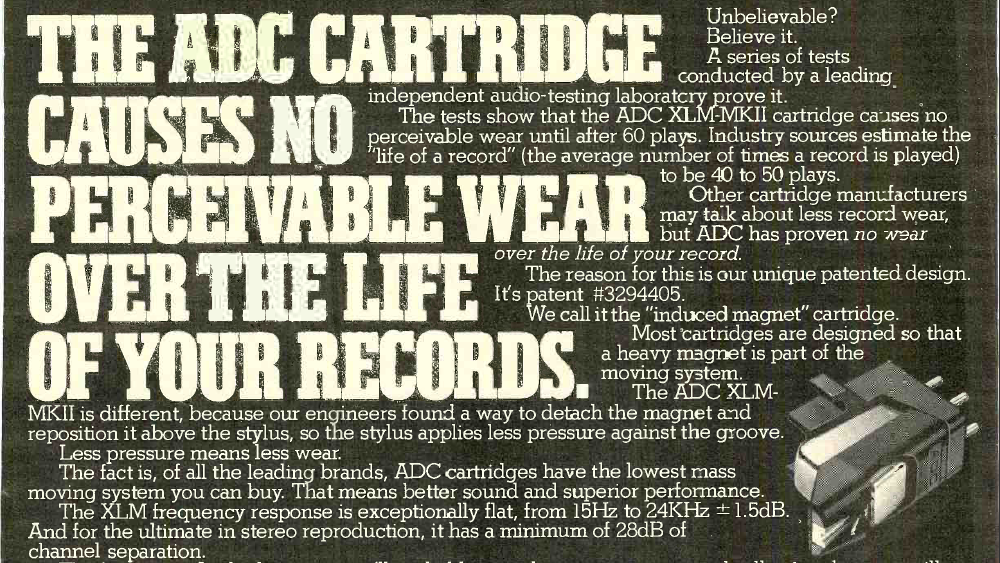
In 1977, this ad claimed that "industry sources estimate the 'life of a record' (the average number of times a record is played) to be 40 to 50 plays". Therefore a test of playing a record 100 times is more than twice its real-world "life".

adcnowear.png
 
In the audible high frequency, the db level measured is diminished by one-half after 100 plays. So, records wear out. I wonder if there is some way to make a type of record where something like a light-beam traces the surface and converts sequences of high and low reflectivity into a numerical representation of the sound energy level corresponding to a discrete segment of recorded time. This numerical representation could be converted back to sound energy....

The other thing I was thinking about is that records are tangible sources of music which, are not only are irreproducible by the consumer, they wear out. I wonder if an industry could be built around that concept...
 
Last edited:
In the audible high frequency, the volume is diminished by one-half after 100 plays. So, records wear out. I wonder if there is some way to make a type of record where something like a light-beam traces the surface and converts sequences of high and low reflectivity into a numerical representation of the sound energy level corresponding to a discrete segment of recorded time. This numerical representation could be converted back to sound energy....

The other thing I was thinking about is that records are tangible sources of music which, are not only are irreproducible by the consumer, they wear out. I wonder if an industry could be built around that concept...

Thats a fantastic suggestion,no doubt the record labels would claim that the discs are indestructable,and a good addition to the selling point would be if they were housed it a handy plastic jewel case.
 
Same. The posters who yammer on, thread after thread, about VTF, record wear, trotting out old graphs and such, they fail to recognize the MANY, MANY users who have played multiple records hundreds of times with no notable degradation of sound. This is a consumer format. Play your records.

I have lots of records I have played well over 100 times...still sound fine to me.
 
I semi-retired my big ol' M3D due to the excessive tracking force.

May have to put it back in rotation. She sings rather sweetly on old, sorta beat up Living Presence albums.
 
Same. The posters who yammer on, thread after thread, about VTF, record wear, trotting out old graphs and such, they fail to recognize the MANY, MANY users who have played multiple records hundreds of times with no notable degradation of sound. This is a consumer format. Play your records.
What fun is a hobby without graphs, specs, test reports, and dredging up information/opinions that are many decades old? That's not "yammering on"; it's just jumping into the fun!
 
Back
Top Bottom