• The move to the new server is done. There are some software and database maintenance updates in process. This has us passing the hat around to help out. We appreciate any donations. Seriously, even a dollar helps. The payment page may be found here - https://www.audiokarma.org/support.html

Help Identifying a Diode. University Sound Studio Pro 120A

RyeGuy859

Well-Known Member
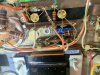
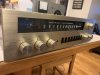
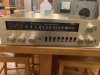
So I got this receiver recently. It’s a University Sound Studio Pro 120A. Theres not much about it, i did find the specs online but nothing of a service manual or schematic. I opened it up prior to turning it on and upon inspection I found two bad resistors and a bad diode on one channel. I cannot determine the diode though. It is different from the other channel so i believe it has been changed at one point. The assuming correct channel diode says 516, dj1, and ge on its sides. I’m not sure how to use this is figure out what kind it is and google doesn’t seem to have much info either. As for the resistors The working channel are 100ohm and 330ohm I assume 1/4 watt but they are the size of todays 1/2w but that’s an easy replacement. I assume the diode went and took the resistors with it, but seeing the diodes been replaced before it’s probably a transistor and after a replacement it fried the diode again and they gave up. I’d like to replace these components before going on the dbt/variac where i will do more testing. Pics below

Bad Channel
1D141A4F-3DC2-4265-8A4D-B4A492DF2D23.jpeg

Good Channel
53121AA9-8568-4833-A020-9E5561B53BD7.jpeg

Overview
FDFCDC0A-4C18-41F9-B927-2440211C3475.jpeg

Receiver
CCBD305B-CE05-409C-AD89-A970B388693E.jpeg 37935376-FC1E-40AA-A26D-4DF8CA0AADAB.jpeg 4880C166-9ED7-40B2-A8BF-F6FBD8BFC46A.jpeg EE4159C4-0DA4-4DDF-953F-20D297BB37D1.jpeg
 
Last edited:
Register to hide this ad
Germainum transistors and very very likely a germanium diode. 516 sounds familiar, might the the one that's used in some meter circuits. Typical ones are 1N34A and 1N60. Check the known good one, they have a lower voltage drop (0.2V or so usually) than silicone diodes.

Single sided capacitor coupled amp with point to point wiring all over, what a nightmare. You may have to draw up your own schematic.
 
Germainum transistors and very very likely a germanium diode. 516 sounds familiar, might the the one that's used in some meter circuits. Typical ones are 1N34A and 1N60. Check the known good one, they have a lower voltage drop (0.2V or so usually) than silicone diodes.

Single sided capacitor coupled amp with point to point wiring all over, what a nightmare. You may have to draw up your own schematic.

Oh im sure it will be a mess, I just love the gold look to not at least give it a try. Hopefully its just the diode but im sure theres more to the story. In the manual it states it has some sort of protection to protect the output transistors something about about a self resetting circuit breaker (power programmers it calls them) There are also these small glass tubes on the rear middle of the underside, I think you can see them in the pic, that i've never come across before either

It was the one and only reciver build by University Sound, excluding the Studio Pro 120 ( Same reciever but silver basically) Perhaps for a good reason. Let me see if I can find the manual again.

Edit: Wow Hifi engine is fast, I uploaded these a week or so ago and looks like they're posted now. It says something about all silicon circuitry so hopefully not germanium.
https://www.hifiengine.com/manual_library/university_sound/pro-120a.shtml
https://www.hifiengine.com/manual_library/university_sound/pro-120.shtml
 
Last edited:
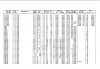
Well, apparently I didnt look hard enough at the manual before I uploaded it because theres a section about the components in the amp section. I looked up the diodes that were 2 or more and It looks very similar to a 1n5239 zener or a 1n4002 possibly
 
The clear glass one does look like a 1N34A.

The red ones have numbers that I can't quite make out. SHould be able to tell something with a magnifier, but none of those look like a 1N4002 to me.
 
Ah y
The clear glass one does look like a 1N34A.

The red ones have numbers that I can't quite make out. SHould be able to tell something with a magnifier, but none of those look like a 1N4002 to me.
Ah you’re right about the 1n4002 I searched it wrong. the numbers on the small red ones are what I mentioned in my first post. 516, dj1, ge

From the looks of the other channel the clear one was used as a replacement for an original small red.

Searches yield nothing for them from what i can tell
 
Finally got around to messing with this unit again. Sound out of one channel. Replace with a new diode and resistor, starts to smoke. Check the transistor next to it. Seems to be open. It’s a HEP 243 NPN. I am unsure what modern replacement this can have. It’s a to-5 There seems to be a data sheet for it so finding one should be to bad. I’ve gathered so far it can be subbed with a NTE128.

40v 3A 6W frequency 8mhz gain 60
HEP 243
87F2621C-DF97-4175-9ADE-5AD691723C14.jpeg A15A0D54-BDD1-4298-8E0C-9A4E8F3ADD7C.jpeg
 
Last edited:
what do you have on hand then? Possible one will sub. I'm somewhat guilty of going through my stash and figuring out if something I already have is close enough to serve.
 
My fault, definitely would help if I told you.
ksc1845, ksc2690, ksc2383, bd139, tip41c, ksd526, ksc2073, and ksc1815.

I think those are all the NPNs i have on hand. Not sure if a to-92 is to small for this application, I would assume so but doesn’t hurt to mention it.
 
The TIP41C might get it done. Its even slower, 3mhz, but depending on what its actually doing that may not matter. The rest of the ratings look suitable enough.
 
The TIP41C might get it done. Its even slower, 3mhz, but depending on what its actually doing that may not matter. The rest of the ratings look suitable enough.
ill Check it out. I’m not sure if it’s purpose either. With no manual and all this point to point wiring it makes it even harder
 
Back
Top Bottom