• The move to the new server is done. There are some software and database maintenance updates in process. This has us passing the hat around to help out. We appreciate any donations. Seriously, even a dollar helps. The payment page may be found here - https://www.audiokarma.org/support.html

HELP? JVC JA-S5G Amp?

I wish I had the knowledge and therefore the ability to carry out work on amplifiers such as this.:tears:
It would add another dimension to my addiction.
To be able to do stuff like this is a big cost saving compared to having to rely on someone else to find and fix problems.:tears:

Beautiful pictures Jooch :thmbsp:

I did not have the skills myself when i started my interest in audio, i just started tweaking a little. And after some years of modding and repairing i am able to do what i do.

Just start on a broken amp you can get for less than 5 bucks, try to repair it. If you succeed, it becomes very addicting. Failing once in a while is part of success, giving up however will not lead to success.

So my recipe:
Old broken stuff + interest + determination + time(you will need to negotiate about that with the woman :D) = electronics skills
 
I have now been listening an afternoon to the modified amp and can confirm the bass has improved (to my liking).

Before the mod some subsonic sounds more or less sounded like a drone instead of sound, completely overthrowing the rest of the music.

After the mod and careful calibration of the DC and BIAS (now 16mV, was between 2 and 4!), i was quite impressed to hear the droning sounds were all gone. This means the amp now has good control over the lower frequencies.

For some this might not be desirable, because this sort of sound/distortion is often interpreted as 'warmth' or 'wooly'.

Other mods planned:
  • Replace the trimmers with precision multiturn types
  • Replace small signal transistors with newer types to improve overall linearity of the amplifier
 
I did not have the skills myself when i started my interest in audio, i just started tweaking a little. And after some years of modding and repairing i am able to do what i do.

Just start on a broken amp you can get for less than 5 bucks, try to repair it. If you succeed, it becomes very addicting. Failing once in a while is part of success, giving up however will not lead to success.

So my recipe:
Old broken stuff + interest + determination + time(you will need to negotiate about that with the woman :D) = electronics skills

Good to know Jooch.
There's hope for me yet:banana:.
My father used to tell me
"If there's anyone worse than a quitter it's someone not game to begin"
I've never been a quitter, I'll have a go at anything.
:yes:
As for negotiating with the woman I lean towards the adage that it's best to ask for forgivness than to ask for permission, most of the time anyway

I'm just having a problem with the amplifier at the moment, phono 2 input has only one channel working.
I've changed the turntables over just to check if it wasn't the turntable/cartridge which it's not.
 
Very nice work. I'm a hobbyist type too, and enjoy fixing broken things. I'm more of a "parts changer" than a technician though. I leave the hard thinking to the experts.
 
Good to know Jooch.
There's hope for me yet:banana:.
My father used to tell me
"If there's anyone worse than a quitter it's someone not game to begin"
I've never been a quitter, I'll have a go at anything.
:yes:
As for negotiating with the woman I lean towards the adage that it's best to ask for forgivness than to ask for permission, most of the time anyway

Gee, now that i think about it... You're very right about the woman part, i wasn't aware of myself doing the exact same thing to convince my girlfriend.
Well i guess you're already halfway to success then :thmbsp:


I'm just having a problem with the amplifier at the moment, phono 2 input has only one channel working.
I've changed the turntables over just to check if it wasn't the turntable/cartridge which it's not.

Looking at the schematics there is only one amplifier for the two phono inputs.
Since Phono1 is working, we can assume the preamp is working properly.
This means the signal is not getting from the connection to the input of the phono preamp.

- Check the connectors of Phono2 for signs of wear and corrosion.
- The input selector is connected to a large rectangular switch, set it to phono2 and spray it with contact cleaner. Switch the selector about 20 times fully clockwise and back.
 
Got some parts again (new trimmers):

Old trimmers
IMG_5532.jpg


New trimmers
IMG_5531.jpg
 
G'day Jooch.
What sort of costs are involved with buying replacement pieces.
I'm just trying to get a feel for what I may get myself into.
Also with replacing these parts what is involved, desoldering, resoldering???
 
Took me a while, but here's the list of parts:

Power caps:
  • 6800uF 63V x4 $16
  • 47uF 63V (10pcs) $2
  • 470uF 100V $1
  • 330uF 63v x2 $3.50
  • 0.01uF 1$

Input caps:
  • 4.7uF (5pcs) $5
  • 3.3uF x4 $5

Various:
  • New trimmers: x4 $4
  • Transistor upgrade, 2SC1815 (50pcs) $1.20
  • PVC piping: $2
  • PVC glue: $4
  • PVC primer: $12
  • Black paint: $8


Tools used:
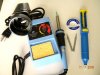
  • 30W Variable Temperature Soldering Station $20-$30
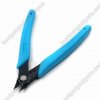
  • Precision wire cutter $6
  • De-soldering pump $2
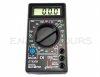
  • Digital Multimeter $4
  • Solder 1mm 60/40 $4
  • Crocodile Clamp Clip Test Leads $2
  • Contact cleaner $5
  • Basic stuff (pliers, screwdrivers, etc)
 

Attachments

  • soldering_station.jpg
    soldering_station.jpg
    76.6 KB · Views: 9
  • wire_cutter.jpg
    wire_cutter.jpg
    16.3 KB · Views: 6
  • Crocodile_Clip_Test_Lead.JPG
    Crocodile_Clip_Test_Lead.JPG
    79.6 KB · Views: 5
  • multimeter.jpg
    multimeter.jpg
    96.8 KB · Views: 6
Last edited:
Replaced some caps again and the input stage transistors. The old caps were quite burned because of hot resistors. The transistors were not very linear, and quite worn.
The sound has mostly benefited from the new transistors, it is far less noisy and more crisp.

IMG_5536.jpg


IMG_5547.jpg


IMG_5542.jpg


IMG_5540.jpg
 
Back
Top Bottom