• The move to the new server is done. There are some software and database maintenance updates in process. This has us passing the hat around to help out. We appreciate any donations. Seriously, even a dollar helps. The payment page may be found here - https://www.audiokarma.org/support.html

HK Citation II pushes out speakers when powering off

Thanks, is this the right capacitor?
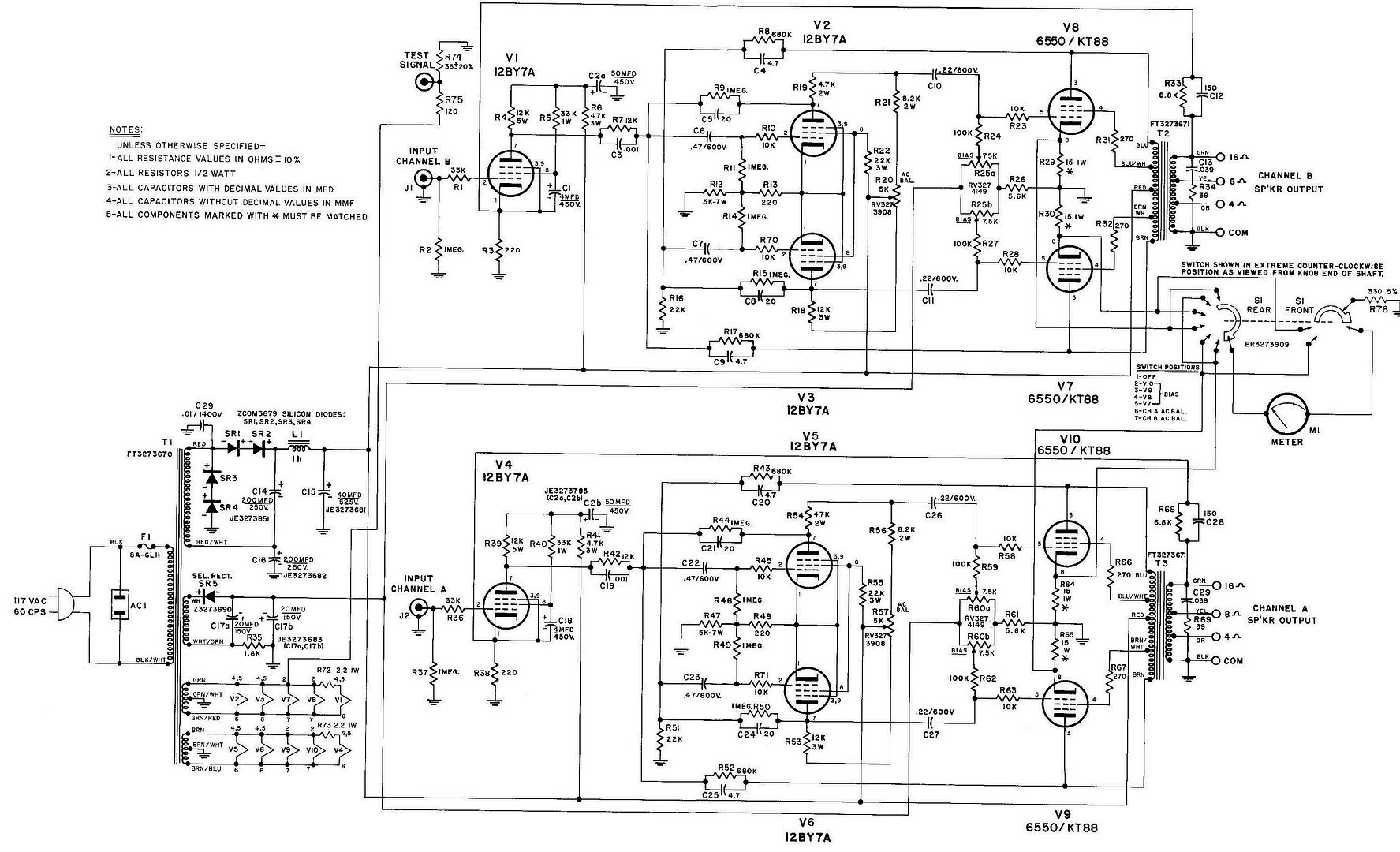
I can't tell from that photo. It HAS to be C15. It has to go from the B+ rail to the ground. If you are unsure, do not add anything! You must be 100% sure. That power supply operates at hundreds of DC volts. The wrong placement can cause damage.

Is there a tech near you who can add that resistor?
 
I can't tell from that photo. It HAS to be C15. It has to go from the B+ rail to the ground. If you are unsure, do not add anything! You must be 100% sure. That power supply operates at hundreds of DC volts. The wrong placement can cause damage.

Is there a tech near you who can add that resistor?
As of now, I am not 100% sure so I'm not adding or touching anything. Too much voltage.
I left a message with the tech today and I'll see if I can get him to look at it. Either way I'm going to hold off for now.
 
Howdy,

I have a Citation I and II going into Altec Model 19s. I run the amp and preamp off of a variac at 117vac.

When I power down the Citation II, it momentarily pushes out the speaker (Altec 416) to the point where I'm not comfortable using it until I fix the issue. There is no pop sound either. It behaves like this when there is no preamp connected or if I'm running it directly off the house AC power (no variac).

It seems to me that DC voltage is discharging on shut down and flowing directly to my speakers.

The Citation II has the McShane upgrade kit but I'm not sure which level as I purchased this with the work already done.

I just opened it up today and am familiarizing myself with the schematic. I've restored and repaired tube preamps and tube amps in the past but always learning though. I did my Citation I with the McShane kits and am really happy with the result.

Has anyone experienced this issue or could point me to what part of the circuit that may be causing this?

Thanks in advance.
I always follow this rule shut off pre amp wait a 5 seconds time, then shut of mono blocks 40 normal watts, 100 instantaneous watts . IM running Altec Model 17's
 
I always turn the amp off first. Some preamps make nasty noises on shut-down, both my Bottlehead Foreplay and my PAS that has a line stage thats pretty similar to the Foreplay will. If the preamp is turned off first that nasty thump goes right through the amp. Opposite at power-up, the preamp is on first so it gets its noise out of the way before the power amp is turned on.

though OP says his does it even when not connected to the preamp so I think thats not the problem here.
 
I always turn the amp off first. Some preamps make nasty noises on shut-down, both my Bottlehead Foreplay and my PAS that has a line stage thats pretty similar to the Foreplay will. If the preamp is turned off first that nasty thump goes right through the amp. Opposite at power-up, the preamp is on first so it gets its noise out of the way before the power amp is turned on.
That's true! That's what we were taught, but keep in mind, that was in the last century; things may have changed since then:dunno:
 
My Moscode pre has output muting, it doesn't care what order things shut down in. I have everything on a single master switch and it all just turns off politely. Single biggest reason I don't tend to swap preamps if I'm being honest, but the fact that it sounds good helps.
 
That's true! That's what we were taught, but keep in mind, that was in the last century; things may have changed since then:dunno:
Im 72 years old born in 1954 . I always have energized pre amp first and then the mono blocks never hear any noise yet I just had the mono blocks totally restored all resistors , all caps too. Although they are 1960-61 amps they were in original boxes, with original tubes, purchased last fall as new many of the tech men here on AudioKarma had steered me to have them restored by Phils Analog Basement which he is a Analog perfectionist, very careful does the very best with no cutting corners. At shut down I shut off the mono blocks first then the pre amp. They all go to there own 117 volt power strip In my house power. All though we have a new transformers at the pole outside my house In a minute Im going to check all my house plugs to see what Is coming In NOW...Good news I now have 119.4 Volts to as many plugs I could get to...Hope the way back machine works on the correct time LOL.
 
Last edited:
Traditionally, the resistor is after the last capacitor in the power supply rail. From positive to ground.

98ac2acc-3180-492a-9b85-808cc659ab23.jpg


The bleeder resistor would go after (right of) C15 — Positive rail to ground.

If you feel uncertain about doing this yourself, can you have the tech that did the McShane mods add the bleeder? :idea:
I'm seeing a "test signal" jack on the top left section of the schematic. Wedged between two resistors and powered off the heater string if you follow the line down. I've never seen this before. Is the purpose to provide a 60hz tone for testing, or am I missing something? Was this setup very common on other tube amps?
 
I'm seeing a "test signal" jack on the top left section of the schematic. Wedged between two resistors and powered off the heater string if you follow the line down. I've never seen this before. Is the purpose to provide a 60hz tone for testing, or am I missing something? Was this setup very common on other tube amps?
I really don't know. I never worked on one of these amps. Jim McShane is the man to ask if he is still answering emails.

:)
 
I'm seeing a "test signal" jack on the top left section of the schematic. Wedged between two resistors and powered off the heater string if you follow the line down. I've never seen this before. Is the purpose to provide a 60hz tone for testing, or am I missing something? Was this setup very common on other tube amps?
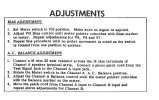
The test signal jack is an output jack that, as you say, sends a 60 Hz sine wave. It's used for setting AC balance, one connects from it to each of the channel inputs and then adjust according to the meter.
 
I'm seeing a "test signal" jack on the top left section of the schematic. Wedged between two resistors and powered off the heater string if you follow the line down. I've never seen this before. Is the purpose to provide a 60hz tone for testing, or am I missing something? Was this setup very common on other tube amps?
The info is in the sm.
 

Attachments

  • IMG_0669.jpeg
    IMG_0669.jpeg
    153.6 KB · Views: 9
The Marantz 8b is similar for doing AC balance, but it doesn't provide its own signal source. Probably the most effective low-tech way of setting it honestly. Requires nothing but the existing bias meter and a signal. Providing the signal right from the heater string is a bit of genius.
 
The Marantz 8b is similar for doing AC balance, but it doesn't provide its own signal source. Probably the most effective low-tech way of setting it honestly. Requires nothing but the existing bias meter and a signal. Providing the signal right from the heater string is a bit of genius.
That’s clever! Not all end users have access to test equipment.
 
Back
Top Bottom