• The move to the new server is done. There are some software and database maintenance updates in process. This has us passing the hat around to help out. We appreciate any donations. Seriously, even a dollar helps. The payment page may be found here - https://www.audiokarma.org/support.html

How Important is Cartridge Loading in Regards to Sound Quality?

Isaac C.

Cat Hoarder
Hello everyone, I have been enjoying collecting records and gear for the past year now since I ventured into this hobby, but one thing I am still not familiar with is cartridge loading. I have learned a lot since I started but would appreciate a simple lesson on cartridge loading. I see it mentioned here and there but have always wondered how important it is to sound quality. If it is important would I be able to do anything to adjust it on a Hitachi SR 603 receiver, or is loading more commonly used with phono stages and moving coils cartridges? Thanks in advance!
 
Register to hide this ad
Google search this. Both capacitance and impedance changes make differences mostly to the high end. There are ways to address it. With that research background you might have a specific question folks can answer for you.
 
For MM cartridges, the recommended impedance is normally 47kOhms but the recommended capacitance varies between cartridges. Basically, the capacitive load is the sum of the phono-cable capacitance and phono-stage capacitance. The former is usually somewhere within the range 150-200pF and the latter depends on the phono-stage. The cartridge manufacturer's recommended capacitive load is often a range - for example, 150-300pF for the Ortofon 2M series. So, in this case, you would be looking at a phono-stage with capacitance of 150pF or less to get within the advised range. The capacitance does make a difference to the sound.

I have a phono pre-amp with adjustable capacitance, as I have quite a few cartridges, so have been able to experiment with different settings. Starting off at low capacitance (50pF) and increasing, I generally find that the sound initially begins to brighten and become more open, but there comes a point where the treble begins to roll off and the sound becomes duller again (this is due to the movement of a resonance peak as you alter the capacitance). While not always critical, the capacitive load can make the difference between liking a cartridge and not liking it.

I doubt that the phono-stage capacitance can be changed on the Hitachi receiver, although it is possible to increase the capacitive load by adding capacitance to the phono-cables. If you want to tailor the load for your cartridge, you really need a separate phono pre-amp of the appropriate capacitance.
 
For MM cartridges the load resistance is usually 47k and the load capacitance is usually somewhere between 100pF and 350pF. Changing the load capacitance alters the HF response and different cartridges recommend different load capacitances.
For LOMC cartridges the capacitance is less important and the load resistance is usually around the 100 ohm mark, though it can be higher or lower. Manufacturers of LOMC cartridges usually specify a minimum load resistance rather than any specific figure.
Personally, I think the importance of "correct" load impedance is often overstated and leads to people getting paranoid about having for example a 300pF load on their Brand X mm cartridge when the recommended load is 250pF, or the load resistance for their MC cartridge is 100 ohms and they've read on a forum that 80 ohms is best. You may find the differences are a lot more subtle than you expected.
 
Hello everyone, I have been enjoying collecting records and gear for the past year now since I ventured into this hobby, but one thing I am still not familiar with is cartridge loading. I have learned a lot since I started but would appreciate a simple lesson on cartridge loading. I see it mentioned here and there but have always wondered how important it is to sound quality. If it is important would I be able to do anything to adjust it on a Hitachi SR 603 receiver, or is loading more commonly used with phono stages and moving coils cartridges? Thanks in advance!
I don't know if you have loading options on your Hitachi or not; does your owner's manual mention anything about being able to adjust capacitance or impedance? Apart from adjustable capacitance in an old NAD pre-amp, I've never owned equipment that offered loading adjustments, including reasonably good preamplifiers from conrad-johnson, Linn, and Audio by Van Alstine.

Below is a link to a short but interesting article on the effects of different loading on a moving magnet cartridge, the Shure M97xE. I loved this cartridge, and my setup was, by happenstance, fairly close to Shure's recommended load of 47kOhms and 250 picofarads. I particularly enjoyed the rather soft high end that standard loading gave me, but many in the past recommended higher impedance to brighten the sound.

https://www.tnt-audio.com/sorgenti/load_the_magnets_e.html
 
I don't know if you have loading options on your Hitachi or not; does your owner's manual mention anything about being able to adjust capacitance or impedance? Apart from adjustable capacitance in an old NAD pre-amp, I've never owned equipment that offered loading adjustments, including reasonably good preamplifiers from conrad-johnson, Linn, and Audio by Van Alstine.

Below is a link to a short but interesting article on the effects of different loading on a moving magnet cartridge, the Shure M97xE. I loved this cartridge, and my setup was, by happenstance, fairly close to Shure's recommended load of 47kOhms and 250 picofarads. I particularly enjoyed the rather soft high end that standard loading gave me, but many in the past recommended higher impedance to brighten the sound.

https://www.tnt-audio.com/sorgenti/load_the_magnets_e.html

Carver C-16 preamp, as such I would assume the C-19, and C-6 would also.
 
Carver C-16 preamp, as such I would assume the C-19, and C-6 would also.
Strangely enough, I got very pleasant, engaging sound from those conrad-johnson, Linn, and AVA preamps despite their not having adjustments for cartridge loading. Do you find loading options an important part of the listening experience?
 
Thank you all for the replies! The reason I asked about loading is because I purchased a new to me Ortofon F15E with a new Jico and it seems a bit bright and shrill on the high end and wasn't sure if it was related to loading. I'll do some digging and more research on the subject.
 
Strangely enough, I got very pleasant, engaging sound from those conrad-johnson, Linn, and AVA preamps despite their not having adjustments for cartridge loading. Do you find loading options an important part of the listening experience?

The Carver only offers two loading options, 39 and 240ohms, and there is definitely a huge difference between the two. Selecting the 39ohm setting results in a much more recessed presence region, where the 240ohm really opens things up. The preamp also allows for two different gain settings for the MC phono stage, with the 240 loading there's more gain available allowing the use of the lower gain setting.

Hope this helps.
 
Last edited:
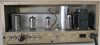
Some early Hi-Fi equipment incorporated variable PHONO resistance loading. Below is an example of a Pilot PA-912 with variable loading from 100k ohms to 6k ohms.

Pilot PA-912 back nude.JPG
 
The reason I asked about loading is because I purchased a new to me Ortofon F15E with a new Jico and it seems a bit bright and shrill on the high end and wasn't sure if it was related to loading.
It's possibly due to the cartridge being brand new. Maybe a break-in period will improve the performance.

With older designs using discrete transistor circuits it wasn't so easy to change gain and load impedance settings as it is with modern op-amp designs. In the old days it wasn't really considered of much benefit to change gain/load (or so it seems) but there's a modern fashion for making both gain and load adjustable, and since it's easy to do with op-amps you'll find it's a feature which quite few phonostages offer.
 
Thank you all for the replies! The reason I asked about loading is because I purchased a new to me Ortofon F15E with a new Jico and it seems a bit bright and shrill on the high end and wasn't sure if it was related to loading. I'll do some digging and more research on the subject.
The F15E has a crisp top-end but is certainly not shrill. It is quite beefy in the bass department too. The overall sound balance is fairly neutral. The recommended load capacitance for this cartridge is 400pF. I use a 200pF phono-stage setting with it, so am probably achieving a total load of nearly 400pF. I wouldn't be surprised if your Hitachi's phono-stage has a capacitance of around 200pF, as this or 220pF seem popular values.

The Jico stylus should be decent. Which tracking force are you using? The recommended range for the original stylus is 1.0-2.0g, but aftermarket styli often need a bit more than the originals, so I would set it in the top half of the range - at least 1.75g.
 
The F15E has a crisp top-end but is certainly not shrill. It is quite beefy in the bass department too. The overall sound balance is fairly neutral. The recommended load capacitance for this cartridge is 400pF. I use a 200pF phono-stage setting with it, so am probably achieving a total load of nearly 400pF. I wouldn't be surprised if your Hitachi's phono-stage has a capacitance of around 200pF, as this or 220pF seem popular values.

The Jico stylus should be decent. Which tracking force are you using? The recommended range for the original stylus is 1.0-2.0g, but aftermarket styli often need a bit more than the originals, so I would set it in the top half of the range - at least 1.75g.

I should have mentioned it but the stylus is a Jico D20ES from an Ortofon M20 so the recommended tracking is around .75g-1.5g if I remember correctly. Im currently running it at 1g, I tried 1.25 and 1.5 but the suspension looked a bit loaded down. It still may have not broken in yet, as I probably don't even have 20hrs on the stylus yet. It may have just been the record I was listening to as well. The detail of this cartridges blows away the VMS 5E MKII I have though.
 
Thank you all for the replies! The reason I asked about loading is because I purchased a new to me Ortofon F15E with a new Jico and it seems a bit bright and shrill on the high end and wasn't sure if it was related to loading. I'll do some digging and more research on the subject.

I recall the F15E family of Ortofon, like the VMS family , likes about 400 to 500pf of total capacitance. Increase your current capacitance to this range and that should smooth out the high end.
 
I should have mentioned it but the stylus is a Jico D20ES from an Ortofon M20 so the recommended tracking is around .75g-1.5g if I remember correctly. Im currently running it at 1g, I tried 1.25 and 1.5 but the suspension looked a bit loaded down. It still may have not broken in yet, as I probably don't even have 20hrs on the stylus yet. It may have just been the record I was listening to as well. The detail of this cartridges blows away the VMS 5E MKII I have though.

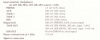
I might have figured it out, the specs list the phono sensitivity as 2.5mv and 47k ohms, the cartridge outputs 5mv so that might be the issue.Screen Shot 2019-09-02 at 12.41.58 PM.png .
 
I should have mentioned it but the stylus is a Jico D20ES from an Ortofon M20 so the recommended tracking is around .75g-1.5g if I remember correctly. Im currently running it at 1g, I tried 1.25 and 1.5 but the suspension looked a bit loaded down. It still may have not broken in yet, as I probably don't even have 20hrs on the stylus yet. It may have just been the record I was listening to as well. The detail of this cartridges blows away the VMS 5E MKII I have though.
I'm surprised that you managed to use the D20ES for the M20E in an F15E body, as the plug shapes at the back are different. If it was the D20E for the VMS20E, it would fit though.
 
I might have figured it out, the specs list the phono sensitivity as 2.5mv and 47k ohms, the cartridge outputs 5mv so that might be the issue.
Probably not, because phonostages should have about 20dB headroom and many have a lot more. The difference between 2.5mV and 5mV is only 6dB and that shouldn't eat up all the headroom.
 
Is there a way to measure the current load capacitance with a multimeter?

Best way is to simply look at the phono input load specs ... 47k ohm and xxpf.

If you have a capacitance meter that measures that low of a capacitance value then you can just turn off the amp and measure at the phono input, one lead in the rca center conductor, the other on the rca shield.

Also measure at the turntable rca connectors. That will give you the cable and tone arm wire capacitance. Add the two values. That is your total. If no meter than estimate the cables to be in the 150 to 200 pf range.

You can get RCA spillers and make capacitance plug to increase the value further. For example, if 5he amp inpu is 200 pf and the cables are 150 pf you have 350 pf total. If you want 450 pf (some vintage Shure, Ortofon, Empires do prefer it) then add a 100 pf plug using the splitter
 
Back
Top Bottom