• The move to the new server is done. There are some software and database maintenance updates in process. This has us passing the hat around to help out. We appreciate any donations. Seriously, even a dollar helps. The payment page may be found here - https://www.audiokarma.org/support.html

How much vibration is too much?

SPL= Sound Pressure Levels
From what I read form your post you don't have a problem, just because you feel vibration on things in the room doesn't hurt anything. Now if your turntable phono cartridge is picking up the SPL it will loop into the system and you will be forced to turn it down. I can turn my system up so loud without any subs and have it knock things over across the room and be using the turntable to play the music doing it, that's isolation.
I made these clips all in one day stretching out the systems 2000 watts


In this vid I stopped it because I felt / heard something fall over.


Here I re-started the recording showing the **** that fell to the floor.

Now that's extreem! My gear does not even hold a candle to what you have going on.

Anyhow, do you isolate your amps, preamps etc? Or just your turntable ?
 
Last edited:
I like this idea.

How do you implement the sorbothane hemispheres?

Do you stick the flat side against the bottom of the gear or the flat side against the table top?

Flat side against the shelf, in this case. They have glue that you can expose by removing paper covers; I left the covers on so they don't stick to the shelf.
 
Now that's extreem! My gear does not even told a candle to what you have going on.

Anyhow, do you isolate your amps, preamps etc? Or just your turntable ?
The turntable has awesome factory designed isolation.


In this vid you will see 300 watt VAC Tube mono blocks that are suspended for isolation.

 
Last edited:
Flat side against the shelf, in this case. They have glue that you can expose by removing paper covers; I left the covers on so they don't stick to the shelf.
If the flat side is against the shelf, how do you position them? The gear I would use them with has rubber feet and I assume yours does too. So, do you remove the rubber feet? Do you use wood between the sorbothane hemispheres and the rubber feet then put the sorbothane hemispheres between the wood and the shelf?
 
Mine didn't have rubber feet. You could remove any feet, or leave them on but 'bypass' them by putting the hemispheres next to them, or incorporate the feet as the original supports, or add another layer in between. My instinct would be to bypass existing feet.
 
Personally I haven't worried about that (except for turntables of course) but? Nothing better than an engineering project to improve what you appreciate....kudos to ya!
 
Just ordered up some sorbothane PADS.....the weight of the gear is at the max weight limit of the hemispheres hence the decision to go with pads.

I will report back with the results.

The pads are only 1/2in thick. The feet of the gear is taller than that so I will likely have to dump the factory feet or set the feet on the pads. The small surface area of the feet concentrated on the pads does not seem ideal. I would rather the full surface area of the pads make contact with the gear. Seems preferable. Either that or come up with a washer of sorts to go between the pads and feet to evenly distribute the load across the pads.
 
Last edited:
A lot of subwoofer and modern high end speakers have amplifier in the woofer/speaker's cabinet.

I don't think there's a place with more vibrations in your house, except in your laundry room.
 
Last edited:
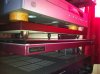
Sorbothane pads are in the house and I fabricated some washers to distribute the load evenly across the pads.
 

Attachments

  • 1506389982937-1462548377.jpg
    1506389982937-1462548377.jpg
    38.7 KB · Views: 6
And......I am actually quite happy with the results.

The vibration that the table was transfering to the receiver is gone. As of now, the chassis no longer has any resonance or vibration to it, however the thin sheetmetal top still picks up sound in the air and I am ok with that.

The chassis, pc boards etc. are no longer vibrating with the table and I can now jam without worry.

Well worth the $23 plus fabrication of the load spreading spacers.
 
To be clear, one hand on the table and the other on the bottom of the receiver....lots of vibration on the table and none on the bottom of the receiver. The sheetmetal vent at the top of the receiver has some resonance to it. That is airborne sound waves that I will live with.
 
Back
Top Bottom