• The move to the new server is done. There are some software and database maintenance updates in process. This has us passing the hat around to help out. We appreciate any donations. Seriously, even a dollar helps. The payment page may be found here - https://www.audiokarma.org/support.html

How to update a vintage amp?

thought91

Active Member
Vague question, I know. Are there any threads out there indicating how to determine what to replace, what to replace it with, and how to replace it? I'm completely new to circuitry stuff, so approach as if I know nothing, which is pretty accurate. I'm trying to update a Nikko Alpha 1 and Beta 1 power & pre amp, but have no idea where to start. I want to get the most out of these components as is possible, so price is no object. I'm interested to learn how to do this stuff myself, but if anyone is willing to help me on this specific endeavor, I'd be happy to pop the amps open for some pics.
 
Register to hide this ad
Vague question, I know. Are there any threads out there indicating how to determine what to replace, what to replace it with, and how to replace it? I'm completely new to circuitry stuff, so approach as if I know nothing, which is pretty accurate. I'm trying to update a Nikko Alpha 1 and Beta 1 power & pre amp, but have no idea where to start. I want to get the most out of these components as is possible, so price is no object. I'm interested to learn how to do this stuff myself, but if anyone is willing to help me on this specific endeavor, I'd be happy to pop the amps open for some pics.
If cost is no object then high quality film caps are in order. Maybe even bypassing the power supply caps with film caps. First you need the schematics to study. Of course making sure to set bias and dc offset if required. Reseat power transistors for better heat transfer. You go crazy too, like silver wire, ha ha.
 
One easy mod that sometimes pays off handsomely is to replace the feedback divider resistors with good metal film units. I could identify reference numbers in the power amp if pointed to a legible schematic.
 
One easy mod that sometimes pays off handsomely is to replace the feedback divider resistors with good metal film units. I could identify reference numbers in the power amp if pointed to a legible schematic.
Schematics for both units would cost me over $50..worth it? A friend of mine said the original components are likely labelled
 
I'd thought that maybe Nikko could provide me with a schematic, but I don't know if they're still in business..
 
If cost is no object then high quality film caps are in order. Maybe even bypassing the power supply caps with film caps. First you need the schematics to study. Of course making sure to set bias and dc offset if required. Reseat power transistors for better heat transfer. You go crazy too, like silver wire, ha ha.
I'll let a friend of mine make sense of all this haha, thanks for the advice
 
My friend has advised that I buy all my caps from the same company, to stay consistent with the tone they'll produce
 
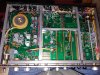
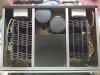
I popped open the Nikko, it's really quite cool. I think it's dual mono. Will post pics whenever I get to my laptop
 
Check with stereomanuals.com for copies of the relevant service manuals - they list both, with very good quality, for ca. $20 total (+p&p).
I can highly recommened them re. quality & service, and the manuals are your key reference documents, so worth having at that quality & price - I'm just a satisfied customer, no other connection.
 
Check with stereomanuals.com for copies of the relevant service manuals - they list both, with very good quality, for ca. $20 total (+p&p).
I can highly recommened them re. quality & service, and the manuals are your key reference documents, so worth having at that quality & price - I'm just a satisfied customer, no other connection.
Interesting, I'll take a look! IvI' been told that I could just look at the values of the components, that it's either stated outright or indicated by color, negating my need for a schematic.
 
Interesting, I'll take a look! IvI' been told that I could just look at the values of the components, that it's either stated outright or indicated by color, negating my need for a schematic.

If they're Nikko units which you intend to keep, then personally I wouldn't think twice about ordering a set of manuals, for future reference if nothing else.

While it's true that the majority (if not all) components will be marked or coded with their values, after 40+ years you'll find that many parts are now obsolete - it's a lot simpler to find suitable alternatives if you have the schematics, and can 'see' the location & function of any given part in the various circuits. Any adjustments, e.g., for DC-offset, or bias setting, should also be included in the service manuals and/or associated schematics - the bias settings especially are important.

If you have to do any troubleshooting or fault-finding (which should be done before any 'updates'), and you need advice from other forum members, then being able to post the relevant parts of the schematics on the forum will prove essential, e.g., BinaryMike's comment above.
 
since you intend to have this for a long time. do your homework, listen to the best, and
be careful about following flipper moves that can and will destroy things.

1. compare the service manual schematics, to the parts lists, the PCB stencilling,
and above all, the working active/passive components on the board. do not assume
the schematics, the stenciling, the parts lists are complete, or accurate.
2. do your own parts lists. others' mistakes can be yours. then with the list
you can upgrade specs, combine qtys for bigger discount (and to be able to measure
to get tighter tolerances), and to upgrade (research the pecking order and move
up the "food" chain for better sonic results) to better caps.
3. do not begin your journey (soldering, upgrades, etc) on these units, buy crap
unit off ebay/CL/etc and start learning on them. learn reflowing joints, pulling
components, cleaning lands, prepping for soldering, use of flux, cleaners, etc
and if you really care, learn to read schematics, troubleshoot, re-engineer but
this is a long pole effort...
4. always, always: in replacing a part, pull old, measure old, compare to verified
parts list, PCB layout, and schematic. then measure replacement, solder in,
mark on all documents the change made. fail to do this and with 200 caps, resistors
changed, all it takes is ONE to screw things up and if you skipped the step about
reading the schematics you may never find the problem and may have to pay $100+/hour
to have somone one else do so. troubleshooting is a whole new universe.
5. DBT
6. caps from one vendor? there are galactic battles over caps. Black Gates, Silmic II
silk caps, Russian teflons, Green Nichicon MUSE ES non-polars, small value c0g,
silver micas, polypropylenes in the PS,... not possible for the ultimate sonics no
matter how narrowly or broadly accepted/argued/defined/etc. that's just caps
how about thin/thick film resistors, 0.1% ones, allen-bradleys from 50 years ago,
special Japanese black cylindricals, takmans, Vishay-dales, etc.

the good news is that you will be refreshing 40+ YO gear, which is good on a
number of levels: it will last longer, you avoid the periodic teardown to find
yet another 40 YO failure, and the sonics will be great.

then every so often in the next 50 years, if anything happens, you can go in and
fix things. (I have this hafler preamp bought about 40 years ago, in great
operational conditions with great sonics that I've upgraded/fixed twice). and if
there's some breakthrough you can go in and upgrade.

not to mention bragging rights, street creds, and if you document this and want to
sell, you will get about double what the flippers get with their banged up, dead units.

and if you post here, you help others with your work, and with what you learned,
you go onto bigger and better things as you enjoy the music.

 
I didn't know what to make of this
since you intend to have this for a long time. do your homework, listen to the best, and
be careful about following flipper moves that can and will destroy things.

1. compare the service manual schematics, to the parts lists, the PCB stencilling,
and above all, the working active/passive components on the board. do not assume
the schematics, the stenciling, the parts lists are complete, or accurate.
2. do your own parts lists. others' mistakes can be yours. then with the list
you can upgrade specs, combine qtys for bigger discount (and to be able to measure
to get tighter tolerances), and to upgrade (research the pecking order and move
up the "food" chain for better sonic results) to better caps.
3. do not begin your journey (soldering, upgrades, etc) on these units, buy crap
unit off ebay/CL/etc and start learning on them. learn reflowing joints, pulling
components, cleaning lands, prepping for soldering, use of flux, cleaners, etc
and if you really care, learn to read schematics, troubleshoot, re-engineer but
this is a long pole effort...
4. always, always: in replacing a part, pull old, measure old, compare to verified
parts list, PCB layout, and schematic. then measure replacement, solder in,
mark on all documents the change made. fail to do this and with 200 caps, resistors
changed, all it takes is ONE to screw things up and if you skipped the step about
reading the schematics you may never find the problem and may have to pay $100+/hour
to have somone one else do so. troubleshooting is a whole new universe.
5. DBT
6. caps from one vendor? there are galactic battles over caps. Black Gates, Silmic II
silk caps, Russian teflons, Green Nichicon MUSE ES non-polars, small value c0g,
silver micas, polypropylenes in the PS,... not possible for the ultimate sonics no
matter how narrowly or broadly accepted/argued/defined/etc. that's just caps
how about thin/thick film resistors, 0.1% ones, allen-bradleys from 50 years ago,
special Japanese black cylindricals, takmans, Vishay-dales, etc.

the good news is that you will be refreshing 40+ YO gear, which is good on a
number of levels: it will last longer, you avoid the periodic teardown to find
yet another 40 YO failure, and the sonics will be great.

then every so often in the next 50 years, if anything happens, you can go in and
fix things. (I have this hafler preamp bought about 40 years ago, in great
operational conditions with great sonics that I've upgraded/fixed twice). and if
there's some breakthrough you can go in and upgrade.

not to mention bragging rights, street creds, and if you document this and want to
sell, you will get about double what the flippers get with their banged up, dead units.

and if you post here, you help others with your work, and with what you learned,
you go onto bigger and better things as you enjoy the music.
Wow, thanks for all of that. I have an old Technics SA 400 that needs to be fixed, so I'll start with that. It looks like I need to do some research.
If they're Nikko units which you intend to keep, then personally I wouldn't think twice about ordering a set of manuals, for future reference if nothing else.

While it's true that the majority (if not all) components will be marked or coded with their values, after 40+ years you'll find that many parts are now obsolete - it's a lot simpler to find suitable alternatives if you have the schematics, and can 'see' the location & function of any given part in the various circuits. Any adjustments, e.g., for DC-offset, or bias setting, should also be included in the service manuals and/or associated schematics - the bias settings especially are important.

If you have to do any troubleshooting or fault-finding (which should be done before any 'updates'), and you need advice from other forum members, then being able to post the relevant parts of the schematics on the forum will prove essential, e.g., BinaryMike's comment above.
Alright, thanks! I'll take a look at stereomanuals.


Like I said, I think the Alpha is dual mono. There seems to be two of everything as far as I can see.
 

Attachments

  • 20180414_231624.jpg
    20180414_231624.jpg
    153.5 KB · Views: 49
  • 20180414_224358.jpg
    20180414_224358.jpg
    80.5 KB · Views: 44
fter 40+ years you'll find that many parts are now obsolete - it's a lot simpler to find suitable alternatives if you have the schematic
What exactly do you mean by obsolete? Do you mean to say that there are new parts that do something different than the old ones, that wpuld work in the old parts' place? Or just that there are new parts that do the same thing as the otiginal, but better? Or something completely different?
 
What exactly do you mean by obsolete? Do you mean to say that there are new parts that do something different than the old ones, that wpuld work in the old parts' place? Or just that there are new parts that do the same thing as the otiginal, but better? Or something completely different?
It means that electronic part production starts, and ends.

Resistors and capacitors are generally not a problem - you just need to buy new types of the values that you have in your amp.

However semiconductors are different - transistors, diodes and IC's are made over a period of years then this production is stopped, the part is replaced by new parts.

So you probably wont be able to find replacement transistors (ie) with the same number as those in your amp. Unless these are faulty or have gone noisy, this generally isnt a problem. But if you need to replace these - the originals will be obsolete, and you will need to find modern equivalents to replace them with. It gets more complicated than that, but thats the general gist. You may also find "genuine" old parts on ebay (unused) but generally these will be fake, especially if they are from China.

In terms of your question - electrolytic caps are what you want to replace as they dry out when they age. Critical trimmers should also be replaced to prevent anything going wrong.
 
Last edited:
It means that electronic part production starts, and ends.

Resistors and capacitors are generally not a problem - you just need to buy new types of the values that you have in your amp.

However semiconductors are different - transistors, diodes and IC's are made over a period of years then this production is stopped, the part is replaced by new parts.

So you probably wont be able to find replacement transistors (ie) with the same number as those in your amp. Unless these are faulty or have gone noisy, this generally isnt a problem. But if you need to replace these - the originals will be obsolete, and you will need to find modern equivalents to replace them with. It gets more complicated than that, but thats the general gist. You may also find "genuine" old parts on ebay (unused) but generally these will be fake, especially if they are from China.

In terms of your question - electrolytic caps are what you want to replace as they dry out whine they age. Critical trimmers should also be replaced to prevent anything going wrong.
Okay, thank you.
 
Back
Top Bottom