• The move to the new server is done. There are some software and database maintenance updates in process. This has us passing the hat around to help out. We appreciate any donations. Seriously, even a dollar helps. The payment page may be found here - https://www.audiokarma.org/support.html

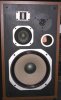
HPM-60's compaired to HPM-100's

Pic's

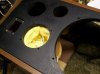
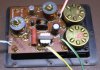
Well here's a couple pics and I stand corrected the midrange does have it's own sealed compartment, GOOD!

The more I listen to these the more I am becoming aware of there shortcomings.

I think Charivari thought the tweeter needed to go, I may be in his camp! But if all that needed to be done was replace
the tweeter, lower the woofer xover point and maybe retune the port plus some better damping that would not be to bad. IMHO
"That is while trying to stay with the original cabinet"
I have a pair of the dayton domes new in boxes that are used in many diy projects that may work.

I see at least one place in the xover that could help the graininess in the mid and tweet is those electrolytics need to go.
 

Attachments

  • mid_900.JPG
    mid_900.JPG
    75.5 KB · Views: 68
  • xover_900.JPG
    xover_900.JPG
    92.5 KB · Views: 204
Last edited:
Kegger said:
Wait a minute now you got me lost!
The 10" would beam at a lower freqency then the 12"?

No, I was joking, a la the Car Talk Puzzler. "If a hen and a half can lay an egg and a half in a day and a half..." Sorry, didn't mean to lead you astray.

Which is not to say that a real-world 10" with a really rigid cone couldn't beam sooner than a 12" with purpose-designed ribbing (kind of a Michelin Man effect) designed to decouple the outer parts of the cone progressively as the frequency rose, thus reducing the effective diameter. Which is to say that you can't take these numbers too seriously. They're abstract. You'll be working on a real-world speaker.

So as you progress, listen carefully, move around while you listen, move the speakers around, try disconnecting various drivers to see what they do...
Play with them. Don't be afraid to get fed up with certain aspects of their performance. Feel the cynicism of the marketing department. Drink in the decadence of the '70s. Make the speaker confess its sins.
 
OK cool, Yes I know not to take #'s as absolutes but you did throw me for a loop there. LOL!

But I am kinda curious just as # if the 12" was 666hz what area would the same driver in a 10" be at?
 
All other things remaining equal, say 800 Hz, just to pick a very rough figure. Not a bad crossover point, easily doable. The problem is, will the existing midrange come down to meet it?

Obviously I'm having trouble controlling my logorrhea on this subject, so now, as promised, a short bibliography of speaker books. Fascinating reading if you love speakers and want to know how we think they do what they do.

Colloms, Martin: High Performance Loudspeakers. Halsted Press/Wiley. I still like the first edition from 1978. Covers all the basics, shows how the numbers work, summarizes a helluva lotta work worldwide. A must-have. He's up to the 6th edition now, but I found the later editions were lurching slightly toward the magical-thinking ward. Maybe that's just me.

Davis & Jones: Sound Reinforcement Handbook. Yamaha/Hal Leonard Publishing. Second Edition, 1988. Written for people who have to make this stuff work or they don't eat. Keepin' it real. How to be a Sound Guy: everything from room acoustics to outdoor acoustics and mics and mixers and of course stalking the elusive wooger.

Weems, David: Designing, Building, and Testing Your Own Speaker System. McGraw-Hill, 4th edition, 1996. Basic do-it-yourself that takes you from "What's a loudspeaker?" to cabinetry to driver selection to testing, all on a nice simple beginner's level.

A wonderful series of [sometimes crazy, sometimes blindingly clear] articles on loudspeaker design from the '50s to 1991 is published by the Audio Engineering Society , collected from its journal, referred to as the JAES, in several paperback anthologies. I think they're up to volume 4. Indispensible if you want to see what the big boys are doing. Public libraries probably won't have these; check local universities and/or tech schools.
FUTURE EDIT: Gotta mention Floyd Toole's Sound Reproduction. Thorough; mythless; more info than you'll probably ever want about speaker measurement and performance.
 
Last edited:
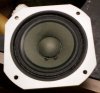
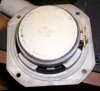
Well as you might expect no way of getting specs for this driver but I suspect for my
lower powered application, say 35 watts or less max for the whole speaker and how
heavy duty this driver looks "yah I know looks are nothing but it seems fairly beefy"
I believe 800hz is doable and very suitable for this application. Just might work!
 

Attachments

  • middrvr_frt_700.JPG
    middrvr_frt_700.JPG
    58.9 KB · Views: 40
  • middrvr_700.JPG
    middrvr_700.JPG
    60.6 KB · Views: 39
Last edited:
It also looks like the cabinet/port is tuned to about 35hz.

The port is 2.5" ID and 5" long with a volume of roughly 1.58 cubit feet.
 
You could test the midrange driver by putting a signal generator on it, or you could try it out at low level in another speaker with a crossover point of 800 Hz, eg, one of the big ESS/Heil amt series. Careful, though. You don't want to blow this thing or HPM lovers everywhere will hate you. The Weems book(s) citation I added to my previous post has a good section on testing drivers of unknown spec.

But maybe a fellow AKer knows these Pioneer drivers like the back of his hand and will speak up..?
 
Yah just went back and looked at what you posted, looks like some good reading.
Could allways use some extra knowledge. Got a lot more to learn.

I have a few speaker books around here plus have read many a online discussion
and have been tinkering with speakers for most of my life then as of about 5 years
ago started getting a little more serious about speaker/xover design.

I love speakers and can't get enough of them. I'm a tech by trade both pc and electronic.
I have quite a few pairs of speakers and many different drivers of various sorts around
here and a lot of capacitors as when I find good deals on things I just buy a bunch. I spent
a long time listening to caps on one speaker in mono to see for myself what the differences
are instead of having to rely on someone elses oppinion.

I have a few DIY speakers I've done here also, my advent heritages are still only about 45%
done after a major cabinet rebuilding to where they don't even look like the same speaker,
braced up the wazoo and now 1.5" thick all the way around with real wood exterior, they
look very nice. (at least I think so)

So anyways I understand most of what you talk about and love hearing/reading it.

Just got the service manual for the HPM series and there's some decent info in there.
Thanks Charivari! And Kenkat!
 
Last edited:
Aha, since you're a tech you'll probably get a real kick out of reading Neville Thiele's and Richard Small's original papers wherein they show that it's possible to model the most important funny mechanical oddities of drivers and boxes and slugs of air (inside the duct) as electronic components to which standard filter theory can be applied.

Even if you're not a tech, read them anyway. They show the power of being able to manipulate mechanical systems with electronic concepts. Your car being a good example of the results of this kind of thinking.
 
The tweaking has begun!

TO WHOM IT MAY CONCERN! Or care to listen to me for that matter.

Let me start this off by saying my wanting to mod this speaker is my own personal preference and
not really a knock on the HPM speaker, I just want to try and better it after now listening to one.

Well I could listen no more without doing something to it, as what bothers me is the hazey mids and
the raspy treble with no real definition along with the boomy bass. That is "MY" description of the spkr.
Doesn't sound like I liked em to much does it? Actually I did I'm just being very critical of the pair.

After opening the speaker and seeing the damping "agree with what Charivari had to say" was only used
on the bottom half of the speaker but yet on both sides. I damped the top half to finish what should have
been done from the factory with the standard yellow speaker dampening materiel along the back and top.
Then added a second layer of pink fiberglass to the entire back. Then put in a piece of the accoustic egg
crate type foam on the bottom and lightly stuffed the top half with folded sheets of 1/4" think 1ft squares
of black foam like the ones computer motherboards come with. The yellow speaker dampening material
and the fiberglass are about 1 1/4" thick each to where now the back of the speaker has about 3" of pad.

This got rid of the boominess and the hazey mids to a degree, WHOO HOO! Getting somewhere. Now
onto the treble "again I believe Charivari alluted to this" and more specifically the tweeter just had to
go. In went the dayton silk dome, Just drilled 3 holes to bolt it in and it covers the originals so no air
leaks or odd looks. Then all drivers got the speaker putty stuff on the mounting, the kind you get with
new drivers to seal them and refrain from any vibrations. (The speaker can be put back to original with no ill affects)

That cleaned up most of the hazey midrange and got rid of the raspey treble to boot! The speaker
also now has detail and definition in the mids/highs but is also much smoother! YEEAAHH!!

This speaker is now a pleasure to listen to that could go lower and image better if a new cabinet were
constructed that is larger and arrange the upper drivers better on maybe a smaller baffle up top. But at
what it took to get this, "practicaly nothing" a great improvement I must say. The mid and treble controls
are currently set slightly to the plus side. The bass is a little tighter,goes a little lower and more of it.

At this point power handling should be the same, the impeadence similar and the effiency should not
have been sacrificed "except down some in the mids and highs" to where it still does not take a lot to
drive them, as at the moment the 300B is still driving them but solid state will be tested.

-------------------------------

The original xover has the woofer with a single .6mh coil, the mid with a single 6uf cap "no bandpass"
then the tweeter has a 3uf cap in series and a 2mh coil paralelled, both the tweeter and super tweeter
are 2nd order while the woofer and mid are first.

Well by looking at that you see the mid and tweet produce together from 3k on up and I Know that the
dayton using those xover parts will yeild about a 4500hz xover point for it, which I think is good both in
sounding and on paper as that should bring the mid/tweet level down some and since the dayton is an
89db driver the overall treble should drop just a touch. (which is how it sounds to me)

Now the next thing is replacing all the electrolytics and dropping the woof/mid xover to somewhere in
the neighborhood of 800hz, which just a guess at this point would be to use roughly a 1.6mh coil on the
woofer and somewhere around a 20uf cap on the mid.

But I believe quite a few including myself could/would be very happy with how the speaker performs right
now. And it would cost a measly $30 (pair of tweeters) http://www.partsexpress.com/pe/showdetl.cfm?&DID=7&Partnumber=275-070
And whatever you can find for some extra stuffing plus a couple hours work.

I'm going to listen some more like this until I mod the xover. Any thoughts?
Here's a pic of the tweeter in the cabinet just to see how it looks/fits.

 

Attachments

  • New_tweet_900.JPG
    New_tweet_900.JPG
    79.5 KB · Views: 111
Last edited:
Kegger, I look forward to reading your thoughts on these mods after you've had some more time to critically listen to them. Were I not space limited and thus keep my HPM-100s, I'd seriously consider following your example here. At any rate, the tweeter mod alone could be found useful for those with bad tweeters in their HPMs.

Keep up the good work. :thmbsp:
- JP
 
Will do, so far I am still very satisfied with the sound of these now. Could listen all day.

Interesting though the hazey midrange is still slightly there until the whole system is
on for about 4 hours then it basically disappears and the bass fills in. No other spkrs
I've had on my systems change as much as the sound on these from cold to warm.

Don't know if it's the caps in the speakers or how they react to the amp after warmup
or whatever else it may be at this point, but after warmup they sound very very good!
They will go back on solid state power pretty soon and I'll see how they react there.
 
Lookin' good, Kegger. Is the port open, closed or covered by a fiberglass batt?
 
It's open you can just see the fiberglass along the back wall through the port.

There does seem to be a little lower midrange hollowness "very slight" which I think is the combo
of the woofer producing some and not doing a great job of it but also because it does produce the
lower mid that the lower mid backwave is coming through the port and your hearing it.

For an experiment "just to see what it does" I have laid a sock in the port of each speaker "just laying
along the bottom side of the port from front to back" to see if it might try and catch some of those lower
mid back waves and minimize them, I believe it does. So in theory lowering the xover point should take
care of that if that is what I'm hearing. (but that's being pretty picky at this point)
 
I have read this thread with great interest. thanks for the unbelieveable thoughts, comments, interesting notes on your modifications and so fourth. Since this thread was started as a comparison of HPM 60's to HPM 100's, does anyone have any thoughts on the HPM 40, seeing that it lacks the midrange speaker of the 60's and 100's? I have all 3 and like it's sound but almost always run it in conjuction with either 100's 60's or all at the same time....Thanks guys....
Jim

PS: I did some modifications on some newer not so great Yamaha speakers with good results...here's the thread if interested...

http://audiokarma.org/forums/showthread.php?p=504161#post504161
 
Last edited:
40

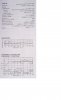
Wel let's see if this works, the sheet for the 40.

Allright it's there, anyway well the frequency response looks flatter on the 40
and the impeadence curve is still pretty good but the xover being at 2500 will
still have the same beaming issues as the others and the same lower midrange
sound as the 60 because it uses the same woofer which is still producing lower
mid upto 2500, at least I think it would sound similar but I have not heard a 40.
 

Attachments

  • 40_jpg.JPG
    40_jpg.JPG
    35.7 KB · Views: 44
Last edited:
See the problem you "generally" have with a 2-way and a larger woofer is that most
tweeters can't be crossed any lower then about 2k so you get the woofer trying to
produce the frequencies upto the xover point which rarely does any good on a woofer
larger then 6.5". That is why a 3-way is used with woofers 8" or larger a lot of times
so that the xover points can be more conducive to the drivers strengths but as we
see with the HPM's they didn't take advantage of that on the 60 and 100.
 
I had a pair of HPM-40 Series IIs that I ran in conjunction with my HPM-100s for a while in my bedroom system; they're now in the possession of AK member Frogtoes. They aren't too bad of speakers and I feel that they're better balanced than their larger brethren. Sure, they're still a bit top heavy, but not to nearly the same degree as the larger HPMs, so the level controls on the speakers actually does a good job of taming this.

A few months back, a friend and I put the 40s through their paces and auditioned them against some like sized speakers (Boston Acoustics A-70s, Dynaco A-25s, and Bose 301 Series II [yes, seriously]) to find the best sounding speaker to give in a system to a mutual friend. The Dynacos won, but I kept those, with the BA A-70s a close second and the 40s a distant third. Compared to these other speaks, the HPM-40s sounded too thin and there were issues with the midrange, as Kegger noted. I would almost call then tinny sounding with vocals, perhaps due to the woofer being crossed too high, and the tweeter (the same as those in the HPM-60s/100s) was still abrasive.

Though not as detailed or dynamically gifted as the '100s, I'd say the '40s were the better sounding speaker aside from the thin sound and could sound good with a subwoofer to take care of the low end.

Interestingly, I compared these against a pair of HPM-40 Series Is that the previous owner had put Radio Shack drivers in place of the woofers when the foam rotted. Though the woofer was much cheaper and had serious issues towards the upper end, the sound was richer and more enjoyable, though a bit bloated in the midbass region.

- JP
 
Charivari and Kegger...A most intersting thread...thanks for the comments. For my 47 year old ears that have been overabused by too many concerts, loud car and home stereos, I love the sound of my HPM series speakers. Whatever the graphs and curves, roll offs mean. Everyone I know agrees with me. (their ears are probably shot as well!) My current stack of 2 HPM40's, 4 HPM60's, and 2 HPM100's sounds great too me.

Follow this for a pic...Thanks guys! Jim

http://audiokarma.org/forums/showthread.php?p=528193#post528193
 
Back
Top Bottom