• The move to the new server is done. There are some software and database maintenance updates in process. This has us passing the hat around to help out. We appreciate any donations. Seriously, even a dollar helps. The payment page may be found here - https://www.audiokarma.org/support.html

If You Have a Pilot Model 602 (no suffix) Receiver

(Originally posted in the wrong forum, trying again here.)

Assistance Needed from Owners of a Pilot Model 602 (no suffix) Receiver

If you have a Pilot Model 602 ---- not the Model 602S, 602M, 602SA, 602MA or 602MA/1, but the 602 (no suffix) as printed at the top center of the faceplate ---- I could use some assistance.

There were three variations on the Model 602 (no suffix) having to do with slide-switch arrangements and functions they control. From all appearances, it seems that Pilot did not acknowledge the changes or differences in the 602 (no suffix); it just put them out. However, a long time ago, one individual on this site noted (almost in passing) that he has Model 602a (notice the small “a”). If so, this was/is not a formal model number (such as 602S or 602MA), but a variation designation on the 602 (for lack of a better term).

Either on the rear chassis or bottom plate, Pilot often printed the company name, location, and model number of the item. If you have a Model 602 (no suffix), would you please look at the rear chassis and bottom plate for a printed model designation, possibly even a schematic. Would you let me know the model designation --- 602, 602a, 602b, or whatever --- and how many slide switches on the front panel.

REMEMBER: we are speaking only of the Model 602, not the 602S, 602M, 602SA, 602MA or 602MA/1. The top of the faceplate will state “Pilot 602” (and nothing more).

Thank you,

Howard
 
Register to hide this ad
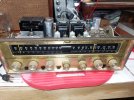
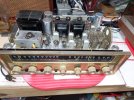
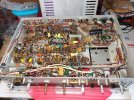
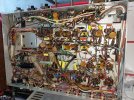
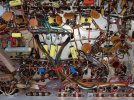
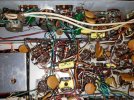
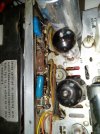
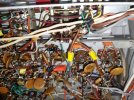
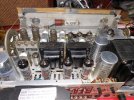
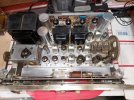
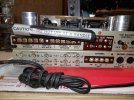
I have a pilot 602 (no sufiix), front faceplate just states ' Pilot 602', the sn#268690, power supply metal stamped '55-76B' '606029' would indicate 29th week 1960 production, Output Transformers (opts) both date Matched 30th week 1960, they are vertically inked ' 56-61B' '352 030' both with white ink. There are 4 a/b horizontal switches on the front panel. I just had this unit total restored, changed out all pio & wax caps about 30 caps to polypropylene and polyester(mylar) mpk, sprague & cde caps upgraded the 0.1uF from 400v 20% to 630v 10% same with the .47uF. Change a few resistors out of tolerance. Pilot used high quality parts, the original resistors are Allen-Bradleys (mil-spec) .amazingly 65years later many still within spec. Will post some pics. This unit was a pull from a pilot console so no metal cab.
 
(Originally posted in the wrong forum, trying again here.)

Assistance Needed from Owners of a Pilot Model 602 (no suffix) Receiver

If you have a Pilot Model 602 ---- not the Model 602S, 602M, 602SA, 602MA or 602MA/1, but the 602 (no suffix) as printed at the top center of the faceplate ---- I could use some assistance.

There were three variations on the Model 602 (no suffix) having to do with slide-switch arrangements and functions they control. From all appearances, it seems that Pilot did not acknowledge the changes or differences in the 602 (no suffix); it just put them out. However, a long time ago, one individual on this site noted (almost in passing) that he has Model 602a (notice the small “a”). If so, this was/is not a formal model number (such as 602S or 602MA), but a variation designation on the 602 (for lack of a better term).

Either on the rear chassis or bottom plate, Pilot often printed the company name, location, and model number of the item. If you have a Model 602 (no suffix), would you please look at the rear chassis and bottom plate for a printed model designation, possibly even a schematic. Would you let me know the model designation --- 602, 602a, 602b, or whatever --- and how many slide switches on the front panel.

REMEMBER: we are speaking only of the Model 602, not the 602S, 602M, 602SA, 602MA or 602MA/1. The top of the faceplate will state “Pilot 602” (and nothing more).

Thank you,

Howard
 

Attachments

  • 20250728_121846.jpg
    20250728_121846.jpg
    160.9 KB · Views: 9
  • 20250728_121851.jpg
    20250728_121851.jpg
    166.3 KB · Views: 9
  • 20250728_122122.jpg
    20250728_122122.jpg
    128.5 KB · Views: 7
  • 20250803_103409.jpg
    20250803_103409.jpg
    208.8 KB · Views: 9
Hello Jim ----

Thank you for your post and reply.

You and your technician did a beautiful restoration on your Pilot 602 receiver. And your unit is in incredibly great condition. Pulled from a console, so no one earlier mishandled the 602.

Yours is the second variation of the 602 (no suffix) ---- four slide switches on the faceplate.

With respect to the 602 (no suffix), the faceplate logo and model number will show Pilot 602. But Pilot usually or often placed the model number (black ink) on the rear chassis or bottom plate. And it is in one of these two locations (not the faceplate) that someone had once stated that he believed (but was not certain) he had a model 602a. If so, the variations on the Pilot 602 (no suffix) might have referenced 602a, 602b, etc. on the bottom plate. But I have a few Pilot 602 receivers, of official model numbers: 602, 602S, 602M, 602SA, 602MA, and have never observed a sub-variation (a, b, c, etc.) printed on the bottom plate or rear chassis.

Because your message did not note a sub-variation printed on the bottom plate, I assume such is not present. And I shall hold my long-standing view that Pilot did not print a sub-variation model on the bottom plate. That said, perhaps an original printing of the schematic diagram, which usually states the model number toward the lower right, is where someone observed the “602a” designation.

In any event, thanks again for your post. Enjoy your Pilot 602.

Howard
 
Last edited by a moderator:
Hello Howard,
thank you for your kind and detailed post on the different variations of the Pilot 602's. I downloaded and printed the Sam's Photofact Folder (set 525, Folder 11, dated 04/1961) for my tech in the recent rebuild.. However the pic on the Sam's front cover shows 3 front panel a/b switches (not 4)
The bottom plate black inked silk screening on my unit SN#26869 only states "Model 602" with no other suffix. As you have kindly stated my unit is "second variation of the 602 (no suffix) ---- four slide switches on the faceplate." Which I believe is the variation as the 4/61 dated Sam's SKU but not the front photo. This units PS and OPT's are the factory originals as ink stamped with manufacturing dates 29th&30week 1960 (start of 3Q 1960) so it is possible my unit was assembled into the Pilot console late 4Q 1960 and possible sold into the Holiday season 1960 or sold very early 1961. I also downloaded the 1960-61 and 1962 Pilot Maarketing catalogs from HFE.
Do you happen to have a User/Operations/Setup Guide for this version of the Pilot 602 you can share.? not sure if they made different versions of the Oper guides for either and or all of the 602 models or revised the docs for 3 switch to 4 switches. best jim
 
Hello Howard,
thank you for your kind and detailed post on the different variations of the Pilot 602's. I downloaded and printed the Sam's Photofact Folder (set 525, Folder 11, dated 04/1961) for my tech in the recent rebuild.. However the pic on the Sam's front cover shows 3 front panel a/b switches (not 4)
The bottom plate black inked silk screening on my unit SN#26869 only states "Model 602" with no other suffix. As you have kindly stated my unit is "second variation of the 602 (no suffix) ---- four slide switches on the faceplate." Which I believe is the variation as the 4/61 dated Sam's SKU but not the front photo. This units PS and OPT's are the factory originals as ink stamped with manufacturing dates 29th&30week 1960 (start of 3Q 1960) so it is possible my unit was assembled into the Pilot console late 4Q 1960 and possible sold into the Holiday season 1960 or sold very early 1961. I also downloaded the 1960-61 and 1962 Pilot Maarketing catalogs from HFE.
Do you happen to have a User/Operations/Setup Guide for this version of the Pilot 602 you can share.? not sure if they made different versions of the Oper guides for either and or all of the 602 models or revised the docs for 3 switch to 4 switches. best jim
 

Attachments

  • 20250802_153622.jpg
    20250802_153622.jpg
    134.7 KB · Views: 2
  • 20250803_103818.jpg
    20250803_103818.jpg
    217.3 KB · Views: 2
  • 20250803_103618.jpg
    20250803_103618.jpg
    209.6 KB · Views: 2
  • 20250803_103608.jpg
    20250803_103608.jpg
    203.7 KB · Views: 2
  • 20250803_103103.jpg
    20250803_103103.jpg
    132.4 KB · Views: 1
  • 20250803_103557.jpg
    20250803_103557.jpg
    173.4 KB · Views: 1
  • 20250803_103441.jpg
    20250803_103441.jpg
    211.7 KB · Views: 2
  • 20250728_122033.jpg
    20250728_122033.jpg
    154.6 KB · Views: 2
  • 20250728_121856.jpg
    20250728_121856.jpg
    161.9 KB · Views: 2
  • 20250728_122109.jpg
    20250728_122109.jpg
    120.2 KB · Views: 2
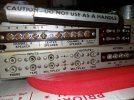
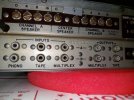
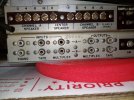
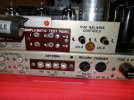
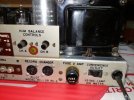
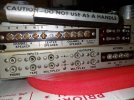
Back panel inputs and outputs, rc1 & rc2 inputs (rc=record changer rc1 is 4 din plug, rc2 is 5 pin din plugin) for crystal and ceramic carts stylus, A MM cart turntable is suported via the rca channel a&b inputs on back also.
 

Attachments

  • 20250728_122551.jpg
    20250728_122551.jpg
    116.4 KB · Views: 3
  • 20250728_122446.jpg
    20250728_122446.jpg
    122 KB · Views: 3
  • 20250728_122113.jpg
    20250728_122113.jpg
    118.5 KB · Views: 3
  • 20250728_122109.jpg
    20250728_122109.jpg
    120.2 KB · Views: 3
  • 20250728_122122.jpg
    20250728_122122.jpg
    128.5 KB · Views: 3
  • 20250728_122050.jpg
    20250728_122050.jpg
    147.1 KB · Views: 3
The 5 pin is actually not for audio input, or at least it is not on other Pilot gear. Its the power jack for the record changer, often some flavor of Garrard. This works with the auto-off switch on the front panel. When the changer gets through the stack and turns off, it shuts the amplifier power off too. Input for the cartridge is the RCA jacks.
 
@Gadget, Thanks so much for the clarification and info on the Pilot 602 (4-switch front panel, 2nd ver.)
as to the functionality on the back panel RC1(?) and RC2 (power plug-in) 5-din plugs.
This is why i need the User/Operations/Set manual for this version Pilot 602 and also the original
Pilot 602 service manual. I only have the Sam's 4/61 published photofacts downloaded digital and print out.
I have maybe 10 older record changers on the back shelf to one day restore. Garrard Lab A MK1 and a MKII, and
also an AT6 and one or two more earlier Garrards. also 3 or 4 Magnavox Collaro (1955-60) TT console pulls.
..been there maybe 10years.....Once i get the docs for this 602 then ill find
which of the older changers has the correct type in plug-in so i can test out this feature in the Pilot 602...
thanks again for your post!
I have this restored Pilot 602 on my test bench with several 16 ohm vintage late 1950's Jensen/Health SS-1's 2way
and 59' EV Regal III 3way speaker pr, along side it is a recently completely rebuilt Fisher 800B and 500C.. All three sound great
very warm n clean audio output both line level and phono.
I prefer the 500c over the 800b because you can connect 2 speaker systems(4 speakers) and enable either set or both from the
front panel. The Pilot has a center channel
so you can connect 3 speakers. All 3 receivers have been just rebuilt with the same manuf. of caps (polyester/mylars are sprague/cde/mallory) and the
MKP (polypros) as the bypass caps upgraded .1 630V 10%. The tone quality of the Pilots OPT's is a little warmer sounding to me than the Fishers.
But many factors are in the mix such as vintage tube selection, ect....really comparing Apples to Oranges as some point.
I will have to say that these Pilot 602's are one of the best tube receivers I have heard. My parents bought a Fisher 500C in 1964 from the Radio
People in Hong Kong with a pair of Whafedale W70's and I grew up pre-teen & teen yrs listing to that system . Started collecting tube audio gear in the 70's.
best jim cochran
 
I know at least one of them was a Type A, but I dn't know if they called that the RC-1 or RC-2. If you can find the round plug, you could make up the proper power cable easy enough. Its a hot, a neutral, a switched hot return from the changer, and the chassis ground. Basically they used it exactly like a lot of console stereos did. Most changers will have that functionality, though not all of them have the switched return wired. Ones with an AmpLok connector generally do, ones with a regular old 120v cord generally don't.
 
@gadget73. I think one of the Garrard TT is a Type A, but have to look at these old TT on the back shelf, the restoration on these old TT's is a labor of LOVE,
hours of bench time to get them back to spec....old grease/oil petrifies on these old TT, I was lucky locally when Joanne's fabrics when out of business, bought
couple of cases of Singer Light Machine Sowing Oil which is best for RTR Transport and TT restoration.
 
"Pilot Garrard RC-1 & RC-2" (also an RC-3) likely refers to a record player/changer, or more specifically, a console radio/record player, "Vintage Mid Century Pilot Radio Corporation Garrard Console Radio Record Player". This suggests that Pilot, a radio manufacturer, integrated a Garrard record changer into their console unit.
While specific details on an "RC-2" Garrard changer are limited in the search results, it's worth noting some Garrard RC models and features that may be relevant:
  • Early Models: Garrard developed their first record changer in 1932, and the models R.C.1a and R.C.2a were among their early offerings.
  • RC88 and RC98: These models were designed to play 78 RPM, 45 RPM (with an adaptor spindle), and 33 1/3 RPM records, and could automatically change up to eight records.
  • Autoslim Chassis: This chassis was a popular and versatile design that allowed Garrard to build models ranging from inexpensive changers to midrange hi-fi units.
  • RC120 and RC121: The RC120 and RC121 were similar, with the RC120 featuring an integral pickup with the arm, while the RC121 had a plug-in head. A model RC
 
Hello Howard,
thank you for your kind and detailed post on the different variations of the Pilot 602's. I downloaded and printed the Sam's Photofact Folder (set 525, Folder 11, dated 04/1961) for my tech in the recent rebuild.. However the pic on the Sam's front cover shows 3 front panel a/b switches (not 4)
The bottom plate black inked silk screening on my unit SN#26869 only states "Model 602" with no other suffix. As you have kindly stated my unit is "second variation of the 602 (no suffix) ---- four slide switches on the faceplate." Which I believe is the variation as the 4/61 dated Sam's SKU but not the front photo. This units PS and OPT's are the factory originals as ink stamped with manufacturing dates 29th&30week 1960 (start of 3Q 1960) so it is possible my unit was assembled into the Pilot console late 4Q 1960 and possible sold into the Holiday season 1960 or sold very early 1961. I also downloaded the 1960-61 and 1962 Pilot Maarketing catalogs from HFE.
Do you happen to have a User/Operations/Setup Guide for this version of the Pilot 602 you can share.? not sure if they made different versions of the Oper guides for either and or all of the 602 models or revised the docs for 3 switch to 4 switches. best jim
Hello Jim ----

You wrote: I downloaded and printed the Sam's Photofact Folder (set 525, Folder 11, dated 04/1961) for my tech in the recent rebuild. However the pic on the Sam's front cover shows 3 front panel a/b switches (not 4).

Jim, I do not have the Sams; however, the difference in image is easily explained. The Sams would have been for the first variation of the 602 (no suffix).


THE FIRST VERSION OF THE MODEL 602

The first version of the Model 602 (no suffix) had three slide switches located at the lower left of the faceplate, having the following labels: Automatic Shutoff, Loudness Contour, AM Phase.

Left Switch: Automatic Shutoff (Out/In)
Pilot used Garrard record changers in its consoles. In 1960, Garrard and Pilot worked together whereby Garrard added a specially wired connector to two of its regular-line record changers, which were then rebranded as Pilot Models RC-1 and RC-2 (and later an RC-3). These were installed in Pilot’s consoles or available separately (of interest for those purchasing a Pilot stereo receiver). The rear chassis of the Pilot receiver included dedicated input connectors for an RC-1 or RC-2 record changer. When one of these record changers was plugged into the receiver’s rear-chassis input and the front panel Automatic Shutoff switch was engaged, the record changer and receiver would shut off after the final phonograph record had completed play. (If a different record changer were used, the auto shutoff feature was not applicable.)

Middle Switch: Loudness Contour (Out/In)

Right Switch: AM Phase (+ / –)

This was used to switch the + or – phase of AM reception, if needed, to match FM reception when receiving “Dual Band FM/AM stereo”.

Note: Power to the receiver, i.e., off/on, was controlled by a combination Power/Volume knob — second knob from the left.


SECOND VARIATION — FOURTH SLIDE SWITCH: TAPE MONITOR


In what seems to have been unannounced (they just did it), a year or so into production Pilot made three changes to the features and controls on the Model 602 receiver. Most noticeable was the addition of a Tape Monitor switch positioned toward the right side of the faceplate. Another alteration to the original applied to the first switch on the left. Previously used to engage the Auto Shutoff function, this was changed to a dual-function slide switch: Power (off/on) and to engage Auto Shutoff. In light of the change in function of the first slide switch, what had previously been the combination Power (off/on) and Volume control knob, became a Volume knob only.

In contrast to the known time of introduction of the first Model 602 receiver, we must look to surrounding facts and circumstances to estimate when it was that Pilot introduced this four slide switch (and later the five slide switch) version of the 602.

Around mid- to late 1961, manufacturers of Hi-Fi quality tape recorders introduced new machines having separate record and playback heads, where the record head was positioned just before the playback head. This arrangement allowed the audio laid down by the record head to be picked up immediately by the playback head. At the same time, manufacturers of amplifiers and receivers now included a “Tape Monitor” function switch on the front panel which, along with a recorder having separate record and playback heads, allowed the user to monitor and constantly check, in real time, what was being copied from FM radio or turntable without having to wait until the end of the recording session. Pilot was on the job. We may therefore reasonably assume that the version of the Model 602 having the Tape Monitor function — and four slide switches — was introduced about the middle of 1961.

As noted above, along with the addition of the Tape Monitoring capability, Pilot engineers made a separate two-fold change to the Model 602 receiver: The Power (off/on) function was removed from the (previous) combo Power/Volume control knob and incorporated into the first slide switch, which also controlled the Automatic Shutoff feature. We do not know specifically Pilot’s reasoning for this change, but having familiarity with vintage audio gear generally, we have observed the practical and equipment-service advantages in separating the power switch from the volume potentiometer.

This second version of the Model 602 (four slide switches) likely would not have been in production for more than a few months because the five slide switch version was already gestating.


THIRD VERSION — INTRODUCTION OF THE FIFTH SLIDE SWITCH: PHONO-RC/TT

A final variation on the Model 602 (no suffix) and its complement of slide switches came with the addition of a “Phono RC/TT” switch toward the lower right side of the faceplate, just to the left of the Tape Monitor switch.

The first two variations of the Model 602 receiver had one set of rear chassis phono inputs.
On the third variation of the 602, Pilot incorporated two sets of phono inputs: Record Changer and Turntable.

Both of these inputs were intended for magnetic phono cartridges, but the RC had a higher sensitivity specification for use with an inexpensive high-output cartridge, while TT input was better suited for a higher quality, standard 5mV cartridge (which, arguably, was much more likely to be used in conjunction with a quality Pilot 602 receiver). The TT could also be used for a tape head input.

We observe examples of the Model 602 having a Tape Monitor switch but no Phono-RC/TT switch; we do not observe models having a Phono-RC/TT switch but without the Tape Monitor switch. So the production sequence is clear. The original, three slide switch Model 602 was introduced in early 1960. The four slide switch/Tape Monitor version of the Model 602 was introduced around mid-1961. This leaves open the time of introduction of the Phono-RC/TT function and fifth slide switch. The approximate time may be deduced by working backwards from surrounding known events between mid-1961 to early 1962.

I hope the above is helpful, and interesting,

Howard

 
"Pilot Garrard RC-1 & RC-2" (also an RC-3) likely refers to a record player/changer, or more specifically, a console radio/record player, "Vintage Mid Century Pilot Radio Corporation Garrard Console Radio Record Player". This suggests that Pilot, a radio manufacturer, integrated a Garrard record changer into their console unit.
While specific details on an "RC-2" Garrard changer are limited in the search results, it's worth noting some Garrard RC models and features that may be relevant:
  • Early Models: Garrard developed their first record changer in 1932, and the models R.C.1a and R.C.2a were among their early offerings.
  • RC88 and RC98: These models were designed to play 78 RPM, 45 RPM (with an adaptor spindle), and 33 1/3 RPM records, and could automatically change up to eight records.
  • Autoslim Chassis: This chassis was a popular and versatile design that allowed Garrard to build models ranging from inexpensive changers to midrange hi-fi units.
  • RC120 and RC121: The RC120 and RC121 were similar, with the RC120 featuring an integral pickup with the arm, while the RC121 had a plug-in head. A model RC
For reference, my Pilot TD7000 has a garrard rc-3 in it. Zero idea what differences there are but it looks all the world like a type a.
 
Jim and Chef Aaron ----

Pilot used Garrard record changers in its consoles. In 1960 Garrard and Pilot worked together whereby Garrard added a specially wired connector to two of its regular-line record changers, which were then rebranded as Pilot Models RC-1 and RC-2 (and later an RC-3). These were installed in Pilot’s consoles or available separately (of interest for those purchasing a Pilot stereo receiver). The rear chassis of the Pilot receiver included dedicated input connectors for an RC-1 or RC-2 record changer. When one of these record changers was plugged into the receiver’s rear-chassis input and the front panel Automatic Shutoff switch was engaged, the record changer and receiver would shut off after the final phonograph record had completed play. (If a different record changer was used, the auto shutoff feature was not applicable.)

The Pilot Model RC-1 record changer was a rebranded Garrard. I’m not sure, but I believe it was a Garrard RC-121.

The Pilot Model RC-2 record changer (in Pilot’s lower-cost “Soloist” consoles) was a rebranded Garrard Model 210.

For its higher-end consoles of 1960-1961, to about 1963, the “Concert Grand” series, Pilot initially fitted a Garrard Model RC88 changer (which Pilot used in many of its earlier consoles). But this lasted for a very short time, if at all, as Garrard had just recently (1959-1960) introduced its new top-of-the-line changer, the Model A. For Pilot, the Garrard Type A was rebranded the Model RC-3.

Pilot used the Garrard Type A, and later the Type A, Mk II, for a few years in it’s really top-end consoles, some of which used the Model 654 receiver. Beginning late 1963, after Pilot moved its facilities to Yonkers, NY, the company introduced all new consoles and receivers. The top-line consoles continued to use the RC-3 (Garrard Type A) turntable for a while. Pilot later used Garrard’s newer record changer models.

Around 1962-1963, Pilot introduced a series of new consoles targeting the mid-market. There were many variations on a basic theme of electronics. Models 1B500, 1B500LM, 1B505, 1B505LM, 2B500, 2B500LM, 2B505, 2B505LM, 3B500, 3B500LM, 3B505, 3B505LM, 4500, 4500LM, 4505, 4505LM, 5B500, 5B500LM, 5B505, 5B505LM, 6B500, 6B500LM, 6B505, 6B505LM. We can’t get into all the details here, but for the present conversation here is what to know: Within this console line the customer could choose between two record changers:

---- the lower-grade Pilot RC-4 record changer (which was a co-branded Garrard Autoslim changer)

---- or the far better Pilot RC-5 (which was a co-branded Garrard AT-6).

So there you have it: Pilot-branded RC-1 through RC-5 record changers.

Howard
 
Last edited by a moderator:
I don't believe there were any changes to the Garrard changer, other than the specific cord that plugged into the Pilot amp. Maybe it had a Pilot logo on it, not sure. Garrard often would do custom branding.


Yeah restoring those things is a pain in the neck. I've done an RC88, two Type A, two Lab 80, several AT6 variants, a Zero-100 and a 210. Its not hard exactly, just very time consuming and easy to get parts mixed up. Taking pictures makes it go a lot easier.

The AT6 is probably the easiest to deal with, the Lab 80 by far the most difficult. The Type A and RC88 are about the same, but the A has a better arm and heavier platter so for the trouble you may as well rebuild the A. I have an RC88/4 mono that is my 78 changer, or will be once again whenever I get around to putting the preamp with all the pre-RIAA curves back together. The Type A-II lives in my 1947 Scott 800B console. The original 78 changer was long gone, and I had the Garrard console pull sitting around not doing anything.
 
Hello Jim ----

You wrote: I downloaded and printed the Sam's Photofact Folder (set 525, Folder 11, dated 04/1961) for my tech in the recent rebuild. However the pic on the Sam's front cover shows 3 front panel a/b switches (not 4).

Jim, I do not have the Sams; however, the difference in image is easily explained. The Sams would have been for the first variation of the 602 (no suffix).


THE FIRST VERSION OF THE MODEL 602

The first version of the Model 602 (no suffix) had three slide switches located at the lower left of the faceplate, having the following labels: Automatic Shutoff, Loudness Contour, AM Phase.

Left Switch: Automatic Shutoff (Out/In)
Pilot used Garrard record changers in its consoles. In 1960, Garrard and Pilot worked together whereby Garrard added a specially wired connector to two of its regular-line record changers, which were then rebranded as Pilot Models RC-1 and RC-2 (and later an RC-3). These were installed in Pilot’s consoles or available separately (of interest for those purchasing a Pilot stereo receiver). The rear chassis of the Pilot receiver included dedicated input connectors for an RC-1 or RC-2 record changer. When one of these record changers was plugged into the receiver’s rear-chassis input and the front panel Automatic Shutoff switch was engaged, the record changer and receiver would shut off after the final phonograph record had completed play. (If a different record changer were used, the auto shutoff feature was not applicable.)

Middle Switch: Loudness Contour (Out/In)

Right Switch: AM Phase (+ / –)

This was used to switch the + or – phase of AM reception, if needed, to match FM reception when receiving “Dual Band FM/AM stereo”.

Note: Power to the receiver, i.e., off/on, was controlled by a combination Power/Volume knob — second knob from the left.


SECOND VARIATION — FOURTH SLIDE SWITCH: TAPE MONITOR

In what seems to have been unannounced (they just did it), a year or so into production Pilot made three changes to the features and controls on the Model 602 receiver. Most noticeable was the addition of a Tape Monitor switch positioned toward the right side of the faceplate. Another alteration to the original applied to the first switch on the left. Previously used to engage the Auto Shutoff function, this was changed to a dual-function slide switch: Power (off/on) and to engage Auto Shutoff. In light of the change in function of the first slide switch, what had previously been the combination Power (off/on) and Volume control knob, became a Volume knob only.

In contrast to the known time of introduction of the first Model 602 receiver, we must look to surrounding facts and circumstances to estimate when it was that Pilot introduced this four slide switch (and later the five slide switch) version of the 602.

Around mid- to late 1961, manufacturers of Hi-Fi quality tape recorders introduced new machines having separate record and playback heads, where the record head was positioned just before the playback head. This arrangement allowed the audio laid down by the record head to be picked up immediately by the playback head. At the same time, manufacturers of amplifiers and receivers now included a “Tape Monitor” function switch on the front panel which, along with a recorder having separate record and playback heads, allowed the user to monitor and constantly check, in real time, what was being copied from FM radio or turntable without having to wait until the end of the recording session. Pilot was on the job. We may therefore reasonably assume that the version of the Model 602 having the Tape Monitor function — and four slide switches — was introduced about the middle of 1961.

As noted above, along with the addition of the Tape Monitoring capability, Pilot engineers made a separate two-fold change to the Model 602 receiver: The Power (off/on) function was removed from the (previous) combo Power/Volume control knob and incorporated into the first slide switch, which also controlled the Automatic Shutoff feature. We do not know specifically Pilot’s reasoning for this change, but having familiarity with vintage audio gear generally, we have observed the practical and equipment-service advantages in separating the power switch from the volume potentiometer.

This second version of the Model 602 (four slide switches) likely would not have been in production for more than a few months because the five slide switch version was already gestating.


THIRD VERSION — INTRODUCTION OF THE FIFTH SLIDE SWITCH: PHONO-RC/TT

A final variation on the Model 602 (no suffix) and its complement of slide switches came with the addition of a “Phono RC/TT” switch toward the lower right side of the faceplate, just to the left of the Tape Monitor switch.

The first two variations of the Model 602 receiver had one set of rear chassis phono inputs.
On the third variation of the 602, Pilot incorporated two sets of phono inputs: Record Changer and Turntable.

Both of these inputs were intended for magnetic phono cartridges, but the RC had a higher sensitivity specification for use with an inexpensive high-output cartridge, while TT input was better suited for a higher quality, standard 5mV cartridge (which, arguably, was much more likely to be used in conjunction with a quality Pilot 602 receiver). The TT could also be used for a tape head input.

We observe examples of the Model 602 having a Tape Monitor switch but no Phono-RC/TT switch; we do not observe models having a Phono-RC/TT switch but without the Tape Monitor switch. So the production sequence is clear. The original, three slide switch Model 602 was introduced in early 1960. The four slide switch/Tape Monitor version of the Model 602 was introduced around mid-1961. This leaves open the time of introduction of the Phono-RC/TT function and fifth slide switch. The approximate time may be deduced by working backwards from surrounding known events between mid-1961 to early 1962.

I hope the above is helpful, and interesting,

Howard
Hello Howard,
thank you again for your kindest replies, time and very detailed research and explanations on the different variations of the Pilot 602's and there operating features. I've printed out this thread and will keep it with the Pilot 602 (ver 2) and the Sam's together! Once i find the user/oper & service manuals I will keep everything together.
best jim
 
Jim and Chef Aaron ----

Pilot used Garrard record changers in its consoles. In 1960 Garrard and Pilot worked together whereby Garrard added a specially wired connector to two of its regular-line record changers, which were then rebranded as Pilot Models RC-1 and RC-2 (and later an RC-3). These were installed in Pilot’s consoles or available separately (of interest for those purchasing a Pilot stereo receiver). The rear chassis of the Pilot receiver included dedicated input connectors for an RC-1 or RC-2 record changer. When one of these record changers was plugged into the receiver’s rear-chassis input and the front panel Automatic Shutoff switch was engaged, the record changer and receiver would shut off after the final phonograph record had completed play. (If a different record changer was used, the auto shutoff feature was not applicable.)

The Pilot Model RC-1 record changer was a rebranded Garrard. I’m not sure, but I believe it was a Garrard RC-121.

The Pilot Model RC-2 record changer (in Pilot’s lower-cost “Soloist” consoles) was a rebranded Garrard Model 210.

For its higher-end consoles of 1960-1961, to about 1963, the “Concert Grand” series, Pilot initially fitted a Garrard Model RC88 changer (which Pilot used in many of its earlier consoles). But this lasted for a very short time, if at all, as Garrard had just recently (1959-1960) introduced its new top-of-the-line changer, the Model A. For Pilot, the Garrard Type A was rebranded the Model RC-3.

Pilot used the Garrard Type A, and later the Type A, Mk II, for a few years in it’s really top-end consoles, some of which used the Model 654 receiver. Beginning late 1963, after Pilot moved its facilities to Yonkers, NY, the company introduced all new consoles and receivers. The top-line consoles continued to use the RC-3 (Garrard Type A) turntable for a while. Pilot later used Garrard’s newer record changer models.

Around 1962-1963, Pilot introduced a series of new consoles targeting the mid-market. There were many variations on a basic theme of electronics. Models 1B500, 1B500LM, 1B505, 1B505LM, 2B500, 2B500LM, 2B505, 2B505LM, 3B500, 3B500LM, 3B505, 3B505LM, 4500, 4500LM, 4505, 4505LM, 5B500, 5B500LM, 5B505, 5B505LM, 6B500, 6B500LM, 6B505, 6B505LM. We can’t get into all the details here, but for the present conversation here is what to know: Within this console line the customer could choose between two record changers:

---- the lower-grade Pilot RC-4 record changer (which was a co-branded Garrard Autoslim changer)

---- or the far better Pilot RC-5 (which was a co-branded Garrard AT-6).

So there you have it: Pilot-branded RC-1 through RC-5 record changers.

I hope that helps (it’s all in my book on Pilot receivers and consoles).

Howard
Excellent and awesome ! thank you Howard!!!!
 
Back
Top Bottom