I would like to upgrade my l100t crossovers to the T3 and was considering parts. I have done a couple crossovers previously but never had to deal with inductors. It looks like two of the four need to be changed, but having a hard time finding replacements. For anyone that's done this, are there drop in replacements available or do they need to be modified in some way to work? Where is a good source, can't seem to find matches.


You are using an out of date browser. It may not display this or other websites correctly.
You should upgrade or use an alternative browser.
You should upgrade or use an alternative browser.
Inducters for JBL t3 mod
- Thread starter Markkueh
- Start date
Register to hide this ad

Parts Express, Parts Connexion, Erse Audio, Madisound......

malden
Lunatic Member
can you post both schematics?Thanks. How important is it to replace the inductors while doing this mod?
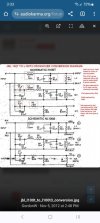


I've had 2 pairs of L100T upgraded to the T3 specs and it was a worthwhile upgrade both times
- took some of the shrillness out and resulted in a much more pleasant speaker.
(Updated per Gordon's comment)
- took some of the shrillness out and resulted in a much more pleasant speaker.
(Updated per Gordon's comment)
It looks like there is only a 0.1mH and 0.2mH difference between the original and the replacement which is pretty small and may be within the tolerance of the parts.
Last edited:

The issue with leaving the coils as is- is that JBL was playing some "EQ games" with those changes. They were pretty significantly dropping the level of the sound, at the crossover point between the woofer and midrange driver, by using a larger coil and smaller cap to reduce the Q of the lowpass on the woofer, AND a smaller cap to lower the Q and to increase the frequency of the highpass on the midrange. That will result in a lowering of the level of both sides of that crossover, at the overlap point. That's going to result in a couple dB change in level, near the crossover point.
For the 0.5 to 0.6mH change- that's acting to lower the midrange crossover, AND, again, to reduce the Q of the lowpass on the midrange. That reduces the level of the upper end of the midrange., at the crossover point. The whole "reducing shrillness" thing is basically happening, RIGHT THERE.
In essence- if you're not going to change the inductors, there's not much reason to do the rest of the changes.
EDIT: It's not as pretty- but, there's nothing functionally wrong, with getting a 0.2 mH, thick-gauge inductor, gluing it onto the wall of the cabinet next to the crossover, unsoldering one lead of the 3.0mH choke, and running jumper wires from the lead on the existing coil, and from the solder hole in the board, to the new inductor. Just place the new one far enough away, so that it doesn't couple with what's there (4 inches is plenty).
Though, a heavy-gauge 0,2mH- one thick enough to not add a significant amount of resistance- is probably going to be as expensive, as getting a proper iron-core inductor to directly replace the original. Here's what I would use- you'd need access to an inductance meter, to be able to unwind and measure the resultant inductance (it has to be unwound a bit, to be reduced from 4mH to 3.2mH):

That would wind up functionally equivalent to what JBL used.
Or, for the more "clever" modder- if you had access to an inductance meter, and a length of magnet wire (you could cannibalize the 0.5mH coil that's being removed from the midrange circuit, for wire)- you could just wind some ADDITIONAL wire around the existing 3,0mH choke, wiring it in series with the exising choke wire, until it BECAME 3.2mH. Probably would only require a few turns. Just wind it over the original- making sure to verify that you've wired the new windings in the correct polarity, to INCREASE, rather than DECREASE the inductance. That's easy to measure with a meter, though. Once you get enough wire wound around it to reach the correct inductance, just spread and flow in some epoxy, to bond the wire firmly in place over the existing windings, so that it can't move...
Regards,
Gordon.
For the 0.5 to 0.6mH change- that's acting to lower the midrange crossover, AND, again, to reduce the Q of the lowpass on the midrange. That reduces the level of the upper end of the midrange., at the crossover point. The whole "reducing shrillness" thing is basically happening, RIGHT THERE.
In essence- if you're not going to change the inductors, there's not much reason to do the rest of the changes.
EDIT: It's not as pretty- but, there's nothing functionally wrong, with getting a 0.2 mH, thick-gauge inductor, gluing it onto the wall of the cabinet next to the crossover, unsoldering one lead of the 3.0mH choke, and running jumper wires from the lead on the existing coil, and from the solder hole in the board, to the new inductor. Just place the new one far enough away, so that it doesn't couple with what's there (4 inches is plenty).
Though, a heavy-gauge 0,2mH- one thick enough to not add a significant amount of resistance- is probably going to be as expensive, as getting a proper iron-core inductor to directly replace the original. Here's what I would use- you'd need access to an inductance meter, to be able to unwind and measure the resultant inductance (it has to be unwound a bit, to be reduced from 4mH to 3.2mH):
Dayton Audio IC184 4.0mH 18 AWG Laminated Steel I-Core Speaker Crossover Inductor Coil
Dayton Audio IC184 4.0mH 18 AWG Laminated Steel I-Core Speaker Crossover Inductor CoilDayton Audio 18 gauge steel I-core inductors are the most cost effective choice when large inductance values are needed for subwoofer crossovers. Features fully annealed refined copper wire with baked enamel...
www.parts-express.com
That would wind up functionally equivalent to what JBL used.
Or, for the more "clever" modder- if you had access to an inductance meter, and a length of magnet wire (you could cannibalize the 0.5mH coil that's being removed from the midrange circuit, for wire)- you could just wind some ADDITIONAL wire around the existing 3,0mH choke, wiring it in series with the exising choke wire, until it BECAME 3.2mH. Probably would only require a few turns. Just wind it over the original- making sure to verify that you've wired the new windings in the correct polarity, to INCREASE, rather than DECREASE the inductance. That's easy to measure with a meter, though. Once you get enough wire wound around it to reach the correct inductance, just spread and flow in some epoxy, to bond the wire firmly in place over the existing windings, so that it can't move...
Regards,
Gordon.
Last edited: