• The move to the new server is done. There are some software and database maintenance updates in process. This has us passing the hat around to help out. We appreciate any donations. Seriously, even a dollar helps. The payment page may be found here - https://www.audiokarma.org/support.html

Isolation transformer usage

pjf610

Active Member
For the past couple of years, I have been using a DIMM Bulb to start up on trouble shooting vintage gear, I picked up a variac and an Isolation transformer for a pretty good deal. My question is can I plug all my test equipment and the DIMM Bulb and variac into the Iso. transformer?? If not, what should I plug into the Iso. transformer??
 
Register to hide this ad
Generally used for tube amps with a hot chassis. I plug the DUT into isolation and keep the text equipment plugged into the mains.
 
Things with switch mode power supplies are another use.
Basically anything that doesn’t have its own power transformer to limit the amperage that the mains can deliver. The isolation transformer does this and prevents the unintended high current path…
 
Things with switch mode power supplies are another use.
Basically anything that doesn’t have its own power transformer to limit the amperage that the mains can deliver. The isolation transformer does this and prevents the unintended high current path…
Thanks Pat
 
Most of the time its being used to slow down the window fan in the workshop. Its one of those Heathkit jobs that varies from about 80v to 120. I run the fans on 80v for noise reasons.
Same here. Dam fan is too loud so I run it with the variac at 60v. It's a 36" wall fan I removed from a Target during a going out of business sale. Good thing it has 3 speeds so I don't have to adjust the voltage, just the fan speed as needed.
 
Last edited:
I'd prefer to run it slower, but it only goes down so low and I use the variac enough that I don't want to move it to fan duty. If i score another one cheap it will probably get used for a fan speed control though.

Window fans recently got a rebuild too. 1970s vintage Western Auto dual window fan, needed the usual deep clean of the bearings and the felts and bearings re-oiled. It was sounding like cat fight at random and putting oil in the holes would only shut it up for a limited time. Much better with that done but its still 5 feet away blowing right into my ear and I can only take so much of that.
 
Basically anything that doesn’t have its own power transformer to limit the amperage that the mains can deliver. The isolation transformer does this and prevents the unintended high current path…
Are you sure about this? - when you say 'isolation transformer' do you really mean 'Variac'? - which makes slightly more sense.

To my mind isolation transformers just 'isolate' in other words removing the direct connection to the mains of a DUT - isolating transformers don't provide useful current limitation. A Variac can reduce the voltage, and in turn the current to a degree, to a device under test- but also not usefully actually limiting current.
 
Last edited:
Are you sure about this? - when you say 'isolation transformer' do you really mean 'Variac'? - which makes slightly more sense.
Yup- the transformer can only pass a limited current before it saturates. This is the safety effect.
A variac doesn’t have this current limiting ability. It delivers what ever it can until a fuse or breaker blows.
 
For the past couple of years, I have been using a DIMM Bulb to start up on trouble shooting vintage gear, I picked up a variac and an Isolation transformer for a pretty good deal. My question is can I plug all my test equipment and the DIMM Bulb and variac into the Iso. transformer?? If not, what should I plug into the Iso. transformer??

I don't know that much about isolation transformers, but we have assembled some basic, shared info here: https://audiokarma.org/forums/index.php?threads/dlucys-guide-to-isolation-transformers.1069427/

Should you find anything useful but not listed there, please post in that thread and contribute.
 
Yes the iso trafo will limit current, but thats not really what its main function is. Its to break the tie between neutral and ground so that gear where something is tied directly to mains can be measured using grounded test equipment without anything going bang. Better off using a fuse as a current limiter / safety device than relying on the iso trafo.

also depends what your transformer is. My big guy is a 2.5 KVA, or basically 20 amps. Not limiting much with that, the circuit breaker is likely to trip before it saturates. I was using it as a power conditioner / power strip for a while but currently its just sitting in the corner as a long-term gravity verification experiment. The little Heathkit I think is rated 100 watts, but it has a 1 amp fuse in it for protection.
 
Yes the iso trafo will limit current, but thats not really what its main function is. Its to break the tie between neutral and ground so that gear where something is tied directly to mains can be measured using grounded test equipment without anything going bang. Better off using a fuse as a current limiter / safety device than relying on the iso trafo.
This is why I use an isolation transformer. All test gear is powered through regular grounded source while anything under test is powered through the isolation transformer. EEVBlog has a good video on it linked here:
 
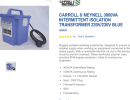
Hi guys, new to the forums also new to the hobby of electronics. Just a diy guy, trying to find his way up by reading and watching. I decided to restore my old Yamaha CA 1010. I use it with 240 v setting in here in the UK. I started recapping boards ( I will do them one by one and test if all god before carrying on to the next one) I have an old Variac 240v , working ok , I built my own dim bulb tester with 150 w bulb, which I tested with working and faulty components, looks like working fine . Before powering up the unit , I guess I need to have an isolation transformer. Yamaha says on the back max power 900w, I guess this puts me in a position like I need a transformer at least 1kva . I am hunting for isolation transformers in the UK, which do not come cheap, I guess there is a reason for that. I came across to this one with a decent price. Is that something that will be up for the job, or am I missing something ?? Thank you for anyone that will respond

 

Attachments

  • Screenshot 2025-11-21 at 15.12.49.png
    Screenshot 2025-11-21 at 15.12.49.png
    265.3 KB · Views: 10
Mine is a repurposed isolation transformer originally made for medical equipment. I had to disconnect the ground to the isolated outlets to achieve full isolation and prevent the scenario in Dave Jones’ video. I found a local seller who was open to local pickup. They included a nice triplite 8 position power strip.
 
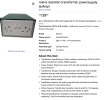
I purchased the one on top with 1.5kva, budget friendly I would say, still working on the restoration part, soon I will have an idea was that a right decision or not. Thanks for the response
 
Are you sure about this? - when you say 'isolation transformer' do you really mean 'Variac'? - which makes slightly more sense.

To my mind isolation transformers just 'isolate' in other words removing the direct connection to the mains of a DUT - isolating transformers don't provide useful current limitation. A Variac can reduce the voltage, and in turn the current to a degree, to a device under test- but also not usefully actually limiting current.
A Variac does not provide isolation. It's just a single winding with a slider contact used to pick off a voltage from the winding. The Variac needs to be used with an isolation transformer for safety reasons when using it while working on whatever it powers. Have the isolation transformer power the Variac; not the other way around.
 
Back
Top Bottom