• The move to the new server is done. There are some software and database maintenance updates in process. This has us passing the hat around to help out. We appreciate any donations. Seriously, even a dollar helps. The payment page may be found here - https://www.audiokarma.org/support.html

It has begun. My first REAL amp build.

Lwrs10

Super Member
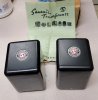
I found a matching quad of 6V6G ST style RCA tubes recently, and a few hours later, these 6V6 PP Sansui transformers showed up on Bartertown.

I personally love the way 6V6's sound. And they should sound really good paired with these Sansuis.

Now for the rest of the circuit. What do yall more experienced builders reccomend?

So far I'm eyeballing 12AX7->6SN7->6V6. I also would like to utilize some not so well known tubes, like some 955 acorns, 6J5's, 9002's, etc. I really like the idea of using the 955's over anything else though.

Thoughts? Ideas? Inputs?
20220826_193938.jpg Resized_20220823_210823.jpeg
 
Register to hide this ad
Have you got the sockets to use Acorn tubes?
Personally I'd go with common audio tubes that you know you can get in the future.
12ax7 6sn7 and 6v6 is a solid plan because those tubes will most likely be available for as long as any of us will be alive...
Congratulations on your first "real" amp build.
Were your previous attempts "fake"?
 
I found a matching quad of 6V6G ST style RCA tubes recently, and a few hours later, these 6V6 PP Sansui transformers showed up on Bartertown.

I personally love the way 6V6's sound. And they should sound really good paired with these Sansuis.

Now for the rest of the circuit. What do yall more experienced builders reccomend?

So far I'm eyeballing 12AX7->6SN7->6V6. I also would like to utilize some not so well known tubes, like some 955 acorns, 6J5's, 9002's, etc. I really like the idea of using the 955's over anything else though.

Thoughts? Ideas? Inputs?

View attachment 2648851 View attachment 2648866
Mabe i ahould become a subscriber again.Those output transformers are beautiful,not to mention those rca 6v6 tubes.Fwiw i also love the sound of 6v6 tubes.:thumbsup:
 
@trainbuftony Yes, I have sockets. And more 955's than I can shake a stick at, so not worried about availability.

This will be the first amp I designed around the transformers. Or at all really. Previous ones were either kits or a schematic I found somewhere. But none of them have near the quality of iron as this one will have. Hence the "real".

@radioactive I found these 6V6G's in a 1940's big stand up radio a buddys wife bought for just decoration. He let me grab the amp out if it. The amp itself weighs over 100 pounds.
 
@trainbuftony Yes, I have sockets. And more 955's than I can shake a stick at, so not worried about availability.

This will be the first amp I designed around the transformers. Or at all really. Previous ones were either kits or a schematic I found somewhere. But none of them have near the quality of iron as this one will have. Hence the "real".

@radioactive I found these 6V6G's in a 1940's big stand up radio a buddys wife bought for just decoration. He let me grab the amp out if it. The amp itself weighs over 100 pounds.

I'dbe interested to know the make and model of the radio the tubes came out of .If bought just for decoration it must be in good shape as nobody would want a eyesore just for decoration although im a exception:D.The radio could be restored back to its former glory just like we do with our audio gear.With 4 6v6 output tubes the radio sounds like a higher end radio of the times.Please let us know what the radio is.:beerchug:
 
I'dbe interested to know the make and model of the radio the tubes came out of .If bought just for decoration it must be in good shape as nobody would want a eyesore just for decoration although im a exception:D.The radio could be restored back to its former glory just like we do with our audio gear.With 4 6v6 output tubes the radio sounds like a higher end radio of the times.Please let us know what the radio is.:beerchug:

Let me take a look. It was a mono amp. But really good iron. REALLY REALLY good iron!!!

I remember the antenna was a big rotating cylinder about 3 feet long and 8 inches thick. Really fancy looking. I still have the antenna somewhere around here, and it has the radio name on it. When I find it I'll be sure to pass that info along.

*EDIT* Its a Capehart 73-501. And....this is great...the amp itself is made by Western Electric. Suppose that explains the square output transformer. Now I just need to find another one so I can build a couple monoblocks.

Here's the amp itself. I just noticed I mislabeled the output sockets as 6L6. They are 6V6 for sure.

20220827_020929.jpg
20220825_195542.jpg

20220827_021139.jpg
 
Last edited:
did a quick google
Man, I'd consider restoring the radio!

I do not have the radio. Just the amplifier and antenna. A friends wife bought it for a decoration/furniture in their house. She let me grab the amp and antenna out of it and that's it. She wanted to keep the tuner and faceplate because it "looked cool".

It is an awesome looking and well built radio though. If it was mine I would restore it. I'm pretty damn lucky I got the amp though.
 
6v6 drive-wise is pretty similar to a 6bq5 so that might open up some circuit ideas.

maybe a 12ax7 long tail pair inverter with a 6AV6 as the voltage amp in front of it. Or just use a 12ax7 and share it for both channels if you're building this as a stereo amp vs monos.

If you want to do this with all octals, 6SN7 or 6SL7 could be the inverter, same for the voltage amp. Just not quite sure you'd get enough gain with a 6sn7 voltage amp to also have a reasonable feedback level. If you really wanted to run 6sn7's though, you could build basically a baby Williamson. That ought to have more than enough gain, though it might have arguably too much.

6j5 is half a 6sn7 so they can drop in. Don't know anything about the acorn tube but it looks like you might be able to use it in a similar manner to a 6J5.
 
@gadget73 one of my current favorite amps uses 6sn7's driving 6V6's. An Audio Note Kit 4. I really like how this amp sounds. It uses 12AX7's that drive 6SN7's going into a push pull 6V6GT arrangement. Not sure which one is the phase splitter, as I'm not that good at schematics yet.
704710_10151551118893569_605964404_o.jpg

Curious your thoughts on why a 6sn7 might not have enough drive for 6v6's. I'm not questioning you, but trying to learn more.
 
Last edited:
That has a phase splitter. Looks like a floating paraphase.

KIT%2B4.jpg


output from the first 12ax7 triode to the upper 6sn7 and through the resistor chain to the lower 12ax7. The inversion is the feed into that lower 12ax7. Output from there to the lower 6sn7 section, on to the output tubes. The voltage amps in the middle make it somewhat Williamson-like, but the front end is basically like what Magnavox and Pilot used. Just seems like more gain than it really needs.


anyway its not so much about lack of drive with a 6sn7, its just lack of gain. A pair of 6v6 tubes in class A push-pull with common datasheet values says 38 peak volts grid to grid. in rms volts thats 27v rms. A typical inverter has a gain of about 1.8 from output to output, so it needs 15 volts rms input. A 6sn7 has a max gain of 20, so that would be about 0.75 volts of signal input to get full output. If you want to add even a modest 6db of feedback, you'd need 1.5 volts of input to get that done. More feedback means more input signal. Something with higher gain like a 6SL7 (gain of 60) makes it possible to have reasonable input sensitivity, decent amount of feedback, and not have to involve a bunch of gain stages that all add the chance of creating stability problems. The more stuff in the loop, the more chance of it acting stupid.

can also just add a gain stage outside the feedback loop. Pilot did that on the SA-232 and the SA-260.
 
Phase splitter is the Paraphase type phase splitter. After the first 12AX7 gain section, the coupling cap feeds the 6SN7 grid, the 6SN7 driving the "upper phase" (re: the diagram) 6V6, as well as a 220K R headed toward the bottom 12AX7 section. That bottom 12AX7 feeds the "lower phase" to the lower 6SN7 section, which drives the lower phase 6V6. Feedback from the Voice Coil (560 pf across 6K8 R) returns to the first 12AX7 section...

Many folks here at AK seem to distrust, even dislike the paraphase inverter. I can vouch for the sonic virtues of this type of phase inverter. For R-C coupled circuits, as opposed to transformer coupled circuits, a paraphase inverter can actually sound "fast and detailed, yet sweet" in practice. Note that the Pilot 232 and Sun Radio CR-10, both exemplary tube amps, used a similar inversion technique.

Of course, not too many R-C coupled phase inverters can yield exact 180 degree phase reversal, as well as an interstage transformer can easily accomplish. One end of a coil is naturally 180 degrees out of phase with the other end of the same coil. Can you tell I like Interstage and Driver trannies ?
 
@gadget73 Thanks for the explanation.

The thought floating around in my head currently is not using any global feedback, since these transformers are VERY linear 20-20k, and still very linear from 10-80k. They publish 10-80k +-1db. Am I going down the right road here? Or is there other reasons feedback would be needed? It was my understanding feedback is usually to improve the bandwidth of amplifiers with not as good iron.

@tubeactive Interesting. I'm learning so much here. Transformer phase splitters eh? I'd like to learn more about those.
 
Low feedback or moderate feedback retains flat freq response and could lower distortion at higher power...Pentode output tubes like some feedback...

That square output tranny Capehart amp was built under Western Electric license, not by the WE craftsmen. The rarer Capehart amps with four 2A3s were built by Lincoln Walsh, of Brook amplifier and Caledonia Transformer fame. It's also possible his hands crafted the Capehart amp with 6L6s...
 
@tubeactive The transformer does say Western Electric on it, but you know how this stuff is. You're probably correct.

I'm blown away by the amount of knowledge you have of that amp. I should post some pics of the other really nice amplifiers I have from the same era.

For example:
20220827_020935.jpg
 
lowering the output impedance is major thing that feedback does, and pentodes have very high output impedance. makes them very load sensitive, so if your speakers don't have a super flat impedance curve its likely to cause some gremlins in real-world performance vs measured.

If you triode-wire them you can probably get by without it but it will make maybe 8 watts instead of 12. Plate resistance in pentode mode is about 50k, in triode mode its about 2k.
 
@gadget73 Good point!

Forgot about speaker box rise etc. Very non linear load.

And I would be totally fine with 8 watts vs 15 or so. But doesn't doing push/pull on pentodes strapped as triodes kinda defeat the purpose of strapping them in the first place? As in that sweet triode midrange?
 
never owned a triode amp or a single ended amp, nor have I ever triode-wired a pentode output tube so I have no idea. the datasheets don't say anything about midrange, sweetness, or otherwise. Thats all into the land of "there ain't no datasheet for that" and I try to avoid that as much as possible. Its a scary place full of opinions and jargon that doesn't define clearly.
 
@gadget73 I see your point.

I do have a little amp you can switch between pentode and triode mode, and even ultralinear or not, feedback on/off, etc. It baffles me.
 
Back
Top Bottom