
• The move to the new server is done. There are some software and database maintenance updates in process. This has us passing the hat around to help out. We appreciate any donations. Seriously, even a dollar helps. The payment page may be found here - https://www.audiokarma.org/support.html

JBL 4341 no Sound Stage vs Spendor SP1/2

travellersol

Active Member
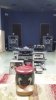
So two weeks ago I got to visit a two new found hi-fi friends and saw a pair of vintage JBL 4341 that one of them just bought. I was very fortunate that he was going to test them right away. His listening space is a dedicated room approx. 15' x 25' with adequate sound treatment. He drove the 4341s with Primare pre amp and Perreaux power amplifier 500w, CD player I can't remember what. The 4341s were placed about 2' from the back wall and 2.5' from the side walls, while listening position was about 20' away from the front panel of the speakers. Throughout the one hour session, I found the 4341 to be very balanced in the high, mid, and low, they are also very powerful and accurate though we have no way to put these into any objective measurement. However, all three of us agreed that we couldn't hear any good sound stage. I was trying very hard to pinpoint the locations of the singers and each different instrument but most of the time they are like performing in a small stage and all musicians are in the forefront.

The owner then switched to use a pair of vintage Spendor SP1/2 which are much smaller with only 8.5" woofers, everything unchanged except that this time the power amps were a pair of McIntosh MC25 valve monoblocks, and the speakers were placed half way nearer to the listeners (abt 2' behind the gear racks seen in the photo.) Boy, what a big difference-the sound stage immediately opens up on the same tracks that were just played through the JBL 4341. Positions of singers and instruments were clearly identified in most of the tracks, very mesmerizing in fact. Even the bass is good enough, though the woofers are only 8.5" I almost felt there was a sub woofer or two hidden and of course none was there.

Both friends have a pair of the Spendors each, and they stated clearly that though they own multiple sets of speakers, their Spendors are not for sale. The JBLs cost almost 10 times of the Spendors but the owner will sell them soon-it was fun to buy and test but he won't keep them. All of us find ourselves enjoying the Spendors more than the JBLs. Now I am serious to check the Spendors out, and also the Harbeths which should have similar sound.

That led me to the question:
Do all the JBL professional monitor series sound like that, i.e. accurate and powerful but not good in sound stage? I know the question could be too general but big JBL monitors like these are very hard to come by in my country, I would not have many chances to find and test them.
JBL 4341.jpg
 
Register to hide this ad
I once owned a beautiful set of Spendor SP-1 in luscious rosewood.
Luckily they came with their beautiful shipping boxes as it made for an easy resale after I had listened to them for a very long hour or two.
Non plussed;)
Picture 1429.jpg
 
I got on a kick for "Imaging" after I owned some DCM Time Frame speakers a few years back.
A lot may have to do with systems that have Time-aligned drivers - putting the voice coils in the same plane so as to align the sonic wavefront in phase.
I suspect its easier to achieve with less drivers rather than more - e.g, 2 or 3 way systems vs 4 ways.
But I'm just a listener, not an engineer.

I have a good sound stage with the JBL L212s I refurbed last winter, but my customized JBL L200 3 ways did not (nor did the 4341s I owned years back)
My Von Schweikert VR-4s image well, as do Vandersteen 2CIs, 2CEs, and the KEF-105.4s I owned.
 
I suspect if the JBLs are "professional", then they are used in studios (like many large professional JBLs), therefore they may be used for critical instrument sound (in order to adjust levels and EQ etc), rather than soundstage.

None of the studio monitors that I have heard have been a particularly "immersive" experience.

Note also that in your testing, the amplifier was changed, and this could have partly contributed to some of the sound differences between speakers.
 
The general assumption, and this is a very general assumption, is that the more drivers you have, the harder it will be to achieve a wide / open soundstage or proper stereo image.

There is also the fact that the speakers are much too close to the side walls, that will smear a lot of the information. His room is not suited for those speakers. Would most likely be better off with the speakers on the long wall there.

Another note... With the JBLs so far back, you're effectively hearing them like they are closer together vs the Spendors being more forward in the room. If they were soffit mounted and the seating position was much closer, they might have a chance. This also goes back to using the long wall...


And I just noticed that the tweeters aren't mirrored. Placing one tweeter so close to the side wall with the other so far out in to the room, you'll never get a decent soundstage. There's 2 holes next to the horn for a reason, have your friend properly make use of them.
 
The JBL 4430/4435 series have a better soundstage and imaging than the older horns. This is not to say that they sound better, only that they do a better job in this respect.

Has to do with the time alignment and dispersion characteristics where the horn and woofer interact. My L200/300s don't stage/image as well as my 4430s did, but I prefer their overall sound and sold the 4430s.

Interesting that when I play the 4431Hs (18") in parallel with the 2235s (15"), the sound stage and imaging vastly improve.

I attribute this to the loss of some of the upper bass associated with the foam edge/mass ring of the 2235s. As we know, lower bass is perceived as omni-directional so does little to the soundstage/imaging. So when we take away some of the upper bass, there is a "disconnect" and this is perceived as a loss of imaging. The 4431s don't lack for this upper bass and their addition then widens the sound stage tremendously by bringing in these frequencies.
 
I got on a kick for "Imaging" after I owned some DCM Time Frame speakers a few years back.
A lot may have to do with systems that have Time-aligned drivers - putting the voice coils in the same plane so as to align the sonic wavefront in phase.
I suspect its easier to achieve with less drivers rather than more - e.g, 2 or 3 way systems vs 4 ways.
But I'm just a listener, not an engineer.

I have a good sound stage with the JBL L212s I refurbed last winter, but my customized JBL L200 3 ways did not (nor did the 4341s I owned years back)
My Von Schweikert VR-4s image well, as do Vandersteen 2CIs, 2CEs, and the KEF-105.4s I owned.
your hunch about the relationship between the number of drivers and imaging (sound stage) is interesting, might worth some further testing.
 
I sold my beautiful pair of JBL L300’s for an equally beautiful pair of Spendor SP100’s - the L300’s were impressive during short term listening sessions with massive boom and sizzle - the Spendors are musical instruments themselves conveying all the tone, timbre and nuance on any given recording. It took me a while to figure out that price is not always commensurate with performance. :thumbsup:
 
I suspect if the JBLs are "professional", then they are used in studios (like many large professional JBLs), therefore they may be used for critical instrument sound (in order to adjust levels and EQ etc), rather than soundstage.

None of the studio monitors that I have heard have been a particularly "immersive" experience.

Note also that in your testing, the amplifier was changed, and this could have partly contributed to some of the sound differences between speakers.
yeah i read somewhere to have said the same thing about these pro studio monitors. if to me imaging is important, i might avoid them for the time being. Are the JBL L series like L100 and L110 belong to this category as well?

and you are right, the power amps used to push the 4341s and the SP1/2 were different, mainly because the two pairs are so different physically as well as their power requirements. would this be a huge factor? sadly i think he might have sold it by now can't test it again.
 
So you're listening to the JBLs placed maybe 8-ft apart measured at their center line and your listening position is 20-ft away? What soundstage imaging were you expecting? Try moving up twelve-feet or so, and slightly toeing-in the JBLs. My 4345s create a fine soundstage but they are further apart than you had your 4341s and I'm much closer to them.
 
I'm a little confused on the comparison as well. The speaker placement and listening distance could have a huge effect on the sound of both pairs of speakers, especially when you're focusing on soundstage. Comparing a big SS amp to tube monoblocks isn't really fair either. I'd compare them using the same amp and with at least somewhat similar listening setup in the space.
 

I agree that A/B is the way to go. I'm wondering if the camera mic can pic up the collapse in the soundstage when going from the 2235s to the 2241s. I'm assuming that a 2245 is similar to a 2235, only more so. I know it will pick up the improvement in the vocals and reduction in bass and tubbiness. I may have to give it a try.

BTW, what some refer to as tubbiness may also be a reduction/roll off in the frequencies above that point creating a "dullness" rather than a preponderance of a certain set of upper bass frequences and this is just a way of interpreting what they hear. Remember that in a 4430/4435, the woofer(s) carries the fundamentals of the entire vocal range.

I also wonder how much the lower mid driver in the 4341 and 4345 help to correct this. When I get the 2251s set up, I'll have to try these as a lower mids (which is partically why they have their own small cabinets that can sit on top of the L200 boxes :idea:
 
I sold my beautiful pair of JBL L300’s for an equally beautiful pair of Spendor SP100’s - the L300’s were impressive during short term listening sessions with massive boom and sizzle - the Spendors are musical instruments themselves conveying all the tone, timbre and nuance on any given recording. It took me a while to figure out that price is not always commensurate with performance. :thumbsup:
yeah the brits sure have their own way of making speakers.
 
So you're listening to the JBLs placed maybe 8-ft apart measured at their center line and your listening position is 20-ft away? What soundstage imaging were you expecting? Try moving up twelve-feet or so, and slightly toeing-in the JBLs. My 4345s create a fine soundstage but they are further apart than you had your 4341s and I'm much closer to them.
i was just a visitor, so can't say much in the arrangement. hope these are not yet sold and have a second listen.
 
Tubbiness and the many other terms are subjective at best and everyone will tend to use them slightly differently.

If you've ever met any stereo or audio reviewers (I have), they're basically writers who like music, get equipment to demo, and some of them have just better than marginal spaces to set up. If it can't be made to sound good in your listening space, it's not for you.

I have found that the older monitors are great at making music, but each generation continues to get slightly better in imaging and other important musical elements. What some call soundstage, I call "concert hall effect" where there's more cross-channel echo giving lots of airy openness, but no real defined and accurate imaging of a properly miked recording. Or in other words, if the clarinets are recorded at 11:30, they should always be at 11:30, not moving around the stage. Many recordings are (as mentioned above) mixed with the music purposely delayed into the 2nd channel to give the concert hall effect, it's impossible to correct this with good speakers and placement.

Much development in JBL Pro speakers went to help evolve imaging of a pair of speakers in a less than perfect environment. The Engineers understood the relationship between first-arrival sound and second-arrival sound and how the brain processes it, worked hard on designing speakers that can create proper imaging even with expected reflected sound in this imperfect environment that the monitors will see. The imaging of these later monitors is excellent, try out a pair of 4410As or LSR6328P/LSR6312SP and you should be very impressed. I haven't been so lucky as to listen to a pair of M2s yet, ... on my list. The point being that imaging is very much a primary goal of modern studio monitors.

Another point is is how critical the environment is and how pros set up a venue. If you take the time to measure the room for standing waves, decay, and other things that affect not only imaging but cancellation and other reflected-sound effects, you have a very good start in designing a speaker installation. Without this critical data, you're pretty much shooting in the dark.
 
OK, here it is.

This compares the 2235s to the 2241s both through the same crossover (~800 Hz). Other components are the 2420 on the long (L300) horns and 2405 tweeters. There is also a bit of sub being used.

Note how when the 2235s are switched in, the vocals drop to mono whereas the sound field is much more diffuse with the 2241s. The camera captures the effect, but not like being in the room. You can also hear that the 2241s need some padding in their cabinets (boxy). There is none.

The woofers were matched for volume by adding resistance to the 2241s. Maybe a bit too much.

I'll let you figure out which way the switch flips for the 2235s and which way for the 2241s. ;)

 
In the discipline of professional presentation audio design there is a concept called "critical distance". That is the location were the direct sound level from the speaker(s) is equal to the reflected sound.

In pro audio intelligibility reigns whether it is a church or movie theater design....."If you can not understand the words the system has failed" and typically you do not get paid. The goal therefore is to encompass the listeners within the critical distance of the speaker system.

I speculate that in the home audio hobby most listeners prefer to be outside the critical distance, the reflected sound then broadens the soundstage. I suspect that listener preference will push the "correct" listening position both well into and out of the critical distance location.

I believe some listener preference for sheet speaker designs with the expected rear wall reflected sound and the at obtuse angle speaker designs like the EPI250s, DCM Time Windows, and of coarse the Bose901s all reflect this.

I would suspect the wave guide equipped JBLs in this post are just "show'n off" their expected design goals of a very carefully focused critical listening window.

Not necessarily my cup of tea for home music listening but as a analytical tool for exhausting, painstaking monitoring maybe the correct choice.
 
Last edited:
Back
Top Bottom