Hello my dad and me have a pair of JBL 4800's and we were wondering what the wattage was because it says recommended amplifier is 10-150 watts. My dad has these speakers hooked up on one channel to a Kenwood KRM-262 amplifier that is 150 watts RMS and 175 watts Peak at 8 Ohm per channel. We believe that the amplifier on one channel switches power on to that channel producing over 300 watts a channel. We wanted to know if we were wrong on this and would also like to know what is the Peak wattage on the speakers.


You are using an out of date browser. It may not display this or other websites correctly.
You should upgrade or use an alternative browser.
You should upgrade or use an alternative browser.
JBL 4800 Speaker Questions
Register to hide this ad

DrStache
Active Member
Peak wattage is 150. Anything in that range should drive those speakers. I think your Yamaha probably produces around 150 watts per channel. It doesn't double the wattage if you only use one channel, if that's what you're asking. I doubt you'll ever be able to push those JBL's to their or your amps limit without causing damage to the speakers or your ears.

twiiii
Lunatic Member
The speakers were produced around 1990 and as a best guess the 150 watts is a peak reading, though if it were a top of the line model might be a true RMS rating , but as it only cost around $350,00 at that time that places in the lower range of JBL speakers. So Its all right to use a 150 watt/channel amp but do not push the system The slightest amount of clipping or amp instability could trash your speakers quite easily. Personnaly I'd use then with a Mac 502 or or 754 amps with Power Guard capable of 75 to 90 watts per channel. The Power Guard prevents clipping guaranteeing long life for your speakers.

onplane
What! No Wake???
Hello my dad and me have a pair of JBL 4800's and we were wondering what the wattage was because it says recommended amplifier is 10-150 watts. My dad has these speakers hooked up on one channel to a Kenwood KRM-262 amplifier that is 150 watts RMS and 175 watts Peak at 8 Ohm per channel. We believe that the amplifier on one channel switches power on to that channel producing over 300 watts a channel. We wanted to know if we were wrong on this and would also like to know what is the Peak wattage on the speakers.
OK, let's try to understand what you are asking. I believe you have a pair of JBL speakers. These JBL's are rated at a maximum power of 150 watts. Further, you hooked them to "one channel" on a Kenwood amp. Your terminology here is a problem.
I believe you mean you hooked them up to the either speaker A or speaker B. Correct?
Neither speaker A or B is a "channel". These are just options for your speaker selector switch.
You have available to you on either A or B 150 watts of power. Remember this is maximum power. That is, your volume control turned to max. You are good to go! (You could hook these speakers up to an amp capable of 800 watts as long as you don't over drive them.)
Also remember, these power specs are all suspect. I can just about guarantee that if you play these speakers at max volume, you will shortly see smoke coming out of them and then ... they'll become very quiet .... forever!
Regards,
Jerry
The speakers were produced around 1990 and as a best guess the 150 watts is a peak reading, though if it were a top of the line model might be a true RMS rating , but as it only cost around $350,00 at that time that places in the lower range of JBL speakers. So Its all right to use a 150 watt/channel amp but do not push the system The slightest amount of clipping or amp instability could trash your speakers quite easily. Personnaly I'd use then with a Mac 502 or or 754 amps with Power Guard capable of 75 to 90 watts per channel. The Power Guard prevents clipping guaranteeing long life for your speakers.
OK, let's try to understand what you are asking. I believe you have a pair of JBL speakers. These JBL's are rated at a maximum power of 150 watts. Further, you hooked them to "one channel" on a Kenwood amp. Your terminology here is a problem.
I believe you mean you hooked them up to the either speaker A or speaker B. Correct?
Neither speaker A or B is a "channel". These are just options for your speaker selector switch.
You have available to you on either A or B 150 watts of power. Remember this is maximum power. That is, your volume control turned to max. You are good to go! (You could hook these speakers up to an amp capable of 800 watts as long as you don't over drive them.)
Also remember, these power specs are all suspect. I can just about guarantee that if you play these speakers at max volume, you will shortly see smoke coming out of them and then ... they'll become very quiet .... forever!
Regards,
Jerry
Adjusting for inflation the speakers in 1990 would be 700 dollars in todays money would that still make them in their low end? and yes I was referring to hooking them up to only B channel and I was wondering if it was only on B channel it would convert the power from A and transfer it into B Channnel
Last edited:
DrStache
Active Member
No, it won't do that. You only get 150wpc on A or B when you select whichever one. Your JBL's will do fine with that power but don't turn them all the way up. As mentioned above, they won't last long at that power/volume. Your JBL's are probably on the lower end of the spectrum as far as some JBL's I've seen and read about. Some cost in the thousands of dollars. None of that matters though. If they sound good to you then you've made a major score. I've got a pair of Klipsch 4.2's that have outlasted Bozak Centuries, Pioneer CS-99's, Herseys and KG4's in my house.. All those speakers are technically higher end than my 4.2's but for my ears I can't find a better speaker.Adjusting for inflation the speakers in 1990 would be 700 dollars in todays money would that still make them in their low end? and yes I was referring to hooking them up to only B channel and I was wondering if it was only on B channel it would convert the power from A and transfer it into B Channnel

BMWCCA
Addicted Member
JBL usually recommends amplifiers at double the peak speaker power rating in order to provide headroom to prevent overdriving the amp and causing distortion that will damage the speakers. As has been said, your ears will determine how loud you'll play them, and you'll never be able to get close to that peak power rating and stay in the room with the speakers. I'd say more damage is caused by too little power than too much—especially when it comes to fried tweeters.
What many find in older JBLs is that even the lesser models can be impressive performers, so it really doesn't matter where they fit in the "pecking order". I enjoy listening to my JBL Pro-III Plus system that no one ever comments on. I picked it up from a Craig's List ad for $40 and took ownership meeting up at the local Dairy Queen. They've astounded many listeners in my "speaker room" who couldn't believe those where the JBLs they were hearing!
What many find in older JBLs is that even the lesser models can be impressive performers, so it really doesn't matter where they fit in the "pecking order". I enjoy listening to my JBL Pro-III Plus system that no one ever comments on. I picked it up from a Craig's List ad for $40 and took ownership meeting up at the local Dairy Queen. They've astounded many listeners in my "speaker room" who couldn't believe those where the JBLs they were hearing!
Does that mean that the speaker peak is 300 watts and the RMS is 150?JBL usually recommends amplifiers at double the peak speaker power rating in order to provide headroom to prevent overdriving the amp and causing distortion that will damage the speakers. As has been said, your ears will determine how loud you'll play them, and you'll never be able to get close to that peak power rating and stay in the room with the speakers. I'd say more damage is caused by too little power than too much—especially when it comes to fried tweeters.
What many find in older JBLs is that even the lesser models can be impressive performers, so it really doesn't matter where they fit in the "pecking order". I enjoy listening to my JBL Pro-III Plus system that no one ever comments on. I picked it up from a Craig's List ad for $40 and took ownership meeting up at the local Dairy Queen. They've astounded many listeners in my "speaker room" who couldn't believe those where the JBLs they were hearing!

mars_volta
Super Member
I've had plenty of good times with a pair of 4800s 
BMWCCA
Addicted Member
What it means is if you want to play them continuously at the 150-watt level, you should probably use a 300-watt amp so it won't overtax the amp on peaks which could hurt the speakers. Not that you'd really want to pump 150-watts through these continuously!Does that mean that the speaker peak is 300 watts and the RMS is 150?
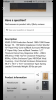
Info I found suggests you are correct on all but price MSRP was $700The speakers were produced around 1990 and as a best guess the 150 watts is a peak reading, though if it were a top of the line model might be a true RMS rating , but as it only cost around $350,00 at that time that places in the lower range of JBL speakers. So Its all right to use a 150 watt/channel amp but do not push the system The slightest amount of clipping or amp instability could trash your speakers quite easily. Personnaly I'd use then with a Mac 502 or or 754 amps with Power Guard capable of 75 to 90 watts per channel. The Power Guard prevents clipping guaranteeing long life for your speakers.
BMWCCA
Addicted Member
Who's to say that's not per-pair?Info I found suggests you are correct on all but price MSRP was $700
Price reference chart over on LH says $349 per each.