• The move to the new server is done. There are some software and database maintenance updates in process. This has us passing the hat around to help out. We appreciate any donations. Seriously, even a dollar helps. The payment page may be found here - https://www.audiokarma.org/support.html

JBL L36 *A* series

Dark Knight

Well-Known Member
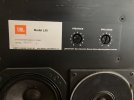
Greetings, I have the JBL L36 *A* series where the presence and brilliance dials go from 0 to 10, which is not on the dB scale of the other two L36 iterations, where 0 zero is the standard factory setting. Does anyone know what the standard factory settings would be on the 0 to 10 scale that these seem to be?
Thanks,
DK
 
Register to hide this ad
Adjust to taste. Kinda like how much salt to put in the soup. The L-pads don’t change the crossover frequencies, but they change the amount of power being sent to the midrange and or teeeter relative to the woofer. So, if you prefer more bass, you turn down the L-pads, if you prefer more treble, you turn em up
 
IME, JBL tended to tune crossovers so the "neutral" setting is right in the middle of the L-pad dial's range, for an anechoic chamber. At home, that may want a little tweaking to accommodate the room.
 
I have a set of these that I just refoamed and I looked at the dials closely after firing them up and thought the same thing because I was assuming that the top dead cent 12 o'clock position normally would be the standard setting but these have it start at zero and go up to 10. Then I realized why they're so bright and started turning them down and they sounded best right at zero. By besr, I mean the best they could sound with the mids also at zero in relation to the woofers.

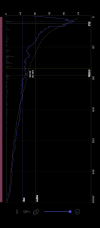
Even still I'm seeing a very lopsided plot after testing them. I realize the new edges will need time to loosen up but even still I'm doubting they'll gain enough db to properly match up with these overly bright mids and tweeters. Here's the plot.
Screenshot_20260312-100446.png
The red line is peak, no smoothing, the mids and highs are very decent with little variation as they transition, but this speaker would greatly benefit from a separate amp driving the woofer. I haven't tried that yet but I'm willing to bet that this could be a fantastic speaker if they made it bi-ampable from the start. I'll bet I can get that plot nearly perfect when bi-amped.

Here's what a test result from a set of modified Martin Logan Aerius looks like. Aerius are not my main speakers but I don't have any plots of my Prodigy's on this tablet.
Aerius - no smoothing.png
The Prodigy is similar with less of a peak but more like a shelf that's elevated from 250Hz to 10Hz before the rolloff. Both sets are bi-amped with one amp on panels and another on the woofers. Plot uses no smoothing.

Here's a smoothed plot of the Aerius.
Aerius - Smoothing - Wow look at that.png

I'll bet I can get this response from the little L36s with 2 amps!
 
5 appeared to be the flat 0 db on the scale to 10 on my L36 years ago and L166’s
They tested way high and I could tell instantly when I had both mid and tweeter set on 5 that there was a major imbalance between the woofers and mids. At zero they sounded much better but as you can see from the test results, the bass is seriously lacking. Most speakers I test from the 70s have this type of result. Even the Martin Logan's both had some terribly low bass until I figured out what to do to remedy it.

Both speakers tested the same, all wiring is correct, I didn't remove the mid or tweet and haven't checked the crossovers, but the pots work fine. I have a few different calibrated microphines and different programs to use, but I found 2 different phone apps that have been able to show nearly exactly the same results. This is something that I have not been able to do with any other 2 programs out of 30 on my computer and 20 phone apps. Without a 2nd test showing nearly exactly results I can't say that any one of the other 50 testing programs and apps I've tried can be considered accurate. There may very well be 1 that's perfect, but, without a second program test results backing it up, I just can't say that any of them are worth the time to even bother using.

I don't live my life by any tests, but using a test that can show you exactly what's going on will be of great use for this exact issue. I've tested my calibrated mics against my phone mics and found Moto phones made after 2020 seem to have a very accurate mic in them (at least when they're brand new). My phones only last me a year before the screen turns into lines so I've used new phones with very similar results each year. I can't say that's true for any other phone or tablet I have tried, maybe 15 devices over 7 years and they're all different and none are close to the calibrated mics. Even using a calibrated mic with phantom power connected to my computer through an external sound card using USB has shown every computer RTA programs results are far different than what I can get with the 2 phone apps and they can run a test before the computer even turns on and can have 10 tests done before I can even get a computer RTA program running, plus the fan noise and sound issues related to Windows will sometimes make it impossible to get a good reading.

The phone apps have different ways they get their info, whether it's by the built in mic or an attached mic or some will use the accelerometer, finding 2 separate apps that show nearly exactly same results is key to trusting the results. Besides, when the sound is this far off, the results will easily be seen in a test. I'll be pulling the woofers and tossing the old Bose 501 woofers back in the cabinets to see how they test. I didn't recall the imbalance when I had them in the cabinets before, but then I only played them for a few minutes as I was just confirming that the mids and tweets were working before I bothered with the refoam of the woofers. I didn't even stand them up to listen to them, I left it laying on its back since I knew I'd be removing the drivers as soon as I was done with the refoam.

I grabbed 3 different 10" woofers for temp duty, the first 1 hit the port, another didn't fit in the hole and the Bose fit perfectly and had exact screw pattern, but I know a have at least 6 more to try and should get 2 that will fit. I'll post results in the morning, this may take a while to get every thing tested and put away. The Bose was 8Ω, not sure what others might be but I'll note that in the results. It shouldn't make much difference for what I'm looking at since the issue lays directly within the woofers crossover range well before the cut off.
 
I have a set of these that I just refoamed and I looked at the dials closely after firing them up and thought the same thing because I was assuming that the top dead cent 12 o'clock position normally would be the standard setting but these have it start at zero and go up to 10. Then I realized why they're so bright and started turning them down and they sounded best right at zero. By besr, I mean the best they could sound with the mids also at zero in relation to the woofers.

Even still I'm seeing a very lopsided plot after testing them. I realize the new edges will need time to loosen up but even still I'm doubting they'll gain enough db to properly match up with these overly bright mids and tweeters. Here's the plot.
View attachment 3721729
The red line is peak, no smoothing, the mids and highs are very decent with little variation as they transition, but this speaker would greatly benefit from a separate amp driving the woofer. I haven't tried that yet but I'm willing to bet that this could be a fantastic speaker if they made it bi-ampable from the start. I'll bet I can get that plot nearly perfect when bi-amped.

Here's what a test result from a set of modified Martin Logan Aerius looks like. Aerius are not my main speakers but I don't have any plots of my Prodigy's on this tablet.
View attachment 3721730
The Prodigy is similar with less of a peak but more like a shelf that's elevated from 250Hz to 10Hz before the rolloff. Both sets are bi-amped with one amp on panels and another on the woofers. Plot uses no smoothing.

Here's a smoothed plot of the Aerius.
View attachment 3721735

I'll bet I can get this response from the little L36s with 2 amps!

I would wonder if the 125A Alnico woofer magnets may be slightly de-magnetized. This can happen, if the speakers are dropped in shipment, or exposed to very high power transients. Maybe not even enough high power to blow or damage the coil, but enough to reduce the magnetic flux.
 
Back
Top Bottom