• The move to the new server is done. There are some software and database maintenance updates in process. This has us passing the hat around to help out. We appreciate any donations. Seriously, even a dollar helps. The payment page may be found here - https://www.audiokarma.org/support.html

Just curious-tape erasing

gkwolfman

USAF 1973-1980
Edited to state that , this post was for the 100 tape length.
On the smaller 60 length, the erase was mostly complete, after several erase attempts.

I have had two different kind of bulk tape erasers now, and , neither one would completely erase a reel or cassette tape. Two hand held(another one-thinking one was bad), and one table top.

Believe me, and I operated each one several different methods , as advised.

So, I end up running thru the cassette deck for a final erase, which to me defeats the purpose of having a bulk eraser.

approach from the top to the table eraser , slowly, ...then across the erase field slowly, and to end, rise away from the eraser slowly.

....same approach....but turn in slow circles across the erase field, and end the same way as above mention.....

On the hand helds, approach tape slowly and expedite circle motions slowly, and then rise away slowly.

Even tried rewinding the cassette tapes to and from A and B each tried method.

Always with the same results, play the tape and still hear recording.
One consolation is, when I run thru my tape deck with music search, it will wind all the way thru after 2 or 3 erase methods. But, on play back, it still picks up previous recording.

When using the eraser on my tape deck as final erase, all is quiet like new. So, what is the use of having a bulk eraser, if, it does not erase
totally??????

Surely the eraser is not bad, if it is erasing? Maybe the erase field is Weak??? Some one know what the deal is here.
 
Last edited:
Register to hide this ad
The bulk erasers are essentially big line-powered electromagnets (well, since it's AC, it's more just like a big 60Hz electromagnetic field generator - like the "degaussing coils" needed for color TVs before they built 'em in)... they draw lots of current and will burn out (open) if left on for too long. Are you sure yours are working? It should get warm (perhaps quite warm) in use, and you'll probably feel a "hum" vibration from the AC coursing through it if it is (they are) working properly. If in doubt, get a Kill-a-Watt (everybody should have a Kill-a-Watt!) and check for current draw when on.

Also, follow the manufacturer's instrucions for the demagnetizer.
 
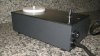
the current tape eraser I am using now, is a table top Teac E-2, equipped with a fuse. I believe that it is working, thus, it does demag some of the tape, just not all of the recording. Yes, the unit gets hot after several minutes on.

Maybe the difference in the tape length and .mil of tape??has to do with a complete erase???

Let me ask this, does someone have a eraser that completely erases a tape???
 
Last edited:
Let me ask this, does someone have a eraser that completely erases a tape???

Have you tried erasing the tapes by doing it once and then turning the tape over and doing it again? Does the tape vibrate and buzz while you are doing this?

I have the hand held Radio Shack video tape eraser (the black one) and have never had a problem erasing tapes, either cassette or reels.

Dave
 
Last edited:
I have an Audiolab eraser that completely erases. I've only done reels, never tried cassettes. When I do it, I don't do anything like the approach slowly etc. that you describe. I set the reel on the eraser, turn the unit on, and spin the tape so it all passes over the top of the unit. I also turn the tape over and do it again, though I don't think I need to. I wouldn't just pass the tape slowly over the unit like that, it might result in what you are describing, not sure.
 
I picked up an old home made eraser at goodwill and this thing will erase your memory !!! Desk top unit. Just a square box with a metal pin to locate the reel on. Instructions say place tape on unit, turn on, spin 2 revolutions, slowly remove tape, turn off. From the 60's.
 
Have you tried erasing the tapes by doing it once and then turning the tape over and doing it again? Does the tape vibrate and buzz while you are doing this?

I have the hand help Radio Shack video tape eraser (the black one) and have never had a problem erasing tapes, either cassette or reels.

Dave

Yes, the tape vibrates and buzzes. Yes, flip over, and also rewind tape and repeat procedures as described.

I guess I need to experiment some more with different methods.
Seems with a fuse protection on this model, that as long as it does not blow the fuse and get overly hot, it should be erasing, even though it is not completely erasing using the methods I have described or used.

report later on the 90 minute cassette and retry the 100 minutes again.

/Report = on the 90 minute cassette, with a faster pass of the eraser, better results than the 100 minute tape did.
tapes are Maxell - 90 is XLII-90 and the 100 is Maxell XLII-S100
 

Attachments

  • 004  right side and rear.jpg
    004 right side and rear.jpg
    65.7 KB · Views: 17
Last edited:
I realize from your last post that you are using an open reel tape eraser with cassettes and high bias ones (type II).

Is that right?

Reel tape erasers are made for open reel tapes which are plain ferric oxide. These have a much lower degaussing threshold.

Try to erase a Type I tape and see if it gets completely erased. It will probably do.

Unfortunatelly, type II cassettes can't be fully erased with this.

Tried also metal cassettes (type IV) and the eraser didn't even affect the recording (well almost).
 
I thought that the only real issue with bulk erasing was the Type IV formulations(?).

I have tried a Nortronics hand held eraser with TDK SA cassettes and it just half way muffled the recording. It does however totally erase the typical R2R tape.
 
Bulk degaussers have trouble with Type II and Type IV cassettes because (1) the tape coercivity--the resistance of the magnetic particles to switch poles--is much higher than that of ferric oxides and (2) there is a spacing loss from the field to the pack inside the cassette shell that reduces the effect of the field. You will have more success removing the Type II hubs from the shell and trying to erase them because the spacing loss is significantly reduced. Type IV tapes, however, will still resist erasure even with this method because their coercivity is so high, beyond most degaussers and, in fact, enough to challenge orientation magnets during production (one reason why the bias noise is so high).
 
Makes sense to me -

I have noticed since I have posted here, and have tried different tape lengths and different types (type I, II). Seems like the smaller length and type I tapes erased more with ease than the longer length type II . I don't have any metal cassette tapes anymore to try them..

I figured anyways that this Teac eraser was not malfunctioning at the least.
I have since sold off my RtR gear and have only my cassette collection, thus this whole ordeal being brought up. The cassette tapes that I am trying to erase are some that I have bought used with recordings on them. Just trying to spare the heads and eraser on my Cassette Deck and for the fact of recording alignment of other tape decks, makes for a cleaner re-record.

Thanks for everyone's response to this.

One other note - using the type II tapes, as mentioned by "SaSi" with his TDK SA tapes, I was getting this same result.

I have tried a Nortronics hand held eraser with TDK SA cassettes and it just half way muffled the recording. It does however totally erase the typical R2R tape.

Unless there is a better bulk eraser for cassette tapes, looks like I will have to use my secondary Cassette Deck, Onkyo TA-2058, with the Music Search feature as my cassette tape eraser, which my Nak BX300 is my main deck.
 
Back
Top Bottom