• The move to the new server is done. There are some software and database maintenance updates in process. This has us passing the hat around to help out. We appreciate any donations. Seriously, even a dollar helps. The payment page may be found here - https://www.audiokarma.org/support.html

JVC QL-Y5F or Technics SL-MA1

myu701

Vintage futurist
I have two turntables in my audio stable and a friend of mine is pining to buy one of them off me. I was using the SL-MA1 for many years, then boxed it up in favor of the JVC QL-Y5F when I got a good deal on it locally. Not that one is notably better sounding than the other (as far as my ears can tell), except for the SL-MA1 being fully automatic. I like the lower profile and appearance of the QL-Y5F, but have a bit of a sentimental feeling about the SL-MA1 since I've had it for many years.

The QL-Y5F is a simpler design and takes a standard cartridge.
The SL-MA1 is more complex and has a P-mount cartridge.

Which one would you keep and for what reasons?
 
Register to hide this ad
I've owned two JVCs, the QL-Y66F and QL-A7. I sold the first one and still have the second. Both are/were excellent tables, but I just preferred the sound of the A7.

If it were me, I would keep the JVC just on the fact that it uses standard carts and there are more of a selection of them.

However, that Technics is very nice. Makes it a difficult choice. :oops:

Whichever you decide to keep, enjoy it to its fullest!
 
Keep that QL-Y5F. 2 reasons:

1. S-arm so can be used with standard SME headshells and all kinds of cartridges. This means you have the widest selection of cartridges and that you can easily swap multiple cartridges. The arm is height adjustable too.
2. The QL-Y5F has a true dynamic servo controlled tonearm in both vertical and horizontal direction with adjustable Q-damping on top of that. Benefits of this are better tracking, optimal anti-skating force across the whole record, much better warp handling (instantaneous correction for constant VTF, even across the warp), less intermodulation distortion, a much lower resonance peak, and optimal adjustment to virtually any cartridge (compliance) is possible. Truly excellent. It really works, it makes cartridges track so much better.

The SL-MA1 just has a regular (although excellent) tonearm with the limited choice of T4P cartridges. Excellent turntable, but not as special as those Biotracer / dynamic servo decks.
 
INot that one is notably better sounding than the other (as far as my ears can tell), except for the SL-MA1 being fully automatic.

The JVC is also fully automatic, although you do have to do things such as select the disc size.

The QL-Y5F is a simpler design...
The SL-MA1 is more complex

Actually, the JVC is a more complex design, because of its superb electronic tonearm.

Which one would you keep and for what reasons?

They're both excellent, but I'd keep the JVC, for the following reasons:
  • Heavier
  • Electronically-damped tonearm (JVC Electro-Dynamic Servo tonearm – see also the very similar Sony Biotracer and Denon Dynamic Servo Tracer tonearm). That’s is the main reason why the JVC is worth choosing - it will outperform any conventional tonearm, whether it be an SME, Rega or anything else
  • The half-inch mount tonearm gives you a better choice of cartridges. OK, they need more setting up, but the choice of p-mount cartridges has shrunk drastically from last century, with the better models (e.g. Shure V15LT and V15V-P) virtually disappearing. There’s a huge range of half-inch mount cartridges available.
The JVC Electro-Dynamic Servo tonearm produces the following benefits compared to a conventional tonearm in the same turntable:
  • Tonearm/cartridge resonance reduced.* This allows cartridges of any compliance to work well with the tonearm
  • Much lower IM distortion
  • Record noise much lower (see my post below for the measurements)
  • Wow and flutter improved
  • Crosstalk or stereo separation improved
  • Resistance to external shocks greatly improved
  • Better tracking of warped or off-centre records. To quote a reviewer about the performance of the similar Sony PS-X75, the JVC QL-Y5F's main competitor when it was new,
    "When we tried it with our collection of warped records, the results were gratifying and even a bit surprising, in spite of our expectations. It played all the records flawlessly, never giving a hint from the speakers that the pickup was soaring up and down over a 1/4-inch warp or jiggling simultaneously from side to side as it negotiated a sharp eccentric "jog." As we watched, the pickup moved over these obstructions as though it were massless, and there was no visible sign of the stylus cantilever's moving in relation to the cartridge body as the arm went through its gyrations.

    This experience brought out forcefully what is the real major advantage of a fully servo-controlled arm such as this. Its actual mass (including that of the cartridge) is of no consequence whatever. The servo action makes it into a close-to-zero-mass pickup capable of playing records that would overwhelm most conventional arms". In fact, fellow AK member dlaloum owns a QL-Y5F, and in another thread describes how his Grado Gold cartridge, well-known for doing the 'Grado dance' due to the very un-damped cantilever, would stop dancing and start steadily tracking when he turned up the JVC Q-Damping (Grado cartridges measured 17dB, 17dB and 21dB resonance in three separate reviews - by far the highest of more than 170 cartridges I've got figures for - terrible!)
  • Tracking force (applied electronically) much more stable
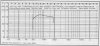
*Actual measured resonance of JVC QL-Y5F with JVC MD-1025EB (Z1EB) cartridge:

JVC QLY5F MD1025EB cartridge resonance.jpg

You can see that the resonance has been reduced to just 3dB.

See here for more info http://audiokarma.org/forums/index.php?threads/sony-ps-x600.721737/#post-9730950 , from one of my earlier posts. Some of the measurements were from the JVC QL-Y5F, and the others were for Sony Biotracer tonearms, which are very similar to the JVC ED Servo tonearm in their performance.

There's a review of the JVC tonearm from when it was introduced on pages 56-58 of Radio Electronics magazine, August 1980 http://www.americanradiohistory.com/Archive-Radio-Electronics/80s/1980/Radio-Electronics-1980-08.pdf .

The review of the Sony PS-X75, which has a very similar tonearm, is available here http://www.hifi-classic.net/review/sony-ps-x75-293.html .
 
Don (ETI_5000), thank you so much for your detailed reply. I see your point about complexity... I was thinking more about the feature set, with the auto size detection and the auto-start (tonearm lines up automatically to start, so you just press "start" and walk away), but I hear you about the underlying drivetrain technology. I remember reading about JVC TT innovations a while back and was very impressed with their techniques on defeating resonance and vibration. It seems like this brand gets overshadowed by the sheer popularity of Technics, Thorens, Rega, Linn, etc. It does seem like the QL-Y5F is an excellent value, because it shares much of the same technology with its higher priced models. I'm not one who has ever found much of a need for pitch control -- as long as the TT is faithful to the proper speed, then any variation might simply be a recording issue, right?
dutchflea, thanks for this input as well, which falls right in line with Don's details. :)
ranf1970, that cartridge support is one thing that has been swaying me as well. Thanks for sharing your JVC TT ownership experience.

I would really like to keep the SL-MA1, because it's a beautifully done TT and for sentimental reasons, but... space is a bit of a premium for me now and I'd rather have just one for the time being.

So QL-Y5F it is. Thanks guys. :)
 
On a related note, how do you feel the JVC QL-Y5F stacks up to the Sansui SR-838 in terms of underlying technology? Are they very comparable or does one have some notable advantages?
 
On a related note, how do you feel the JVC QL-Y5F stacks up to the Sansui SR-838 in terms of underlying technology? Are they very comparable or does one have some notable advantages?

The JVC QL-Y5F (1981) with the ED servo arm and fully automatic turn table is technologically more advance than the Sansui SR-838 (1977) manual turn table. :)
 
On a related note, how do you feel the JVC QL-Y5F stacks up to the Sansui SR-838 in terms of underlying technology? Are they very comparable or does one have some notable advantages?

The JVC has more advanced technology, as Balifly stated. It's better in most specifications except for weight (Sansui 12.8kg vs JVC 10.5), as it's a newer design, and also has the user advantage of automatic operation, while the Sansui is fully manual.

The JVC tonearm, apart from having the huge advantage (to performance) of the electronic tonearm, also has a 15mm longer tonearm.

That's not to say the Sansui isn't excellent, though - just that the JVC is better.
 
Last edited:
I've owned two JVCs, the QL-Y66F and QL-A7. I sold the first one and still have the second. Both are/were excellent tables, but I just preferred the sound of the A7.

If it were me, I would keep the JVC just on the fact that it uses standard carts and there are more of a selection of them.

However, that Technics is very nice. Makes it a difficult choice. :oops:

Whichever you decide to keep, enjoy it to its fullest!

wow you liked the sound of the QL-A7 better. what is it you find that is better with the A7 than the QL-Y66F?
 
wow you liked the sound of the QL-A7 better. what is it you find that is better with the A7 than the QL-Y66F?

For me, the A7 just sounded more open. I also wasn't a huge fan of the straight arm (I didn't have the S arm) of the Y66F. I don't regret selling it but I'm sure others are second guessing my sanity now :)
 
Back
Top Bottom