• The move to the new server is done. There are some software and database maintenance updates in process. This has us passing the hat around to help out. We appreciate any donations. Seriously, even a dollar helps. The payment page may be found here - https://www.audiokarma.org/support.html

KEF 104aB... one more time

One more question, my colleague ask me about resistance of MKP capacitors that I used. I read about change characteristics in LF section when used MKP not electrolytic cap.

But I bought also Alacap electrolitic 5 uM to LF section and the same MKP

16fc8efa6ed46fc5.jpg

I changed it and compared and I don't heard diference. It's something wrong with my ears ??
 
Last edited:
I've found the re-cap to need about 20 hours of break-in time to sound better. I use 2 pairs in my main system. After the re-cap, I'd leave the radio on playing classical music one day and electronica the next while I was at work. It doesn't need to be that loud either.
 
Are these essentially an IMF minus the refrigerator-sized transmission-line box ? Those drivers look pretty similar...

jblnut
 
Because IMF used in old version loudspeakers KEF driver. But they used B139 (active) in Reference 104aB I have BD139 (passive radiator)
 
And the last change in KEF. I bought another pair of T27 (third), but this time with matching numbers.

419fbb3b2a2597d7.jpg

When I return home, I will put it in 104. Maybe they will not play better, maybe I will not see the change, but I will definitely know that now is perfect.
 
Last edited:
Hope it works out well.
The matter is that KEF (as explained in their literature, KEF topics) measured driver units and classed them in "bins" of specs. They also measured components (inductors, capacitors and resistors) and again put them in bins by tolerance. The ranging was done according to results they got from some programs that combined parts from each bin, for the flattest response.
It is possible that two drivers with sequential S/N may perform similarly. Or not.
Anyhow, from the point where a crossover is recapped, all that "clever" matching goes out of the window. In fact it goes out of the window well before that, that happens as the crossovers and drivers age. Replacing drifting capacitors is just the best possible way to fix the problem.
 
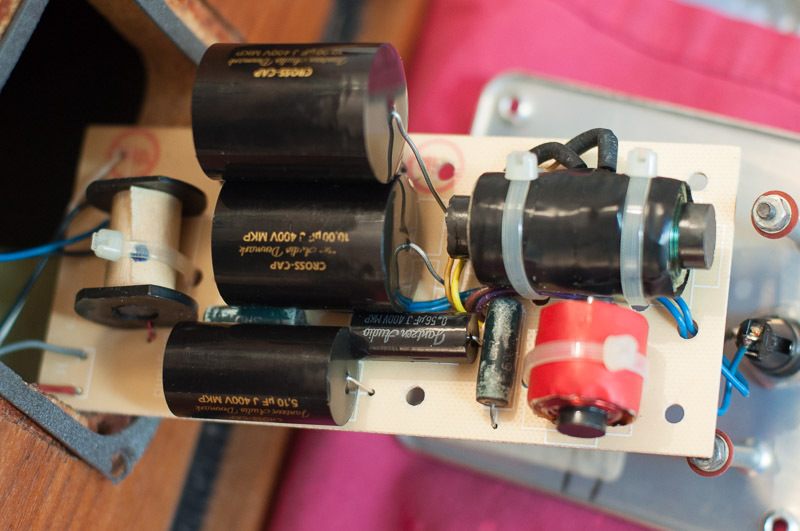
Hi Martynka, nice work. This reminds me of what I did with my 104ab crossovers, using Jantzen Audio Cross Cap capacitors. The operations was quite noticeable, I did some A/B comparisons with the the amp put into mono mode. I also measured the old orignal caps and they were all way out of specs, by 50%.

I have a question, would you mind showing the back side of your speaker grills ? I'm planning to add some too.

_dsc5400fgqv0.jpg
 
One more question, my colleague ask me about resistance of MKP capacitors that I used. I read about change characteristics in LF section when used MKP not electrolytic cap.

But I bought also Alacap electrolitic 5 uM to LF section and the same MKP

16fc8efa6ed46fc5.jpg


I changed it and compared and I don't heard diference. It's something wrong with my ears ??

Hi. I am newbie trying to do mine. Sorry if I am showing my ignorance but the capacitors in the pic show 0.33 micro farads and the circuit diagram shows 3.3 micro farads. Can you help clear my confusion? Thanks Brenny
 
Congratulations vigilance.

You see on photo 0,33 uF because it was my fault. I ordered wrong value... but I still have it:

835f498d44ca1929.jpg

For my crossovers I ordered one more time correct caps before I reasembly everything:
5783ec0a680bddb1.jpg
 
Last edited:
Hi, I want to show my latest speakers and learn from you what to do to make them even better.

I know I'm late to this party but I would say replace the caps with the same type it came with.
At the time it was made, I don't think KEF cut any corners in their design.
I understand how the crossover is frequently a target of cost cutting in lesser speakers but they knew what they were doing with these.
Changing cap types on a well tuned crossover is probably going to change it for the worse.

KEF had the great engineers and computer, I would trust them.

Your B200 surrounds look remarkably perky. Most of them are going flat after 45 years. Where did you get them?

Nice veneer job!
 
Hi,

I am new here. I read the forum anonymously for a long time, now it's time to write something.
I want to show my latest speakers and learn from you what to do to make them even better.

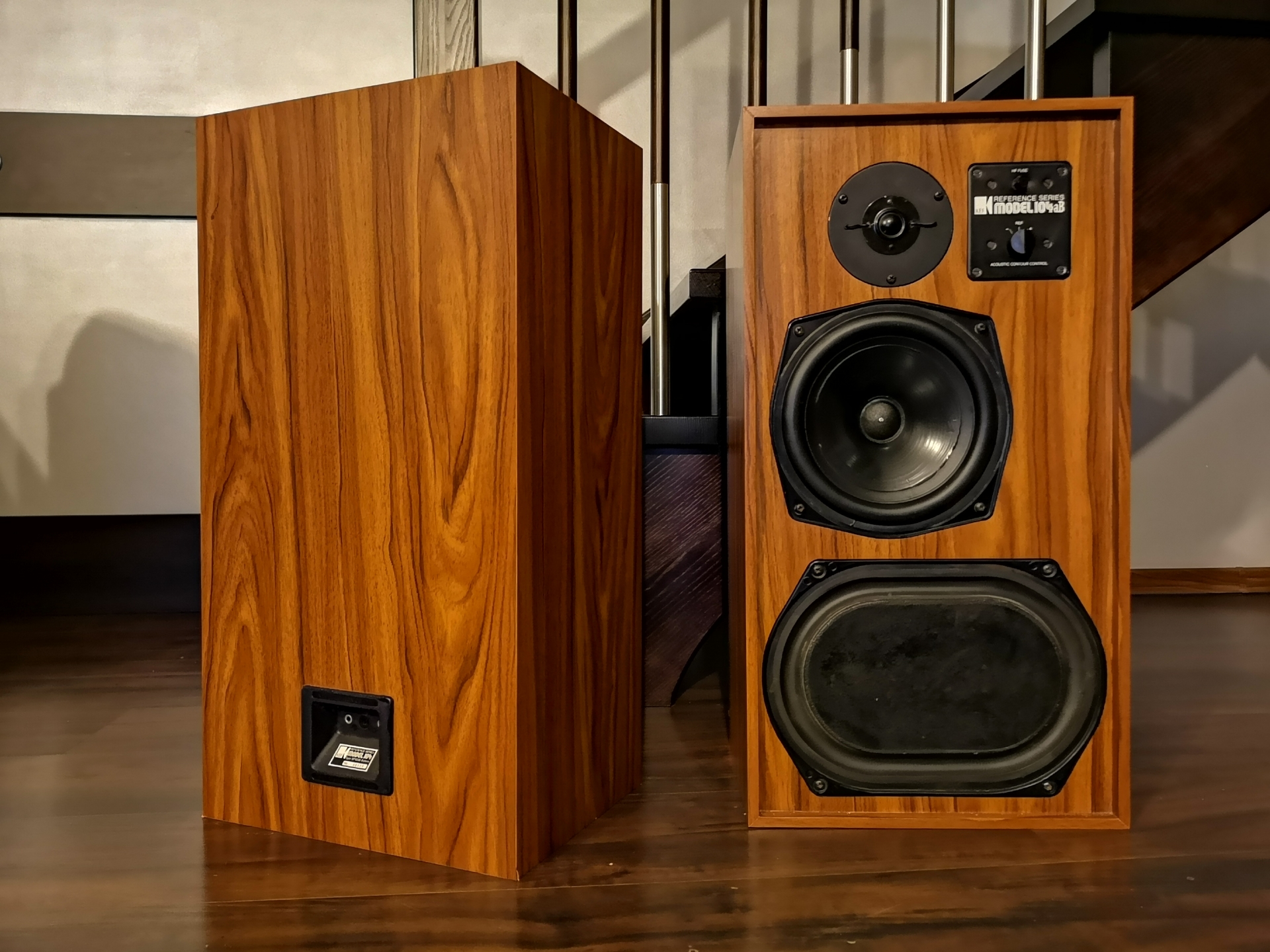
Here are my KEF 104aB:

4110624b0490e144.jpg


9db18a9ebf6ad2cc.jpg


The boxes were good, but for the look they were refreshed with veneer, and to protect the speakers from small fingers I made textile grills.

2e94b0f02aa3d638.jpg


I am still waiting for the KEF logo to put them on textiles.

Visually, I've achieved what I wanted. Now I want to deal with the sound. Will you help me?

Good work (I read ahead) on recaping. I have had these same speakers since circa 1984, also two sets of the larger 104/2 (one pair bought new, the other "lightly used" circa 1995). Never had a problem w/ the "wet", i.e., T33, tweets, and the only issue w/ the aBs is one of the tweeter's (yes, the T27) "buttons" was pokoed in by -- who else -- one of the kids. What I get for removing the grills. Chilren are a powerful argument for leaving grills on your speakers!
 
Changing cap types on a well tuned crossover is probably going to change it for the worse.

KEF had the great engineers and computer, I would trust them.

Your B200 surrounds look remarkably perky. Most of them are going flat after 45 years. Where did you get them?

You can read in this tread that I bought two types of caps and resistors. I compared it by my ears and... for me and my friends was not difference. B200 were in this condition when I bought it.
 
Back
Top Bottom