
Semanon
Super Member
I agree. The replacement Omron relay was far superior. I'll be long dead before that new relay fails.I thought they were sloppy, contact arms were easily moved laterally out of alignment.


I agree. The replacement Omron relay was far superior. I'll be long dead before that new relay fails.I thought they were sloppy, contact arms were easily moved laterally out of alignment.


 Changed ALL TRANSISTORS, CAPACITORS, DIODES, was going to even change resistors, and never bothered to think about the relay.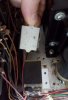
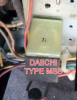
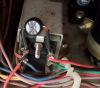
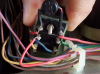

 Wish you guys the best!!! Now I´m on my next GEM, the HK 730. Oh, what a beauty that one is.

 What relay did you use? Was it from Mouser? I should also change mine but I couldn´t find one on Mouser which is where I buy normally.
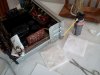
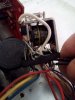

Greetings fellow audiophiles,
You were right @Semanon . The acting up of the relay came back and the spraying DEOXIT in there is not the best solution.
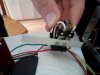
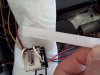
I decided to use the "paper strips" solution and that seems to have really worked well--SO FAR.
View attachment 2768733
View attachment 2768734
View attachment 2768735
View attachment 2768736
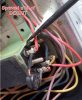
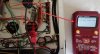
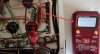
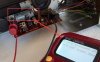
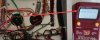
Has anyone seen this much dirt and gunk on the relay contacts?
Next step will be to obviously change it and put in a brand new relay in there. If anyone knows a Mouser equivalent to it, I would greatly appreciate it.
View attachment 2768737
Cheers!!!
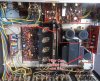



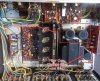
The early Kenwood’s had very simple preamp sections. The 4004 has two transistors and a few caps when the tone controls are not engaged.By the way, that tone board looks so simple and "clean" that this could also be used as a PRE Amp?? The less signal path = the cleaner and more faithful the signal??
I missed the 1000 uF cap when I first looked at the schematic. It is The filter cap for the tone and phono. It comes right after the diode. If you have no noise or hum in the preamp section, it’s probably fine (but at 50 years is probably due for retirement).There are in total 3 big black caps---2 ELNAS 6800uf (have crept up in value, by the way) and 1 1000uf cap
Hum in both channels would point to the filter caps. Hiss is harder to pin down, but could be the filter caps. Based on your measurements and description, that’s where I’d start.Apart from the light hissing, coming from the tweeter, I can also hear a very slight "hum" from the woofer. Isn´t that a tale tale sign that the "filter" caps need to be changed?
Thanks for that sound description on the 6004 and 8100. I prefer the warmer sound and one thing I have learned is that "paper measurements" don´t equate with "musicality" --those feelings and pleasant emotions you get when listening to music. Gonna stick with the KA-4004! 
What transistors did u use to replace them all?Greetings fellow audiophiles,
Thanks @Semanon for enlightening me along the way!!! I will get a Fluke (used one). Saw a 179 for a fairly good price. The 87V, which is what many say would be the best for electronics use, is way too expensive for my budget.
Changed the Diodes De12-15 (S-1.5-02) with a 1N4003. I checked them and they all measured more or less around this value:
View attachment 2542385
Also checked the two oil filled caps (Ce22,23) and they checkout within specs so I left them in there. I lifted one leg for the measurement. Original value 0.022uF:
View attachment 2542386
I rechecked the Bias, connected it and for a moment I thought it was fixed. I was getting ready to start jumping up and downI still have the De5-De10 pending to change. Could it be one of those little "thyristors" close to the Bias pots? Or one of the "ceramic" (Ce1,2) or "mylar" (Ce15,16) caps? The symptoms normally take place at start-up and I have been listening to it since yesterday and it´s working GREAT! Maybe those De3,4 Diodes (STV-3). They are screwed to the heatsink so maybe it has something to do with temperature?
So far, this is what I have changed:
View attachment 2542390
Oh, forgot to check the relay that you mentioned before. Gonna keep trying!!
Cheers buddy!!!