• The move to the new server is done. There are some software and database maintenance updates in process. This has us passing the hat around to help out. We appreciate any donations. Seriously, even a dollar helps. The payment page may be found here - https://www.audiokarma.org/support.html

Kenwood L-07M (Mk1) blows fuse

skynetyt

Member
Just moved the post from conversation to a new thread.
So I have got a pair of beautiful Kenwood L-07M (Mark 1) amps. One is in good shape, but another – unfortunately dead. First I checked the fuse – 250v 5A blew (as I could see, somebody tried to replace it, but put a wrong one for 2.5A). I replaced it with correct one – same story, it went away.

I removed Power Amp board (X07-1520-10) and checked the power transistors - 2 were bad (2SA747A and 2SC1116A). Have been replaced with genuine ones. After that (with power amp board removed) amp started, power led lit and I`ve got two clicks – one from power relay, another –speakers protection relay.

After that checked power amp board: found two fried driver transistors pairs (Qe9 2SC1885 – Qe11 2SC1913 and Qe12 2SA913- Qe10 2SA912).

Replaced with:
2SA913 - PNP - MJE15031
2SC1913 - NPN - MJE15030
2SC1885 - NPN - 522-ZTX455STZ
2SA912 - PNP - KSA1220

Checked IC UPA63H, FET Qe1 and Qe2, Transistors Qe4, Qe5, Qe7 (Qe1, Qe2, Qe4, Qe5, Qe7 with desoldering) and almost all resistors – everything was fine.

Inserted Power Amp Board into amp, powered on – same story, 5A fuse blown again.
Is there specific points where I have to check on Power Amp Board (like pf capacitors). Or I have to dig into different place?

Any help would be highly appreciated! Thank you.
 
Register to hide this ad
Build a DBT. You'll find this tool very handy. It saves money. Less surprises.
Have you checked any outputs?
Bad drivers equal bad outputs.
 
Buy the way, thank you for DBT idea, back in time i was going to build one, but now it is right time to do it.
 
I have a fair bit of experience with the L-07MII, but not the original. So I've never really gotten confirmation as to whether the 'Mk1' contains any of the 'Black Flag' capacitors. If it does, they need to go.

And yes, time to build a DBT.

Q - Why do you think the 2SA747A and 2SC1116A devices you sourced were original/authentic? Safer to just source some MJ21193G's and MJ21194G's unless you have a stash of original devices that are beyond question.

My choices for devices:
Qe9 - KSC2690AY
Qe10 - KSA1220AY
Qe11 - 2SC4793
Qe12 - 2SA1837

Any time the outputs are blown, the V/I limiter transistors become suspect (Qe13, 14, 15, & 16). The Fairchild KSA733CYTA and KSC945CYTA will do well here. Note that the devices with the 'C' suffix are 'center-collector' devices (check datasheet).

500 ohm bias trimpot should be replaced and set to minimum resistance (for minimum bias current).
 
Last edited:
EchoWars, thank you for you response.

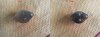
Here the thing, all 2SA747A and 2SC1116A come from NOS from one shop, but frankly I don`t know how genuine it is (seller stated that it is NOS). I attached couple of photos to compare new and old ones. I understand that it is a big chance that SanKen is not originals, and might be, as you said, it is the right way to go with MJ21193Gand MJ21194G.

Yesterday I did not have a chance to test limiter transistors, going to do it tonight. And regarding “Black Flag”, very interesting article, thank you. But so far I haven’t seen any of these (at least on power amp board X07-1520-10). I will check the rest part of the amp and let you know. Buy the way, this ‘Black Flag’ caps, they are only black or come in different types of colors?
 

Attachments

  • 1.jpg
    1.jpg
    60.1 KB · Views: 48
  • 2.jpg
    2.jpg
    63.4 KB · Views: 47
  • 2sa747a.jpg
    2sa747a.jpg
    76.9 KB · Views: 45
  • 2sc1116a.jpg
    2sc1116a.jpg
    84.7 KB · Views: 44
Transistors look OK, but you're the one who has to decide. The Sanken's have a rather unique finish...sort of a satin-y, crystalline look to them. But even if they are authentic, that doesn't mean they are not damaged or blown. It may be possible somewhere down the road to install Sanken devices, but for now it would be easier to troubleshoot if you had known good devices. If you're dead-set on installing Sanken devices later (and that's OK as long as you can somehow source them), then you can troubleshoot with, say, a single pair of MJ21193 and MJ21194, as there's no need to install all six output devices till you have everything else sorted out.

Blown limiter transistors can cause trouble, but are damned unlikely to be the cause of blown fuses. Just so you know.

The Black Flag caps are pretty obvious. If you don't have them, then you don't have them. Simple as that. IIRC, the only place they were used is on the driver board.

Time to get all those output transistors removed and see which ones failed. And get busy on the DBT. :whip:
 
Thank you for all of your advices!

Going to order MJ21193, MJ21194, bias trimpotand other devices you recommended above. I think so it would be the best way to start with known good devices! Down the road I will continue posting my progress.

One question that is not exactly related to this post: I have couple of Kenwood Ka-7100 and Ka-9100 amps. What I have notice, right channel produce more bass (more ‘bassy’) than left. And it is applicable to both amps. Switching the speakers connections (speakers Yamaha NS-1000) – right-to-left, left-to-right does not make any difference, same story, right channel provide more bass. Especially it is clearly seen when I supply amps with 60-70Hz signal from generator. Right canal provides clear bass, but turning balance to the left – and the bass is very easy, and not so strong and noticeable. Can we state that it is the nature of stereo signal, or it is time to dig inside of the amps? Ans as i mentioned it is applicable to both amps.
 
Dirty switches? Speaker placement? Who knows? I get 'em on the test bench and put 'em through their paces to see WTF.
 
Buy the way, regarding the issue that I had between left and right channel I mentioned above – unfortunately it is a problem of the speakers (Yamaha NS-1000). After putting low frequency 40-50Hz signal from generator left woofer started rattling. Magnets shift is suspected (I created a new thread for that “Yamaha NS-1000M rattling sound”). Time to replace woofer.
 
Yesterday received components from Mouser. What have been done:

driver transistors and ‘pre-drivers’ has been replaced, along with one V/I limiter transistor. Also I replaced one 2SA74A and one 2SC1116A – all of these have been cooked. Here is the list of changed components:

Qe9 - KSC2690AY - 2SC1885 - NPN
Qe10 - KSA1220AY - 2SA912 - PNP
Qe11 - 2SC4793 - 2SC1913 - NPN
Qe12 - 2SA1837 - 2SA913 - PNP
Qe14 - 2SC1213A - KSC945CYTA – NPN

Power transistors 2SA74A and 2SC1116A replaced with same originals.

After this job amplifier is up and running.

As EchoWars suggested I ordered two outputs (MJ21193G and MJ21194G') just for testing purposes, after I put back originals.
I was able to adjust power supply voltage (-63 V), center voltage (0 V), and Bias current (25 mV). Everything according to specs.

One question that I have is regarding Bias: to set 25 mV I turn the potentiometer clockwise (VRe 3) just only for a little bit (might be around 15 degrees) from its initial starting point (minimum resistance). Is it because driver transistors (or ‘pre-drives’) generate to much?

I did not replace trimpot yet, but have one: 652-3329W-1-501LF 10% tolerance 500 Ohm. Which trimpot do you recommend in this case?

And thank you gentlemans for your help!
 
The base-emitter voltage determines the point where the transistor begins to conduct. The variance can be significant between different transistors, but as long as you can make the adjustment you should be fine. If push came to shove some resistor values could be changed, but that's for later.

Stock trimpots suck. The one you picked has the adjust facing the wrong way.

Bias adjust - 652-3296P-1-501LF
Coarse Offset - 652-3386H-1-202LF
Fine Offset - 652-3386H-1-104LF
63V Adjust - 3386F-102LF-ND

Handy to have: Bourns trimpot tool: 652-H-90

Mouser #'s.
 
Did not post on the form, last two weeks were pretty busy.

So far amps running pretty good and sound pretty impressive.

One question that I have:

I noticed that transistors like Qe6, Qe7 (2SA810), Qe8 (2SC1452) with metal insulator-radiator fitted on a body run pretty hot. For example, Qe8 temperature measurement showed around 60-62 degrees in Cesium (around 140F). Is it normal operation temperature for them?

But in general amp running warm, especially big power transistor radiator. Outside radiator temperature: 36 degrees Celsius (96F).

Power transistor radiators temperature (Qe11, Qe12): 56-57 Celsius (132-133F).

What do you think, is it normal operation temperatures?

PS. Room temperature is around 85F, kind of hot.
 
in the meantime you could check the data sheets for the transistors to see if in operating range .
saying that i like to see them on the cooler side . but warm enough so to speak .
 
Back
Top Bottom