• The move to the new server is done. There are some software and database maintenance updates in process. This has us passing the hat around to help out. We appreciate any donations. Seriously, even a dollar helps. The payment page may be found here - https://www.audiokarma.org/support.html

Kenwood oscilloscopes?

darklife

Modulating Madness
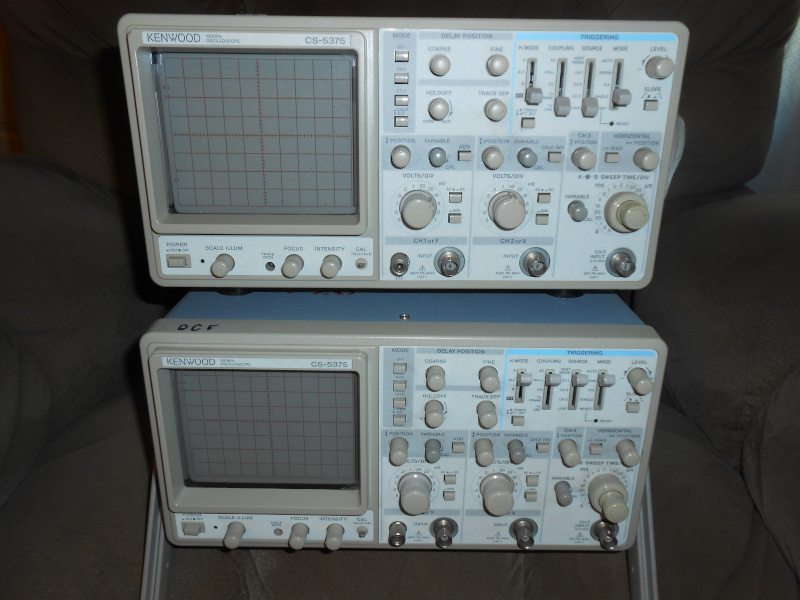
I just got a pair of Kenwood CS-5375 from 1997 scopes for free that originally came from a tech university and it seems information on these is quite rare and even stranger they have three input channels instead of dual or quad. What's up with three channels?

Both work but didn't come with probes so for now I am using some cheap probes from a Hantek and tweaked them with the little probe trimmer tool to get the square wave to look right with the front panel calibration connector but they still aren't perfect.

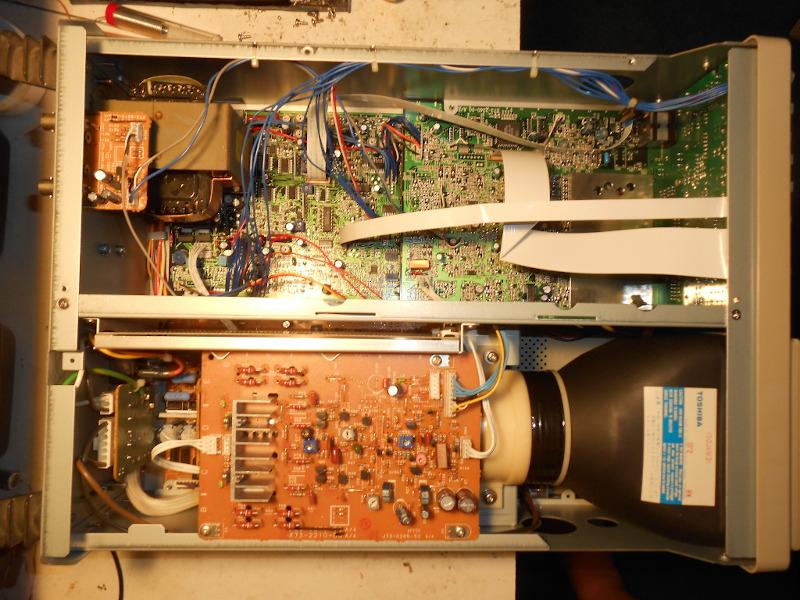
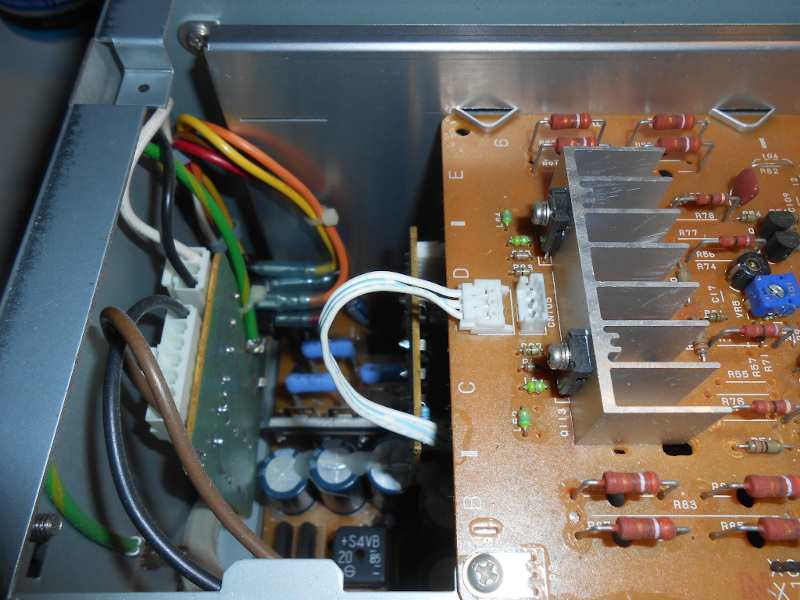
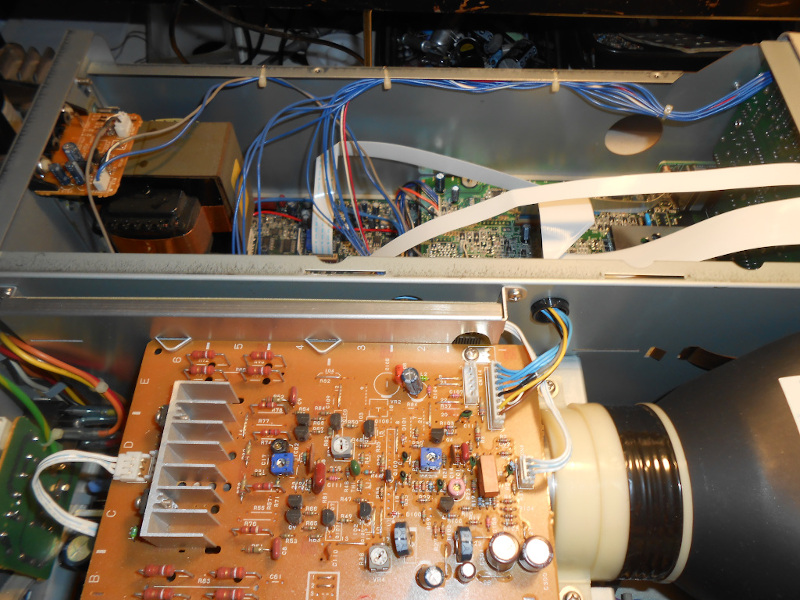
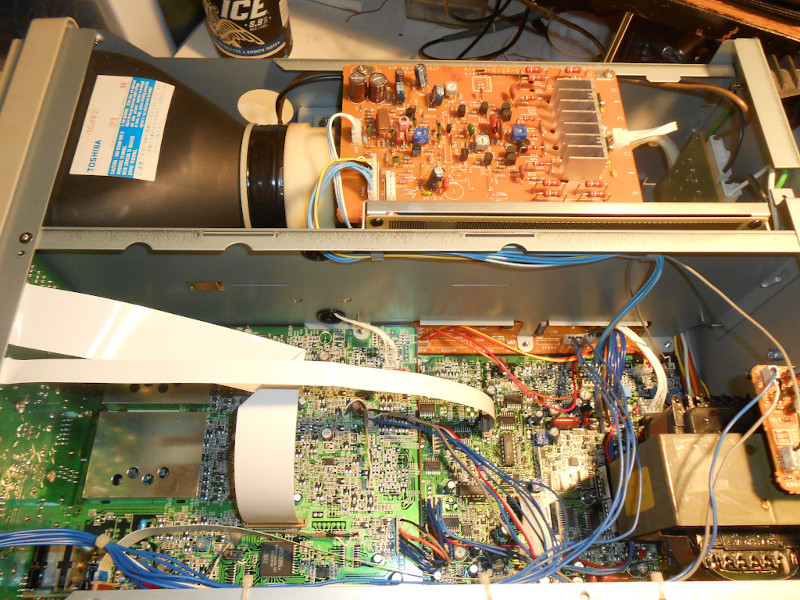
What amazes me with these is that they are built on the inside exactly like their stereo equipment and even look like it which is why I took pictures.
In fact I think the PSU transformer and larger capacitors look identical to some Kenwood stereos.

There is a service manual online but that's all I can find. No instruction manual. I think I figured out most of it so far but if anyone knows where to get the instruction manual please let me know.
Also does anyone know if there are some generic probes that can work with these? I'm guessing most 100MHz probes that have the same capacitance work?

Sorry not sure if this should have went in the Kenwood forum or here since it's an odd topic.
 
Register to hide this ad
never seen a 3 channel scope before. Not sure how you'd use that since there appears to be no v/div adjustment, but there is a position control which implies it can be displayed. Usually the extra front input jack is for external trigger use only.
 
never seen a 3 channel scope before. Not sure how you'd use that since there appears to be no v/div adjustment, but there is a position control which implies it can be displayed. Usually the extra front input jack is for external trigger use only.
It would seem to be an external trigger with "trigger view" capability, not really a vertical input.
 
A three channel can be used for CRT projectors . Comes in handy trying to view and match the Three channels wave forms of the video amps and preamps .

Athanasios
 
never seen a 3 channel scope before. Not sure how you'd use that since there appears to be no v/div adjustment, but there is a position control which implies it can be displayed. Usually the extra front input jack is for external trigger use only.
Yeah exactly lol.
I think the second and third or first and third channel is possibly
Would these be mainly for tuners or communications?. Kenwood was BIG in coms and tunahs!.
Well the good news is that is what I would probably use it for. I'm an RF guy, but I am spoiled by my DSO with all the onscreen measurement text like frequency and duty cycle and so on.
I plan on using one for a modulation monitor for an AM radio transmitter. Keep the other for a service scope if I need to diagnose something away from homebase.

I did find out channel 3 on this scope is kind of a gimmick. It is useful and it can display all three traces but channel 3 is set to a medium input voltage instead of adjustable. It can be synced though either from or to. Strange.

Other than those oddities though it's your generic scope. Pretty easy to grasp after playing with it for a while.
 
Last edited:
There were a few other oscilloscopes that had three channels plus trigger, Schlumberger/Enertec 5220 comes to mind (https://dokumen.tips/download/link/enertec-5220-5224pdf). Usually the 3rd input is fairly simplified (the 5220 had only 1V/div and .1 V/div vertical scales), it was mainly intended to work on applications in which the third channel was a clock or a sync signal of sorts. I don't believe it was aimed at working on tuners, as the simplified vertical divider would have been a major hassle in this case. Interestingly, the 5220 for instance was the simpler version of the 5224 which was a true 4-channel oscilloscope, so they were probably intended for different applications.

Any 100 MHz probe will work fine, all you need to do is adjust the capacitance using the built-in reference generator of the 'scope.
 
Back
Top Bottom