• The move to the new server is done. There are some software and database maintenance updates in process. This has us passing the hat around to help out. We appreciate any donations. Seriously, even a dollar helps. The payment page may be found here - https://www.audiokarma.org/support.html

KLH Model 6 repair

So to help with some clarification......

Yours are very very early Sixes. Everything is epoxied in place - the woofers, the tweeters and the cross-over hiding behind the terminal plate. Don't despair they can be saved. They will also have Oil filled capacitors which last a long time and may still be working which means the problem with your tweeters may actually be bad tweeters (or not). Yours are so old they may date to 1958 or 1959. Glenn's thread on his 1963 Sixes is kind of a primer on how to deal with these early versions. To do it right you need to go through the terminal plate on the back. Read up (please). These are worth the extra effort it takes.

I've got a set in the queue which are also very early with oil caps but the serial numbers are in the 8000's. Mine might be from 1959 or 1960. I haven't dug deep enough to actually be able to date mine yet. I also have a set of 1963's (verified with a date stamp in the cabinet - serial numbers in the 61000 range) which I refurb'd which were epoxied too, but didn't have the oil caps. The 1963's are in my main rotation and they sound sweet - even in comparison with more modern speakers. Wow, they (Henry Kloss) knew how to make them back then! Go ahead. Refurb them and find out for yourself.
 
So to help with some clarification......

Thanks Tim (and Glen). I ordered new capacitors today, and will start the take down process next week. I'll follow advice and go slow. Fortunately I don't have to refinish the cabinets, and the cloth covers are still in excellent condition. If I can get at everything from the crossover cover, I'll be in good shape. I found the original manual with the crossover diagrams on line, so I have some idea of what the connections should be. I expect that it will be challenging to reach the 8 microfarad caps. In any event, this seems to be the place to start, given the inaccessible location of the tweeters.
 
pvs,

Sorry to hear that the grill clothes are good. You might need to remove them to finish your refurb (maybe). The speaker surrounds are cloth and the cloth is sealed with a butylene solution. To get to the cloth surrounds you end up cutting off the grill cloth (not the surround cloth) and replacing it with the later style removable grills from late model Sixes. Let's see what others say.....
 
Last edited:
It's not even possible to test whether the woofers need to be sealed w/o cutting
the cloth. However, after ~60 years, chances are quite good they do.
 
Thanks all. It seems like best sequence is to attempt replacement of capacitors first and see what the results are. In the meantime I'll start looking for a tube amp to power my bench tests. I might as well attempt to recreate the circumstances the speakers were designed for.
 
pvs,

While you are in there replacing the caps if you have a multimeter you can check the tweeters. Glenn can confirm, but the later model Sixes had tweeters that ran about 4.7ohms DC resistance. Not sure if the early model epoxied tweeters have the same DC resistance. Basically you would be verifying that they aren't open circuit (dead).
 
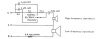
I found the circuit diagram in an on line post of the original manual, but didn't write down the attribution. Thanks to whoever uploaded, and I hope you don't mind my sharing it
 

Attachments

  • Screen Shot 2018-11-24 at 2.47.11 PM.png
    Screen Shot 2018-11-24 at 2.47.11 PM.png
    53.5 KB · Views: 21
pvs,

While you are in there replacing the caps if you have a multimeter you can check the tweeters. Glenn can confirm, but the later model Sixes had tweeters that ran about 4.7ohms DC resistance. Not sure if the early model epoxied tweeters have the same DC resistance. Basically you would be verifying that they aren't open circuit (dead).
As far as I know, the two tweeter version are exactly the same.
It's a difficult decision to cut the grills to reseal the woofer surrounds and dust caps, but sonically, worth it. Like Tim said, start watching fleabay for removable grills.
 
I found the circuit diagram in an on line post of the original manual, but didn't write down the attribution. Thanks to whoever uploaded, and I hope you don't mind my sharing it

Yes, that's the right diagram. I have never seen any other variations, but often in the ones with electrolytic caps you'll find two caps in one tubular case with 3 wires coming out. One wire is a common for both caps inside. You just replace it with two individual caps and tie one end of the two together. Yours is early enough that unless someone has been inside it will still have the original oil caps and probably won't see those double electrolytic caps. You'll know it because the oil caps are in metal cans.
 
Yes, that's the right diagram. I have never seen any other variations, but often in the ones with electrolytic caps you'll find two caps in one tubular case with 3 wires coming out. One wire is a common for both caps inside. You just replace it with two individual caps and tie one end of the two together. Yours is early enough that unless someone has been inside it will still have the original oil caps and probably won't see those double electrolytic caps. You'll know it because the oil caps are in metal cans.
If there's oil caps in there, leave them! They hold up very well.
 
Thanks. i’ll start taking the plate off tomorrow night to see what’s in there. Also decided to see if I can fix my vintage Mitsubishi preamp-tuner and power amp pair. Overpowering 60 cycle hum coming out of one or both channels.
 
If there's oil caps in there, leave them! They hold up very well.

I second the motion to hope that you can leave the oil caps in place, but you need to find out why those tweeters are not working. Hopefully, the tweeters aren't bad. I'm hoping maybe some internal wire nuts fell off or there is dirt or problems with the tweeter switch. Go ahead and do your checking and report back what you find when you dig in. Fingers crossed.
 
Crossover came out easily. The epoxy is very brittle. I pulled out all chips with a small diameter shop vac tool, and used the shop vac on low to remove the fiberglass insulation batting. I’ll put it back in when I finish. The capacitors are paper and wax in speakers despite the very low serial numbers (003756). Perhaps they used oil csps only when surplus was available. The plastic retainer on the 4 mfd cap broke, which made removal easy. Replacement parts have arrived. On to next step
 
Tim D and GD70:
Recapped crossover on speaker #1. It works and it’s awesome!! Process including removal of epoxy took about 2 hours. Now on to speaker #2. Thanks guys
 
Second speaker recapped. Great sounding speakers. It was worth the effort. Thanks to all for your help
 
Second speaker recapped. Great sounding speakers. It was worth the effort. Thanks to all for your help
Yes they are! Did you remove the grills to reseal the woofer surrounds and dust caps? If you think the bass is good now, once resealed, you'll be shocked how much deeper they will go.
 
Back
Top Bottom
