The professionals who refurbed mine switched to LED. I was generally concerned before I brought it in about switching to LED, but I didn't say anything. When I went to get it, he turned it on and I assumed he stayed with incandescent because it was a near perfect match to what I remembered. He said no, it's LED. Mine had the plastic enclosures that eventually would have collapsed the rest of the way onto the bulb if he didn't switch. I'm very happy with the result.


You are using an out of date browser. It may not display this or other websites correctly.
You should upgrade or use an alternative browser.
You should upgrade or use an alternative browser.
Lamp replacement - LED or original incandescent?!
- Thread starter steveUK
- Start date

Semanon
Super Member
I prefer the look of incandescent lamps and leave them when I can. A few units I've owned had the original lamps, probably because a little voltage starved. When lamps fail, though, I replace with LEDs and work very hard to match intensity and color temperature. after a few amps and receivers, I've gotten pretty good at it.

I generally like to replace all the incandescent bulbs with LEDs but I have had nothing but bad luck trying them on my Onkyo M508 amp. If you replace all the bulbs with LED then the orange "standby" lights are always on and effect the color of the Green lights. I put the incandescent bulbs back in the "standby" position and they do go out when the unit is ready. I cannot find a decent green LED, the color is all wrong (I would put incandescent back in except I lost the blue/green bulb covers so it would just be white)

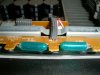

I had a Sony STR-6045 that I was getting fixed by a colleague and the dial bulbs had burned out. He replaced them with LEDs and then coated them with his secret mix of green fingernail polish. They looked very good and should be good for the life of the receiver, which is a big plus as the bulbs in the older Sonys are a bear to get to. I'd do it again.
Is it possible that the circuit is expecting a certain load and LED lights don't provide it? Maybe wire a resistor in series?If you replace all the bulbs with LED then the orange "standby" lights are always on and effect the color of the Green lights.
(I'm not an electrician or audio technician, but I did sleep in a Holiday Inn Express last night. No, really, my old Vespa's light circuit expected a load and you'd fry the headlight bulb if you replaced the turn indicators with LED.)
Is it possible that the circuit is expecting a certain load and LED lights don't provide it? Maybe wire a resistor in series?
(I'm not an electrician or audio technician, but I did sleep in a Holiday Inn Express last night. No, really, my old Vespa's light circuit expected a load and you'd fry the headlight bulb if you replaced the turn indicators with LED.)
Yes, I've read that the only way to fix that is to wire in a resistor, but since I don't know what value or exactly where to put it, I just put the incandescent bulbs back in.

I generally prefer incandescent for coloring reasons. Most LED look "off", the cold white especially. Blue is just eye torture for me, even on things that originally used a standard bulb and a blue filter. The LED blue is just harsh.
Warm white LED can work OK depending on the particulars. The color temp needs to be fairly low, somewhere near the 3000 range to not look funny. A lot of it has to do with how the light is distributed too. Lots of LED are very directional so you sometimes get spots of light rather than an even fill. May also need to do some tweaking on the circuit to get the light output to be right. LEDs are often a lot brighter.
Warm white LED can work OK depending on the particulars. The color temp needs to be fairly low, somewhere near the 3000 range to not look funny. A lot of it has to do with how the light is distributed too. Lots of LED are very directional so you sometimes get spots of light rather than an even fill. May also need to do some tweaking on the circuit to get the light output to be right. LEDs are often a lot brighter.

The LED retrofit people are getting better for controlling color and at diffusion to eliminate those fugly hot-spots in some earlier designs. I recently picked up some 6V bayonet base LED replacements in a diffused warm white (about 2800K) and they actually improved the lighting over the incandescents (ML44) in a Marantz 250 meter application. I was a bit surprised. but pleased. The LEDs are fitted with current regulation and dual pairs of diodes for polarity protection and/or operation on AC, as in the Marantz.
Not sure what kind of LED bulbs are you using, because mine is never getting hot. They are already 5 years old, but never happened to overheat or something like this. They are working like the newest leds, always cool and without making unnecessary heat. Being on this bulb topic on amazon, I found these smart bulbs with colors https://www.amazon.com/smart-light-bulb-bulbs-color/dp/B0922Q43LY/, which I got addicted to, changing the colors all the time, according my mood.


lrb1951
JBL L110 Nut
The catalog photos of Heathkit AR-1515, AA-1515 and AJ-1515 all showed the displays of the meters and indicator lamps as being blue. I was a little disappointed after I built my AR-1515 in 1977 that they were all green instead the blue shown in the catalog photos. The plastic front on the display is red for the readout and blue for the rest of it. So with the original incandescent bulbs emitting a yellow-orange light the blue portion of the display was green when lit. They are a grain of wheat type bulb which have leads that are soldered to terminals. Not real convenient to replace. A number of years ago I purchased cool white LEDs and resistors and replaced all the incandescent bulbs in those Heathkits. I was tickled with the blue display indicators and the brighter lit meters. I have only had one maybe two LEDs quit working due to not having a large enough resistor in series. I now buy LEDs from Evans Designs that already have the proper voltage dropping resistors and diodes so one doesn’t have to worry about polarity or the voltage as long as it’s not over what is recommended. Once LEDs are installed one shouldn’t have replace them for a very long time. My Heathkit audio control center, that I bought and built at the same time as my AR-1515, still has it’s original working red pilot LED. It is pushing 45 years old. I also replaced the incandescent bayonet style with bayonet style LEDs made for pinball machines in the Heathkit AA-1640, AD-1307, AR-29 and AA-29s that I have. I used green ones for the AM/FM dial and a red one for the stereo pilot lamp in the AR-29. Can’t really tell that they are LEDs. I think I used white ones for power pilot lamps in the AA-29s. I used white ones in the meters on the AA-1640 and ice blue for the meters in the AD1307. I may swap out the blue ones in the AD-1307 with white ones.
So am I an advocate for using LEDs in lieu of incandescent bulbs, you bet!
Larry
PS: I forgot they do or did make translucent colored plastic covers for LEDs if want to make them look more like an incandescent bulb. Yellow or orange would work.
So am I an advocate for using LEDs in lieu of incandescent bulbs, you bet!
Larry
PS: I forgot they do or did make translucent colored plastic covers for LEDs if want to make them look more like an incandescent bulb. Yellow or orange would work.
Last edited:

Bill S
Thread Killer
I think it depends on the gear and the lamps. Marantz and some Pioneers do well with warm white LEDs provided you change the vellum diffuser paper. Even with that, I've had some that look good without touching the paper.
I recently re-lamped a Marantz and the FM meters looked off with warm white. The vellum was probably toasted because they imparted a light tan color in the center. The dial looked great though. I didn't feel like removing the meter housing and meters to get to the vellum. The acrylic meter covers can be brittle and break if not careful. I instead did the tuning dial and meters with light blue (blue ice) LEDs and I think it too looks great. Royal blue is too dark for my tastes tho. Like I said, it depends on the gear and the lights but I usually try to go with LEDs. You can tone down the brightness using another layer of diffuser paper (vellum or parchment) and/or gently buff the individual LEDs with 800 grit sandpaper. It's easy to play around with before you permanently affix everything.
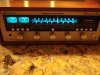
I recently re-lamped a Marantz and the FM meters looked off with warm white. The vellum was probably toasted because they imparted a light tan color in the center. The dial looked great though. I didn't feel like removing the meter housing and meters to get to the vellum. The acrylic meter covers can be brittle and break if not careful. I instead did the tuning dial and meters with light blue (blue ice) LEDs and I think it too looks great. Royal blue is too dark for my tastes tho. Like I said, it depends on the gear and the lights but I usually try to go with LEDs. You can tone down the brightness using another layer of diffuser paper (vellum or parchment) and/or gently buff the individual LEDs with 800 grit sandpaper. It's easy to play around with before you permanently affix everything.
Last edited:

Don't see an issue with using LEDs. White LEDs come in different color temperatures, and the brightness is proportional to the current you pass through them. So if you find them "too blue" or "too bright" you just aren't using the right parts.
I think a lot of folks don't realize LEDs come in various color temperatures. If you want your LED to mimic an incandescent bulb , then you need to find one with a color temperature of around 2700k.