


Raynald
Addicted Member
Like a lot of audio products from the UK, the 8000A evolved a lot without ever changing the model number. They continually improved, so the later the unit the better. Early ones were grey with DIN sockets, then grey with RCA, then black and the last ones were black with a Video input in addition to the regular very full complement of inputs. The price stayed remarkably steady, rising from $999 to $1199 over a long period of time. This one has an F in the serial number and the transformer has a 1997 date code so it was probably one of the later ones before the company was bought over by TAG/McLaren and Phil Swift and Derek Scotland left the company. After that the prices went way up and then the company folded to be reborn with products made in China (sorry, I have no experience with any of these later units so I cannot comment).
Having seen some shockingly amateurish stuff from UK audio companies that seemed to be run from someone's garage, the Audiolab was quite a surprise when it arrived in our store. Amazing build quality and a clever design that combined typical purist UK thinking while still incorporating enough mainstream features not to alianated to average buyer. The size was a standard 17", as mentioned earlier there were plenty of inputs, the controls felt nice, tone controls were included but there was a bypass for the purists. Minimalists got their main speakers hooked up without passing through any switches, but a second switched output was there for another room or for the user who might want to turn the main set off when using headphones through the full size socket provided. The most amazing part was that the Audiolab stuff did not blow up, catch fire, melt down, fall apart or generally behave like a lot of the other UK units we had experience with.
We sold these along side the Cyrus line from Mission. For flat out sound and bang for the buck I would have to favor the Cyrus, especially the later metal cased ones. But for most customers the difference was not that obvious and the Audiolab was a much easier sale. I also felt better selling the 8000A to the non enthusiast because it was generally easier to live with and more reliable. The fact that the Audiolab incorporated a very effective (and seemingly sonically transparent) protection circuit for the outputs while many purist competitors did not include any probably saved a few units that were (mis)handled by non enthusiasts.
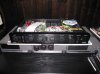
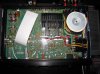
Having a look inside this one reminds me of just how well built they were. Very neat glass epoxy boards, big Sankin outputs on a clever chimney heatsink, 20000uf of caps, Elnas throughout including purple ones in the phono section that I was told were particularly good and expensive, a nice torroid with a metal plate on top and a piece of what I called BUF (British Ugly Foam, dense multicoloured stuff found only in products from the UK) glued to the top cover to quiet any mechanical hum, a Noble volume pot and many other thoughtful touches. All in all amazing quality for the money.
Sonically this one sticks to the Audiolab tradition. Some strong points are transparency, soundstage and detail. Not at all romantic or warm, though the later ones are neutral rather than having the sterile or bland sound the earlier ones were criticized for. The phono section on the early ones was a weak point, but on this one it is much improved and very good to excellent. All inputs are dead quiet, always an Audiolab trait. The bass and sheer amount of drive are pretty surprising for the size and power rating. It did a credible job driving the very power hungry Mirage M3-Si, though it was not as comfortable as the 3B-ST (no surprise or shame there).
Today these units go for around $300, give or take depending on vintage and shape. For that modest amount of money you get more than a glimpse of true high end construction and sound. Still a very good buy as far as I am concerned, just make sure not to match it with overly bright speakers and sources.
Anyone else have any experience with Audiolabs?
Having seen some shockingly amateurish stuff from UK audio companies that seemed to be run from someone's garage, the Audiolab was quite a surprise when it arrived in our store. Amazing build quality and a clever design that combined typical purist UK thinking while still incorporating enough mainstream features not to alianated to average buyer. The size was a standard 17", as mentioned earlier there were plenty of inputs, the controls felt nice, tone controls were included but there was a bypass for the purists. Minimalists got their main speakers hooked up without passing through any switches, but a second switched output was there for another room or for the user who might want to turn the main set off when using headphones through the full size socket provided. The most amazing part was that the Audiolab stuff did not blow up, catch fire, melt down, fall apart or generally behave like a lot of the other UK units we had experience with.
We sold these along side the Cyrus line from Mission. For flat out sound and bang for the buck I would have to favor the Cyrus, especially the later metal cased ones. But for most customers the difference was not that obvious and the Audiolab was a much easier sale. I also felt better selling the 8000A to the non enthusiast because it was generally easier to live with and more reliable. The fact that the Audiolab incorporated a very effective (and seemingly sonically transparent) protection circuit for the outputs while many purist competitors did not include any probably saved a few units that were (mis)handled by non enthusiasts.
Having a look inside this one reminds me of just how well built they were. Very neat glass epoxy boards, big Sankin outputs on a clever chimney heatsink, 20000uf of caps, Elnas throughout including purple ones in the phono section that I was told were particularly good and expensive, a nice torroid with a metal plate on top and a piece of what I called BUF (British Ugly Foam, dense multicoloured stuff found only in products from the UK) glued to the top cover to quiet any mechanical hum, a Noble volume pot and many other thoughtful touches. All in all amazing quality for the money.
Sonically this one sticks to the Audiolab tradition. Some strong points are transparency, soundstage and detail. Not at all romantic or warm, though the later ones are neutral rather than having the sterile or bland sound the earlier ones were criticized for. The phono section on the early ones was a weak point, but on this one it is much improved and very good to excellent. All inputs are dead quiet, always an Audiolab trait. The bass and sheer amount of drive are pretty surprising for the size and power rating. It did a credible job driving the very power hungry Mirage M3-Si, though it was not as comfortable as the 3B-ST (no surprise or shame there).
Today these units go for around $300, give or take depending on vintage and shape. For that modest amount of money you get more than a glimpse of true high end construction and sound. Still a very good buy as far as I am concerned, just make sure not to match it with overly bright speakers and sources.
Anyone else have any experience with Audiolabs?
Attachments

Last edited:


