• The move to the new server is done. There are some software and database maintenance updates in process. This has us passing the hat around to help out. We appreciate any donations. Seriously, even a dollar helps. The payment page may be found here - https://www.audiokarma.org/support.html

Latest Hobby Cars Acquired Last Month. What Carb to Use?

quiet

Addicted Member
P1010001 (5).JPG


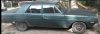
The 75 Dart is a 318 two barrel, auto, p/s, p/b, a/c, single exhaust, no rust, clean inside. The car has OK power for traffic or the hwy. Zero to 60, about 10 seconds. I already replaced the fuel tank, fill pipe, fuel sender, fuel pump, all fuel lines, starter, tires, battery, 4 shocks. It's motoring up and down the interstate at 80 very good now.
It needs,
Total brake job, all of it, every last bit. They work good, but it's all older than dirt.
Ignition attention.
Carb.
Exhaust.
Air conditioner fix. It's complete.
Two sway bars.
Now, here's the question. What carb to use with an air gap dual plane 4-barrel manifold, 2 or 2 1/2-inch dual exhaust, 360 heads, and stock cam? The power curve is just fine. I need guidance on this carb thing please.
This is going to cleanup fine and be a fun little car. It will be about 4k all in.

P1010003 (2).JPG

The 64 New Yorker is a 413 ten to one 4 barrel, auto, p/s, p/b, a/c, posi-rear, no rust, clean inside. It has a lot more motor than it needs. It's a tire burner, I like it. Zero to 60, about 7 seconds. A 361 low compression 2 barrel would have been just fine. It too is running the interstate really good at 80 plus. It came to me with new tires and battery.
And it needs,
Proper seat belts.
Proper seats with head restraints.
Complete total brake job. They work good, but old.
Single to twin master cylinder conversion. The shoes are 11x3. And it stops yesterday. So they stay, no conversion there.
Shocks.
The good working Carter carb cleaned.
Proper tune-up, and points to electronic conversion.
Outer axle bearing. Noise.
A/C fixed. It's complete.
This car has some really long legs on the interstate. It will come in at about 5k all done, no new paint. Constant wax to keep the rain from washing off the rest of the paint.

The question on this car is, why do the good condition and proper fitting hub caps refuse to stay on the correct and good condition wheels?

P1010002 (3).JPG

Maybe you like old cars or maybe you don't. So.
 
Last edited:
Register to hide this ad
Holley carbs. I can set up Rochesters, but the vast majority of mechanics cannot for some reason. Spread bore or quad bore, either works matched to the mainfold. For regular driving I'd put a 2300 series 2-barrel on it though -- 20% better milage and stump pulling torque, did that for a friend on a Ford truck with a 400. Towed my brother's 12,000 pound crawler like the trailer was empty.

Don't know the specific one, but probably in the 400 to 450 cu ft./min range, not enough engine underneath for anything bigger. 350 might be enough for regular driving, you aren't going to be hauling at 90 mph under full throttle and high load very often, if ever. Go small, otherwise the secondaries stay closed all the time, not enough vacuum to pull the servos down, for good reason -- car will stall.

The hubcaps won't stay on because the retaining springs are weak or broken, most likely. American hubcaps stink, never seen a Mercedes one on the side of the road, unlike Detroit ones....

Those big Chrysler V8s are great -- my college roomie's Mom had a 65 Dodge 440 I drove a couple times -- fast as hell (terrible brakes for that fast of a car) and 25-27 mpg at 70 mph. Only drawback was that it would NEVER start below 5F without ether. 6F it would fire right up, below, never.

I still think early 60's Chrysler products are butt ugly though. Give me a 68 New Yorker.
 
Last time I needed a carb recommendation we went straight to Holley. They said to use a smaller one than I would of picked. They supposedly did one in house for the application. The throttle response is fantastic.
Here's a video of it the night we lit it off. https://www.youtube.com/shorts/nJd9sf1LKPk
Vacuum secondary spread bore 4 barrels are more economical than 2 barrels. At least when you aren't leaning on them.
 
I'm handy with Holly's, good twin 850 carbs for my 14-pound 1471 blower motor 572 go-fast boats. I can tune Rochester and Carter also. Love the Quadrajet on big old stock street motors. I was hoping the 318 could pull a Carter or 600 Holly. Got no little motor experience.
The Dart needs to make a right turn at a light on to a 60-mph speed limit 4 lane with median where the traffic is running 65 all the time. It's got to go from 10 to 65 in a big hurry. It's not going to be a part throttle deal with the 2.75 gear. Hammer down all the way to 65. Sometimes 70. Or sit for a long time waiting for the Sundy driver hole to open up.
This Dart will rarely see more than 70. Most interstate traffic here runs 80 on a 75 limit, but this guy mostly runs 70.
Not wanting to change gear or cam. May need to change cam. Hoping the 360 heads, intake and carb do the job.
I think maybe the hub cap cure will be aluminum wheels that will hold decent size (width) tires. Might as well go ahead and get it done now rather than later. $$$$$$.
I don't like my 96 Road Master or non NorthStar 94 Cadillac Deville anymore. Good cars. They are both fast enough but shift happy. Neither will go anywhere without a gear shift. By the time they get the trans sorted out for the demanded acceleration, the New Yorker is 3 cars up the road in third gear with a third throttle, no shift needed. And getting 10 mpg on 93 gas. With a 2.72 gear. Hate to think of it with 3.55. Big torque that 413.
 
View attachment 2628996


The 75 Dart is a 318 two barrel, auto, p/s, p/b, a/c, single exhaust, no rust, clean inside. The car has OK power for traffic or the hwy. Zero to 60, about 10 seconds. I already replaced the fuel tank, fill pipe, fuel sender, fuel pump, all fuel lines, starter, tires, battery, 4 shocks. It's motoring up and down the interstate at 80 very good now.
It needs,
Total brake job, all of it, every last bit. They work good, but it's all older than dirt.
Ignition attention.
Carb.
Exhaust.
Air conditioner fix. It's complete.
Two sway bars.
Now, here's the question. What carb to use with an air gap dual plane 4-barrel manifold, 2 or 2 1/2-inch dual exhaust, 360 heads, and stock cam? The power curve is just fine. I need guidance on this carb thing please.
This is going to cleanup fine and be a fun little car. It will be about 4k all in.

View attachment 2628997


The question on this car is, why do the good condition and proper fitting hub caps refuse to stay on the correct and good condition wheels?
Wheel flex possibly. My 75 fury (drove it until '95 or so) would occasionally let one go on the outside if doing a high-G turn (after i took wide-jaw pliers & re-bent the springy-teeth that engaged the wheel).And keep the points ignition, so if/when the next major solar mass coronal discharge (EMP) hits, you'll have something that still runs.
 
318 is more than enough motor for what you want. You are assuming the bigger the carb the more power you get, and that's not true. Carbs work on airflow, and the airflow through an orifice is determined by the bore, the displacement on the other side, and the rpm, nothing else.

Blown power valves are almost always the result of using too high an airflow carb that then causes backfires when it leans way out when you slap the throttle open, especially with mechanical secondaries. Big hole, small motor turning slowly, airflow goes to essentially zero and no gasoline gets sucked into the non-existant airflow, no power. Usually a stall too, at least momentarily, which is where the back fire comes from.

Holley has a nice chart, look up rpm vs airflow, knowing that 4000 rpm is all you are going to get without major engine mods, and you will find you can't use a big carb. 300 cfm is probably the limit, 275 might give you better response. You have more engine there than my old Mercedes 280 SE 4.5L by about 40 cubic inches, and that beast was hard to drive in traffic with the FI set for power. Lunged right off the line.

Big 2330 series on the 318 should give you plenty of grunt.

If you are only getting 10 mpg on the New Yorker, I think your torque converter is broken. Should be low 20s at worst with a Torqueflight. My old Benz got 17 on the highway with 3.23 gears. And would outdrag and outrun that New Yorker.
 
most people over-size their carbs, usually by over-estimating how much rpm it will actually spin. With a streetable 318 I doubt it really needs more than about 500 cfm, and probably a 390 is about right. The 2bbl will also work flow-wise but I don't know how many decently flowing 2bbl intakes even exist.

just something to consider, depending on the heads they may actually cost you low rpm torque, and with tall gears that could be a bad thing. You may be better off just doing some port work on the stock heads to even out the lumps and bumps, but keeping the small port size for good air velocity.

The good and bad with Holley carbs is how tunable they are. There are so many things that can be tweaked to get it exactly right that it gets intimidating to the point where people give up before it runs even halfway decent.

The other part of the equation that gets way over-looked is the ignition though. If the distributor curve isn't set right, no amount of farting with the carb is going to make it run well. Stock curve is usually for too much advance, but with such heavy springs that it comes in very late and rarely actually hits the limit. Re-tuning that to get maybe 35 degrees total and all in by maybe 3200 rpm will make a massive difference in how it responds. Even just re-curving the distributor with the stock engine can make a nice difference. Heck, half the time the advance mechanisms jam up and it sucks because the distributor isn't even working.
 
318 is more than enough motor for what you want. You are assuming the bigger the carb the more power you get, and that's not true. Carbs work on airflow, and the airflow through an orifice is determined by the bore, the displacement on the other side, and the rpm, nothing else.

Blown power valves are almost always the result of using too high an airflow carb that then causes backfires when it leans way out when you slap the throttle open, especially with mechanical secondaries. Big hole, small motor turning slowly, airflow goes to essentially zero and no gasoline gets sucked into the non-existant airflow, no power. Usually a stall too, at least momentarily, which is where the back fire comes from.

Holley has a nice chart, look up rpm vs airflow, knowing that 4000 rpm is all you are going to get without major engine mods, and you will find you can't use a big carb. 300 cfm is probably the limit, 275 might give you better response. You have more engine there than my old Mercedes 280 SE 4.5L by about 40 cubic inches, and that beast was hard to drive in traffic with the FI set for power. Lunged right off the line.

Big 2330 series on the 318 should give you plenty of grunt.

If you are only getting 10 mpg on the New Yorker, I think your torque converter is broken. Should be low 20s at worst with a Torqueflight. My old Benz got 17 on the highway with 3.23 gears. And would outdrag and outrun that New Yorker.

I know how carbs work. I don't think the little stock carb can do what ai want.
I'm hoping to increase the power between 3000 and 4500 in 1st gear. I may resort to a 3.55 rear and call it good on the Dart.
I've had 64, 66, 68, 69, 70, 71, and 76 C bodies with 361, 383, 400, 383, 413 and 440 motors. They get 14 to 16 at 70. That's it. In the suburbs they get 10 to 14. Urban, it's 8.
Fortunately, the Chrysler torque convertor is working well, very well in fact.
The only Benz I have had the pleasure of driving was a 300D turbo diesel, all over western Europe. Damn fine car. Cruised 180 clicks with ease. I think with a 2.25 rear the Chrysler would also. And still leave the 300d in the dust at the on ramp, way back there. The 413 is a short stroke motor.
 
Last edited:
most people over-size their carbs, usually by over-estimating how much rpm it will actually spin. With a streetable 318 I doubt it really needs more than about 500 cfm, and probably a 390 is about right. The 2bbl will also work flow-wise but I don't know how many decently flowing 2bbl intakes even exist.

just something to consider, depending on the heads they may actually cost you low rpm torque, and with tall gears that could be a bad thing. You may be better off just doing some port work on the stock heads to even out the lumps and bumps, but keeping the small port size for good air velocity.

The good and bad with Holley carbs is how tunable they are. There are so many things that can be tweaked to get it exactly right that it gets intimidating to the point where people give up before it runs even halfway decent.

The other part of the equation that gets way over-looked is the ignition though. If the distributor curve isn't set right, no amount of farting with the carb is going to make it run well. Stock curve is usually for too much advance, but with such heavy springs that it comes in very late and rarely actually hits the limit. Re-tuning that to get maybe 35 degrees total and all in by maybe 3200 rpm will make a massive difference in how it responds. Even just re-curving the distributor with the stock engine can make a nice difference. Heck, half the time the advance mechanisms jam up and it sucks because the distributor isn't even working.

This stock intake works very well up to a rpm/cfm point, then it says, no. Tiny runners, medium valves.
This stock emissions carb is a disaster. Plenty of bad things going on in there. And without some of the related emission stuff it almost won't run well enough to drive. So it's not just delete the cold timing advance and no idle advance. The good news is even though the stock cam is a low lift affair, it's a long duration no over lap cam.
The stock distributor curve on this motor is very poor, But it's working as shipped.
May just go with 3.23 gear and 1970 318 carb and distributor curve, both vacuum and weight. I think it might be fine at 70 mph. About $400 for the parts.
I would like to use a 2 1/2 inch single exhaust to avoid low resonance drown from a pair of 4 cylinder pipes instead of a single 8 cylinder pipe. But I don't know if it will move enough air. I can't try the intake side changes and see because the exhaust system is largely absent from rust holes and probably flows better than a 3 inch single as it is now. It's got to go, now.
 
This stock emissions carb is a disaster. Plenty of bad things going on in there. And without some of the related emission stuff it almost won't run well enough to drive. So it's not just delete the cold timing advance and no idle advance. The good news is even though the stock cam is a low lift affair, it's a long duration no over lap cam.

is this a LeanBurn setup ?

As to the new carb for the Dart, if your not looking to keep it bone stock, I've had great service from this stand alone EFI.

I know, it may be blasphemy to some, but these really do work well.......

https://www.holley.com/products/fuel_systems/fuel_injection/sniper_efi/

friend of mine did this on his 351 Crown Vic police car, and had some weird EMI problems with it until he added a bunch of shielding and did some re-routing on the wiring to the unit. Once he got that figured out it runs really well though.
 
440 hit the market in 1967, so prior would have been a 426 wedge (awesome motor too!) or the earlier 413, or even earlier "318 big block" variants. All good for pulling schools and the 318 big block makes an exceptional boat anchor once they finally break (which takes some doing!)

For the 318 car:

With a dual plane, you are getting great advice on carb. I had a .060 over 440 with a single 750 on it (single plane manifold, and choke bowl cut off, built by a specialist for my engine build). That was still pulling hard a 6500 RPM but I was too chicken to rev a cast crank big block any higher than that...

Point is, you are getting great advice on carb size, so I'll leave that alone. Including the EFI conversion, which might even improve economy and will improve reliability with cold and hot starting.

Exhaust- run duals, but add an "H" pipe, and you should be good. The crossover pipe should (ideally) be where the exhaust is at the hottest temperature, usually about halfway between the exit of the manifolds/header collector and muffler, but not always. The gas slows through friction and heat rises, so it's hotter a bit away from the collector.

Make sure your air is clean and free flowing. I would rather you run an air cleaner assembly with a snorkel to the front of the car than an aftermarket one with the filter exposed all around. The latter draws in the hot air right under the hood... So many "racers" flipped the top of the air cleaner assembly to "get more air" but it is hot and low-density so did them no favors. A dual-snorkel cleaner from an earlier car, with added hoses, would be the "hot" ticket.
 
This stock intake works very well up to a rpm/cfm point, then it says, no. Tiny runners, medium valves.
This stock emissions carb is a disaster. Plenty of bad things going on in there. And without some of the related emission stuff it almost won't run well enough to drive. So it's not just delete the cold timing advance and no idle advance. The good news is even though the stock cam is a low lift affair, it's a long duration no over lap cam.
The stock distributor curve on this motor is very poor, But it's working as shipped.
May just go with 3.23 gear and 1970 318 carb and distributor curve, both vacuum and weight. I think it might be fine at 70 mph. About $400 for the parts.
I would like to use a 2 1/2 inch single exhaust to avoid low resonance drown from a pair of 4 cylinder pipes instead of a single 8 cylinder pipe. But I don't know if it will move enough air. I can't try the intake side changes and see because the exhaust system is largely absent from rust holes and probably flows better than a 3 inch single as it is now. It's got to go, now.
I think without gearing, you're chasing a rat down the rathole. 2.75:1 is silly tall.
 
is this a LeanBurn setup ?


friend of mine did this on his 351 Crown Vic police car, and had some weird EMI problems with it until he added a bunch of shielding and did some re-routing on the wiring to the unit. Once he got that figured out it runs really well though.

No lean burn. No air pump.
Yes, catalytic converter. Doesn't appear to be clogged, yet.
 
Sweet rides!

I'm jealous of the Dart; I had an Iowan rustbucket I drove for 5 years.
318-2 pot, ran good hard starter in winter
-_-
 

Attachments

  • Screenshot_20220802-130916_Gallery.jpg
    Screenshot_20220802-130916_Gallery.jpg
    53.4 KB · Views: 8
440 hit the market in 1967, so prior would have been a 426 wedge (awesome motor too!) or the earlier 413, or even earlier "318 big block" variants. All good for pulling schools and the 318 big block makes an exceptional boat anchor once they finally break (which takes some doing!)

For the 318 car:

With a dual plane, you are getting great advice on carb. I had a .060 over 440 with a single 750 on it (single plane manifold, and choke bowl cut off, built by a specialist for my engine build). That was still pulling hard a 6500 RPM but I was too chicken to rev a cast crank big block any higher than that...

Point is, you are getting great advice on carb size, so I'll leave that alone. Including the EFI conversion, which might even improve economy and will improve reliability with cold and hot starting.

Exhaust- run duals, but add an "H" pipe, and you should be good. The crossover pipe should (ideally) be where the exhaust is at the hottest temperature, usually about halfway between the exit of the manifolds/header collector and muffler, but not always. The gas slows through friction and heat rises, so it's hotter a bit away from the collector.

Make sure your air is clean and free flowing. I would rather you run an air cleaner assembly with a snorkel to the front of the car than an aftermarket one with the filter exposed all around. The latter draws in the hot air right under the hood... So many "racers" flipped the top of the air cleaner assembly to "get more air" but it is hot and low-density so did them no favors. A dual-snorkel cleaner from an earlier car, with added hoses, would be the "hot" ticket.

My stock 70 Super Bee 440 Six Pack ran (according to the suspect factory tack) as you describe your 440. Good running car.
The dual-snorkel cleaner with hoses would be nice, haven't see any lately.
 
  • Like
Reactions: j!m
I think without gearing, you're chasing a rat down the rathole. 2.75:1 is silly tall.

True that.
I had a 69 Dart GTS 340. Plenty fast. 3.55 gear I think. Auto.
It pulls the gear well enough to about 4000, then the power roll off is very aggravating. That's why I'm thinking it needs some more breathing between 3500 and 4500. If it will continue to pull to 4500 and not fall flat at the 1/2 shift I would be happy.
 
Last edited:
Back
Top Bottom