

You are using an out of date browser. It may not display this or other websites correctly.
You should upgrade or use an alternative browser.
You should upgrade or use an alternative browser.
Leestereo's Restoration and Upgrade Of A Sansui AU-919
- Thread starter Leestereo
- Start date
Freedon_road
New Member
It was looked at by Muse in Ann Arbor Michigan, they come highly recommended. I do agree that it sounds high to me as well, I was expecting maybe $800.That sounds a bit expensive. Although the amp is worth it I would hold off to hear from others. Also, how trustworthy is this tech?

gecar
Member
Protector Circuit Board (F-2840)
The F-2840 board contains the AU-919 protection circuit.
The original Fujitsu FRL264 D024/04AL-01 relays (RL601 and RL602) were replaced with Omron MY4-02 DC24 relays
Hello Lee,
Magnificent thread after 6 years ...
One question, do you remember when replacing the original relays Fujitsu FRL264 D024 / 04AL-01, not have to modify any pin of OMRON MY4-02 DC24 to install on the board ?? ... the pins not need any modification to install??

Leestereo
Super Member
It was looked at by Muse in Ann Arbor Michigan, they come highly recommended. I do agree that it sounds high to me as well, I was expecting maybe $800.
What work is included in the restoration?
Leestereo
Super Member
The Omron MY4-02 DC24 are drop-in replacements without any modifications....the original relays Fujitsu FRL264 D024 / 04AL-01, not have to modify any pin of OMRON MY4-02 DC24 to install on the board ?? ... the pins not need any modification to install??
gecar
Member
Lee ... Thank you very much, very kind.The Omron MY4-02 DC24 are drop-in replacements without any modifications.
Freedon_road
New Member
So far only spoke on phone, I have requested a written estimate and summary of work to be done. I will update once I have it.What work is included in the restoration?
Thanks.
Freedon_road
New Member
I think that is what I struggled with, he is not in my town and shipping would be $200-250 more to the cost and risk of damage in shipping wasn't sure of that direction.Get Lee to do it. He is the best!
I have had some great feedback on really competent and highly recommended repair and restoration techs and thanks to all for those suggestions.

You might need to cut off the 'NC' contacts - look at the old relay for which ones to cut off - be careful - 'measure twice, cut once'Hello Lee,
Magnificent thread after 6 years ...
One question, do you remember when replacing the original relays Fujitsu FRL264 D024 / 04AL-01, not have to modify any pin of OMRON MY4-02 DC24 to install on the board ?? ... the pins not need any modification to install??

@gecar
Last edited:
gecar
Member
You might need to cut off the 'NC' contacts - look at the old relay for which ones to cut off - be careful - 'measure twice, cut once'
Thanks John, I'll look at it when I disassemble it

Freedon_road
New Member
Man that is clean looking!!! This will be top dog when this is done... Jealous much! Why yes I am.... WOWWWWW!!!

ghamilton
Super Member
Lee, Thanks for the great review but can you give us an idea of what it can compete with? There are the cheaper NAD integrated amps and marantz has a lower price line of amps. Then there is Luxman & Accuphase which are much more expensive.Sound Impressions of Restored/Upgraded AU-919
Before starting a restoration/upgrade project, I typically listen to a unit to establish a baseline sound for comparison with the restored/upgraded sound. However, due to the unpredictable and catastrophic nature of "Black Flag" capacitor failure, it was decided that no audition of the stock AU-919 would be undertaken to avoid the possibilty of damage to the "nearly-unobtanium" output transistors.
Following the restoration/upgrade, I had the opportunity to listen to the AU-919 for an extended period before it was shipped back to its owner. Selected tracks from CD and LP recordings (listed below) that I'm very familiar with were used to evaluate the AU-919. Listening notes were kept during these sessions (to avoid relying an imperfect sonic memory).
I would characterize the overall sound of the AU-919 as neutral and balanced, with a sense of prodigious power reserve: it is able to play very loudly without any noticeable strain. It never seemed to impose its sonic signature on the music but rather allows one to listen through to the recording: equally revealing the good and not-so good aspects of each. For example, the ECO (Standage)/Four Seasons recording and the Nishizaki/Beethoven violin sonatas are both known to have an aggressively recorded high range and were heard as such: these recordings were indeed bright sounding, but I wouldn't characterized them as overly harsh sounding as played through the AU-919. With excellent recordings (e.g., the DMP Big Band, Wynton Marsalis) there is a naturalness to the treble range that is fatigue-free, even after an extended listening session at high sound levels. The midrange reproduction, to which human hearing is most sensitive, was exemplary: the sound of brass (e.g., Maurice Andre; Duke Ellington), violins/violas (e.g., Brandenburg Ctos.), and acoustic guitars (e.g., Eric Clapton) have a very realistic "bite", and vocals were also rendered with startling clarity (e.g., Ruth Ann Swenson). I thought that the bass range reproduction to be both powerful and "tight" sounding: the 2009 remaster of "Come Together" sounded particularly good. Another example of such was heard with Brubeck's "Time Out," where the drum solos were very well rendered.
In terms of stereo/spatial presentation, the AU-919 produced a wide soundstage and good image depth/height (the latter characteristics often attributed to amplifiers with dual mono construction). Recordings of solo instruments or small ensembles (e.g., Bach Cello Suites or Mozart Violin and Piano Sonatas) were very realistically rendered with a plausible "live-in-the-room" quality.
Without doubt, the Sansui AU-919 lives up to its status as a TOTL unit. And once restored with the latest passive component technology (e.g., low ESR capacitors, stacked film capacitors), it remains sonically competitive with anything available today (or yesteryear).
Some of the recordings (CD and LP) used during the listening sessions (in no particular order): Charlie Watts Quintet/Warm & Tender; Steely Dan/Aja; Miles Davis/Kind of Blue; DMP Big Band/Carved In Stone; Bach (Gendron)/Cello Suites; Dire Straits/Love Over Gold; Eric Clapton/Unplugged; Beatles/Sgt. Pepper and Abbey Road; Ruth Ann Swenson/Positively Golden; Mozart (Snitil, Panenka)/Violin and Piano Sonatas; Beethoven (Nishizaki and Jando)/Violin Sonatas No.5 and No. 9; Dave Brubeck/Time Out; ECO (Leppard)/Bach Brandenburg Ctos; ECO (Pinnock)/Vivaldi Four Seasons; Duke Ellington Orchestra/Digital Duke; BPO (Bohm)/1972 Beethoven Symphonies no. 6 & no. 9; Wynton Marsalis/Standard Time Vol. 3; Maurice Andre/Trumpet Ctos.
Can you be more specific?
Thanks

Karl vd Berg
Super Member
MC input with 6 N-Fets plus 6 P-Fets (each in series) to lower noise to the minimum, right?Moving Coil Head Amplifier (F-2833)
The F-2833 board contains the Head (Phono) Amplifier for moving coil cartridges.


Sui-Yogi
Super Member
What is interesting about the MC-Phono and the JFET is that on page 3 of the service manual Sansui suggest that if you need to replace the JFETS , then you need to use pairs of the same “Rank” and how many you use is defined by the “rank” , you can use at least 3 pairs for each channel if the grade is (N) and up to 6 if the grade is (K) .It does not mention that the pair JFETS needs to be match , other than the grade .( Picture 1 below )
I did a little research and it looks like that the LSK170B/LSJ74B can replace the 2SK163L/2SJ44L by using 4 pairs per Channel…. (Picture below with data sheets)
The 2SK/SJ are unobtainium and very difficult to recreate , only LSK/J ( linear systems company ) has came as closer as to produce a low noise with high gain , their N Channel JFETS are very good but they keep strangle with the P channel …. (Info from DIY forum)
Mind that I have not try that , I don’t have a AU-919 and I don’t know if it’s actually working like that but it might be a nice insight and something to be examined for those that they have a malefaction at the MC-phono and need to replace the JFETS .
Attachments


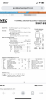
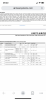
Yes, that's the consensus from the reading I have done on the subject, obviously particularly important with the high gain required for amplifying the low output of MC cartridges.MC input with 6 N-Fets plus 6 P-Fets (each in series) to lower noise to the minimum, right?
MC input with 6 N-Fets plus 6 P-Fets (each in series) to lower noise to the minimum, right?
In order to keep things technically correct - those referred 6-N and 6-P JFETS are connected in parallel, not in series. Generally speaking, noise and SNR are improved by paralleling devices, not connecting them in series. This is why you see for example parallel-ed DAC's in some expensive CD-players.
Regards
ghamilton
Super Member
Because each 919 may differ from unit to unit (not staying exactly with the SM) there cannot be a list that will work with all 919's. Each 919 is a case by case job.Hey folks,
Is there a consolidated list of replaced parts for the AU919?

mgrisoli
Active Member
Because each 919 may differ from unit to unit (not staying exactly with the SM) there cannot be a list that will work with all 919's. Each 919 is a case by case job.
So are you suggesting to start from scratch instead of using a baseline list and assessing just the deltas?