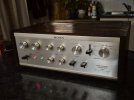
I recently picked up a Sony TA-1080 at a good price. I did not have an opportunity to test it before buying it. It appears in excellent condition. It is quite clean for a 59+ year-old unit in all details including the wooden case.
Whenever I buy a vintage unit like this, I take a lot of time inspecting it before I ever attempt to hook it up to speakers. I am still examining it.
All the components look original. It's also fairly clean inside for a unit this old, and it doesn't appear that anyone has done any work in it.
Then, I noticed some things about the power transformer.
(1) The power transformer was not tightly mounted down. It rocked on the frame when I felt it with my fingers. So, I removed the five screws that hold the mount down so I could look under it. Two of the four screws that hold the power transformer down on the mount were completely out and laying loose under the mount. I picked up the screws and put them back in tightly, and tightened all four screws securing the power transformer to the mount, and then screwed the mount back down. Although I tightened the power transformer down as much as possible, it still has a very slight wiggle to it; not like at first when two of the screws were out, but just a little movement. But, it can't be screwed down tighter.
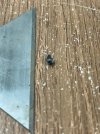
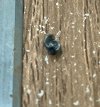
(2) I noticed the power transformer cover has a small dent on one of the top corners. This dent being there is odd because I don't see how anything could have impacted the cover to the power transformer unless someone was inside here. But other than this dent, and maybe the fact that screws were out underneath, it doesn't look like anyone was here. See the picture of the dent.
(3) Then I noticed the voltage selector was set on 100v. I wonder how long anyone was operating it in the U.S. on this setting. It is impossible to know, but I immediately changed it to 117V.
(4) I hooked the unit up to dim bulb tester and turned it on. The bulb in the power indicator on the unit appears to be burned out, but the bulb in the "safety" indicator lights up. There is nothing unusual about the dim bulb test; the bulb lit up briefly, then faded down to no light. I turned the unit on and off a few times, and I don't know if this unit has a "relay," but I assume it does, because I can hear that secondary click whenever it is turned on.
(5) There is a very faint hum or buzz coming from the power transformer. It is audible, but I have to lean in to really hear it, and it probably wouldn't be audible with the cover on the unit. I am sure that's not a great sign, as the power transformer probably should be silent, but I don't know if it means the power transformer is ruined. It might still work okay, I don't know.
I am going to keep examining it and I will try some more testing, but if anyone has any knowledgeable opinions about the issues I am describing, please comment here.
Thank you!
Whenever I buy a vintage unit like this, I take a lot of time inspecting it before I ever attempt to hook it up to speakers. I am still examining it.
All the components look original. It's also fairly clean inside for a unit this old, and it doesn't appear that anyone has done any work in it.
Then, I noticed some things about the power transformer.
(1) The power transformer was not tightly mounted down. It rocked on the frame when I felt it with my fingers. So, I removed the five screws that hold the mount down so I could look under it. Two of the four screws that hold the power transformer down on the mount were completely out and laying loose under the mount. I picked up the screws and put them back in tightly, and tightened all four screws securing the power transformer to the mount, and then screwed the mount back down. Although I tightened the power transformer down as much as possible, it still has a very slight wiggle to it; not like at first when two of the screws were out, but just a little movement. But, it can't be screwed down tighter.
(2) I noticed the power transformer cover has a small dent on one of the top corners. This dent being there is odd because I don't see how anything could have impacted the cover to the power transformer unless someone was inside here. But other than this dent, and maybe the fact that screws were out underneath, it doesn't look like anyone was here. See the picture of the dent.
(3) Then I noticed the voltage selector was set on 100v. I wonder how long anyone was operating it in the U.S. on this setting. It is impossible to know, but I immediately changed it to 117V.
(4) I hooked the unit up to dim bulb tester and turned it on. The bulb in the power indicator on the unit appears to be burned out, but the bulb in the "safety" indicator lights up. There is nothing unusual about the dim bulb test; the bulb lit up briefly, then faded down to no light. I turned the unit on and off a few times, and I don't know if this unit has a "relay," but I assume it does, because I can hear that secondary click whenever it is turned on.
(5) There is a very faint hum or buzz coming from the power transformer. It is audible, but I have to lean in to really hear it, and it probably wouldn't be audible with the cover on the unit. I am sure that's not a great sign, as the power transformer probably should be silent, but I don't know if it means the power transformer is ruined. It might still work okay, I don't know.
I am going to keep examining it and I will try some more testing, but if anyone has any knowledgeable opinions about the issues I am describing, please comment here.
Thank you!
Attachments

Last edited: