asdf_x2
Active Member
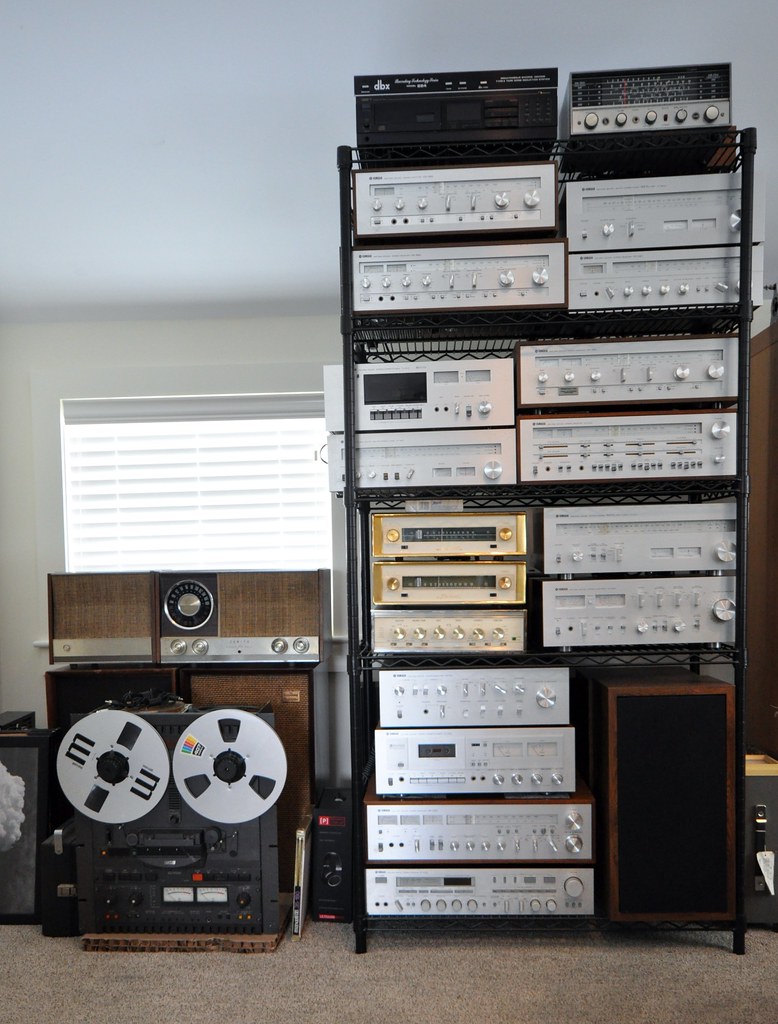
I wish i could be posting the part about B-1 but for now the CA-1000 will do:
A true audiophile amplifier including a Class A/B operation selector, all enclosed in a beautiful form.
Yamaha released the CA-700/500 and entered the component stereo market in 1972, and the next year began a completely different integrated amplifier lineup. This was the birth of the CA-1000, a classic representative Yamaha HiFi component that is still talked about today. The seamlessly connected single-sheet aluminum front panel and a white wood cabinet (open-pore-finished prickly castor oil tree wood) modern style was created by the GK Design Group and its beauty was distinct from both the heavy wood grain style and the mechanical component style. Of course the CA-1000 had more appeal than just its exterior. With features, performance, functions and high cost-performance, it overflowed with charm to steal the audiophiles heart: a power amp section with the world’s first Class A/B switchover that had a convenient switch that changed from low-distortion, priority-on-sound-quality class A operation to high-power class B operation, two huge 18,000 μF block aluminum electrolytic capacitors that blew away the competition, a phono equalizer boasting accuracy to within±0.2dB of the RIAA standard and a permissible MM input of 310mV, and a unique continuous loudness control. With its audiophile insides and clean form, it would not be too much to say that this new Yamaha design swept over the industry overnight. The power amp’s output in class B operation was 70W + 70W (20Hz—20kHz, 0.1% THD, both channels driven) and in class A operation was 15W + 15W (same conditions). Only CA-1000 owners could enjoy both the delicate sound variations revealed by the operation mode change and the high heat radiation of class A operation (which they liked)."
http://europe.yamaha.com/en/products/audio-visual/hifi-components/hifi-history/integrated-amplifier/
A true audiophile amplifier including a Class A/B operation selector, all enclosed in a beautiful form.
Yamaha released the CA-700/500 and entered the component stereo market in 1972, and the next year began a completely different integrated amplifier lineup. This was the birth of the CA-1000, a classic representative Yamaha HiFi component that is still talked about today. The seamlessly connected single-sheet aluminum front panel and a white wood cabinet (open-pore-finished prickly castor oil tree wood) modern style was created by the GK Design Group and its beauty was distinct from both the heavy wood grain style and the mechanical component style. Of course the CA-1000 had more appeal than just its exterior. With features, performance, functions and high cost-performance, it overflowed with charm to steal the audiophiles heart: a power amp section with the world’s first Class A/B switchover that had a convenient switch that changed from low-distortion, priority-on-sound-quality class A operation to high-power class B operation, two huge 18,000 μF block aluminum electrolytic capacitors that blew away the competition, a phono equalizer boasting accuracy to within±0.2dB of the RIAA standard and a permissible MM input of 310mV, and a unique continuous loudness control. With its audiophile insides and clean form, it would not be too much to say that this new Yamaha design swept over the industry overnight. The power amp’s output in class B operation was 70W + 70W (20Hz—20kHz, 0.1% THD, both channels driven) and in class A operation was 15W + 15W (same conditions). Only CA-1000 owners could enjoy both the delicate sound variations revealed by the operation mode change and the high heat radiation of class A operation (which they liked)."
http://europe.yamaha.com/en/products/audio-visual/hifi-components/hifi-history/integrated-amplifier/