• The move to the new server is done. There are some software and database maintenance updates in process. This has us passing the hat around to help out. We appreciate any donations. Seriously, even a dollar helps. The payment page may be found here - https://www.audiokarma.org/support.html

Looking for a modern audio spectrum analyzer that won't break the bank

kward

AK Subscriber
Subscriber
An instrument missing from my test bench is a decent audio spectrum analyzer. I've done a bit of research and find that there aren't apparently a lot of choices on the market at budget prices. On the high end there's the Audio Precision line but they are super expensive like over $10k. On the low end there are sound cards using your PC, but they are limited in precision and bandwidth and seem to have high noise. There are FFT functions in digital oscilloscopes, but they all focus on higher bandwidths for RF work, and don't offer enough precision and resolution in the audio range (DC to 100 KHz). There are DIY type solutions based on the Raspberry Pi but they are not plug and play..

Some requirements:
  1. Purpose of use: Visualize noise spectra and harmonic distortion spectra for tube audio gear.
  2. Off the shelf ready (plug and play).
  3. Cost: around $500
  4. Bandwidth: DC to 100 KHz
  5. Resolution:16 bits
  6. Low noise and distortion
  7. Method of capturing spectrum plots and saving in common bitmap formats (jpg or png ideally)
  8. Good build quality
  9. Could be driven from a laptop so that no screen or user interface is needed on the device itself
Anybody have any ideas what products might meet or come close to meeting these requirements?
 
Register to hide this ad
An instrument missing from my test bench is a decent audio spectrum analyzer. I've done a bit of research and find that there aren't apparently a lot of choices on the market at budget prices. On the high end there's the Audio Precision line but they are super expensive like over $10k. On the low end there are sound cards using your PC, but they are limited in precision and bandwidth and seem to have high noise. There are FFT functions in digital oscilloscopes, but they all focus on higher bandwidths for RF work, and don't offer enough precision and resolution in the audio range (DC to 100 KHz). There are DIY type solutions based on the Raspberry Pi but they are not plug and play..

Some requirements:
  1. Purpose of use: Visualize noise spectra and harmonic distortion spectra for tube audio gear.
  2. Off the shelf ready (plug and play).
  3. Cost: around $500
  4. Bandwidth: DC to 100 KHz
  5. Resolution:16 bits
  6. Low noise and distortion
  7. Method of capturing spectrum plots and saving in common bitmap formats (jpg or png ideally)
  8. Good build quality
  9. Could be driven from a laptop so that no screen or user interface is needed on the device itself
Anybody have any ideas what products might meet or come close to meeting these requirements?

The Picoscope 2206B is $349. It has a built-in AWG up to 1MHz and does spectrum analysis. There is a third-party app for Bode plots.
 
Thanks guys, appreciate the input.

Picoscope: Picoscope has a model called the 4262 which is purpose built for audio. It has a full 16 bits resolution, and I expect is the best performer of all the three solutions discussed here. But it's cost is staggering at $1200. If the Picoscope 4262 were priced at $500 or less, it would be the clear winner in my mind.

Trueaudio: I can see a quite detailed writeup of the Trueaudio so I have a feel for what it does.

Digilent: I found an EEVBlog video on the Digilent Analog Discovery and it looks quite impressive for the price (see below). As stated my basic need is spectrum analysis but the automatic Bode plots are a very nice touch. At 36 minutes into the video below, it describes the spectrum analysis features:


So I need to think on it a bit before I purchase. It seems the Digilent is the way to go in this price category. However I'm not looking for a quick solution, but rather one that will last me for years to come. So maybe I should save my Franklins for the Picoscope 4262.

Thanks much for the input!
 
Last edited:
Hmmmm. That Digilent does look good for the price. Maybe I should have looked at that before I bought the Pico 2206B.
 
Impressive !

I watched the entire video with pleasure.
The guy is funny while keeping it informative and full of common sense comments (which is rare).
I like one of his last comment: "don't waste your time and money on a 8 bit digital scope"... well.. done ! Ha ha.

It will be certainly very useful. I also liked his comment: "Keep a real scope on your bench too". Yeah that's for sure.

I might give it a try.
 
Hmmmm. That Digilent does look good for the price. Maybe I should have looked at that before I bought the Pico 2206B.

Like I said, I really like mine. One of the nice things about it for me, in addition to its price and analog features, are the digital capabilities if you happen to have electronics hobby interests outside of the audio realm as well (I've used it to debug an I2C timing issue where I was using a microcontroller to bit-bang the pins).
 
The guy is funny while keeping it informative and full of common sense comments (which is rare).

Dave Jones is great. Veering off-topic a little, I highly recommend EEVBlog video #555 ... where he discusses in detail how the ubiquitous 555 timer chip works. He did a teardown video of the Keithley 2015 THD bench multimeter as well.
 
More analysis:

Picoscope 4262:
  • Internal signal generator distortion 0.002% at 1 KHz. Implies noise floor is -94 dB. By comparison, my analog HP 339A distortion set analyzer (which was state of the art in 1979) has a noise floor of 0.0017%, or -95 dB at 1 KHz (from page 1.2 of HP 339A user manual and verified with my own loop-back test).
  • Arbitrary Waveform Generator (AWG) max output level: + or - 1V.
  • Resolution: 16 bits
Digilent Analog Discovery
  • Internal signal generator distortion 0.1% at 1 KHz (from their data sheet). Implies noise floor is -60 dB.
  • Arbitrary wave form generator max output level: + or - 5V.
  • Resolution 14 bits
The internal noise floor is high enough on the Digilent Analog Discovery that you really can't use its internal AWG to measure distortion of a tube amplifier or to drive devices under test for spectrum analysis. Also the video posted above showed a significant spike at 40 KHz, which is due to internal coupling of the switch mode power supply. Implied by this is that the spectrum analyzer, if driven from the internal AWG, also cannot be reliably used. However if you can live with 14 bits resolution, which is decent by weekend engineer standards, the spectrum analyzer seems fine if you can drive the device under test from an external low distortion signal source. All in all though, the Analog Discovery appears to be a good learning tool, but not a professional use product. Well we knew that. It's advertised as a tool for education, at which it seems to do very well.

Conversely, the Picoscope 4262 rivals my HP distortion analyzer specs and I wouldn't hesitate to use its internal AWG for THD measurement--if you can live with 1V max output. My HP 339 puts out about 4V max with the vernier turned all the way up on the 3V scale setting. Additionally the full 16 bit resolution of the Picoscope for spectrum analysis seems a plus for detailed measurements.

The Picoscope 4262 is astonishingly expensive though (about $1200). It does appear to offer three quality tools in one:
  • Very decent low distortion internal arbitrary wave form generator including sine wave with THD/IMD and etc.
  • High resolution scope (but only to 5 MHz)
  • High resolution spectrum analyzer as well as frequency and phase response plots (bode plots), plus probably 20 more features
So the choice appears to be: Inexpensive and average performance, which I will probably outgrow in a few years, or expensive (by my standards) but a top shelf performer that will last probably as long as I care to use it.
 
Thanks Kward. Good catch on the Digilent. This is too bad as I liked that tool.


I would not discard the FREE TrueAudio Level 1 software suite to begin with, with a decent USB interface like https://tascam.com/us/product/us-1x2/top

I am missing the AWG part in this equipment, but the audio specs are quite nice.

Agreed the Pico solution is too pricey.
 
I have a custom setup, but it does represent what can be done with a USB soundcard and free software, its just that you have to set it up.

A few outboard USB soundcards provide a 2 channel system comprising 1 Megohm input with gain pot, and 2Vrms line output with level pot - I have an EMU0404 USB which is about 15 years old technology. The 1 Meg inputs mean you can use 10:1 or 1001 probes to allow moderate amplifier DCV connectivity. With free software like REW, and at least 192kHz, 24 bit soundcards, you have available a dead flat compensated 2Hz to 96kHz bandwidth, and noise floor is down below -130dB, and various waveform generation setups including the various IM schemes used. Sine waveform generation is around 0.0009% THD, but can be distortion trimmed down to 0.00004% THD for specific testing if needed. As an example, the REW software comes with a scope, and automated sweep measurements and screen captures, and has a very active software developer and forum, so the product is in continuous improvement.

That type of system does not have DC measurement, and if any sweeps or levels require an absolute level measurement then a DVM is needed (I usually have a DVM on the speaker socket to measure absolute output voltage).
 
However if you can live with 14 bits resolution, which is decent by weekend engineer standards, the spectrum analyzer seems fine if you can drive the device under test from an external low distortion signal source.

Indeed, I have a Keithley 2015 that can perform this task. I don't know off-hand what the function generator is capable of, but the input side can measure down to -94dB, so presumably the function generator is in that ballpark (I suppose I could dig around in the manual to find the quoted spec, but sadly I'm already procrastinating on the Real Work I need to be wrapping up tonight). The Keithley is proper pro kit, not an educational tool, and so noise coupling from the power supply is not going to be a problem. And if I really wanted to, I could control the Keithley over GPIB or RS232 (but I'd probably pick GPIB because I'm an old HP nerd, heh) to control frequency sweeps, etc. that could be measured on the AD2.
 
So the choice appears to be: Inexpensive and average performance, which I will probably outgrow in a few years, or expensive (by my standards) but a top shelf performer that will last probably as long as I care to use it.

This is, unfortunately, the way it usually works out: pay more now, or pay more later.
 
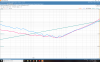
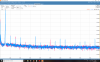
Here are some screenshots from my AD2 running Audio analyzer suite software. Tests performed on a single ended amp. Red=left channel blue=right channel. Using internal generator shows amp noise floor at around -90dB.
I love this setup. Super fast and accurate.
kegger1.png kegger2.png kegger3.png kegger4.png kegger5.png kegger6.png
 
I'm going to look deeper into the solutions discussed here that use soundcards. Thanks for the input! I'm not in a hurry so I have time to research.
 
Back
Top Bottom