
• The move to the new server is done. There are some software and database maintenance updates in process. This has us passing the hat around to help out. We appreciate any donations. Seriously, even a dollar helps. The payment page may be found here - https://www.audiokarma.org/support.html

Lousy foils on 2220b

Richs_Trains

Well-Known Member
Well, after successfully completing my first recap, I decided to go after my 2220b since I figured it would be an easy job. The power supply board was pretty simple and then I moved on to the amp board and man I could not believe how bad the foil work is on this board. Foil is missing from several connections and to cure the problem, the factory used the leads as jumpers to make sure of contact. Couldn't believe this was a Marantz, I guess everyone slips up.

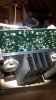
foils1.jpg foils2.jpg
 
Register to hide this ad
It could have been some tech. EVERYbody lifts pads at some point when desoldering no matter how "pro" they are.
 
Unfortunately this is not the fault of a soldering kamikaze, it is quite obvious that the foil was not applied when the actual PCB was configured and stamped. It is missing at almost every connection point in a swath across the board horizontally. Just hard to believe they even used these boards, must have been a bad run, or at the end of a cycle.
 
Thats crazy! I cant see how this would pass QC.

The image is a little fuzzy but are you sure there aren't pads under what seems to be oxidation? A few of those joints look like they couldn't even be conductive without a foil pad. I think these boards are soldered using the wave process where the board passes over a wave of solder but Im sure the alignment of the output bases and assy was done by hand. Just can't see this making it past this point looking like that.

It's crazy some of the stuff you find it these units. It's almost like detective work and sometimes just dead bugs and dust.
 
Some connections look really bad because I have wicked the solder on the electrolytic caps and am waiting for the new ones. I find I make less mistakes if I leave the caps in place until I physically replace them, so I usually de-solder each cap and check it's value (the service manuals have been wrong more than once) and order the parts, leaving the cap in the board until ready. The parts where you see the yellow of the circuit board and there is a complete solder connection are the fault of Marantz. If I counted, I'm guessing that there are 20-30 pads that are not complete. Most of them are about half there and really doesn't look like bad soldering, I think I am the first person in this unit.
 
Back
Top Bottom