• The move to the new server is done. There are some software and database maintenance updates in process. This has us passing the hat around to help out. We appreciate any donations. Seriously, even a dollar helps. The payment page may be found here - https://www.audiokarma.org/support.html

Low Pass Filter?

Ed Dumas

Member
Hello Everyone,

I am running two passive subs off of a second power amp in my home stereo system. The system is really geared towards vinyl, which often carry very low signals in both channels. I built an inexpensive low pass filter using a couple of Chinese made little circuit boards, one for left channel, and one for right channel, in order to maintain the separation. I am not happy with this low pass filter, as the parts were too low in quality, resulting in poor sound quality, and too much noise.

So, I am looking for some recommendations for buying, buying used, or building my own with decent quality parts. Can I use a decent graphic equalizer in place of a low pass filter? Are there better sources for quality low pass boards to wire up your own? Or, is there any quality used equipment that is worth looking at for this job? Note that the EQ/Low Pass Filter should be unamplified, as I have a quality amp to run the subs.

Thanks for your input!

Ed Dumas
 
Register to hide this ad
Specific info on the boards you tried using and how you connected them would be helpful.

Do you plan on using the filter on the inputs to the amp? If so, then a different circuit is needed than would be used on the amp outputs.

Most general equalizers would not be suitable for a subwoofer because the lowest frequency adjustment would likely be too high and the slope may not be steep enough to properly shape the subwoofer signal. I suggest looking for a line level active crossover device.
 
I used two small printed circuit boards from Parts Express. They are made to take two signals and blend them into one, but I used two boards to keep the separation. They are made to filter out highs and mids, and have a sweepable cutoff point, as well as a gain pot. I looked to see if they are still there, and I cannot seem to find them. Basically just a little experiment and not really a good enough quality of sound for what I am trying to do. They were wired to filter prior to the amp dedicated to the subs, so that this amp does not have to work so hard.

Now that you mention it, I think I have heard about using line level active crossovers before. That is probably the best bet. Do you have any recommendations on brands?

Thanks
Ed
 
I have three electronic crossovers. They are a Paradigm X-30, DBX 223SX and a Behringer CX2310. All three are totally noise free and IMO quite reasonably priced. The DBX and Behringer are in daily use. They are used to provide a low pass signal to my subwoofers.
 
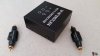
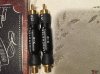
vandersteen makes cross over filters like these

1615369-vandersteen-wx2-low-pass-crossover-box-and-two-x2-50kohm-high-pass-rca-filters.jpg
download-1.jpg 1135216-vandersteen-x2-crossover.jpg

Take a look at what they have that might help you.
 
Thank you everyone for all of your suggestions. I have several ideas now of where to move to. The Active Crossover seems the best plan. I will go do some searching out now. :-)
Thanks
Ed
 
I am not happy with this low pass filter, as the parts were too low in quality, resulting in poor sound quality, and too much noise.
I know this doesn't answer your question but I feel compelled to comment on your statement above.
It's a common misconception that good circuits rely on "quality parts" to achieve good performance. No, good circuits start with good design. Also, a whole bunch of expensive audiophile components in a poor circuit won't rescue it from poor performance.
 
Don't forget there are a lot of used AVRs available for cheap. One of those can high pass to your mains, low pass to your subs, set the levels between them, provide some delay to help integrate your subs, and add powered channels for surrounds and a center and even another passive sub. All that would be adjustable from your listening position. And should cost no more than a mere dedicated crossover.
 
I know this doesn't answer your question but I feel compelled to comment on your statement above.
It's a common misconception that good circuits rely on "quality parts" to achieve good performance. No, good circuits start with good design. Also, a whole bunch of expensive audiophile components in a poor circuit won't rescue it from poor performance.

Yes, of course that is very true, and you make a very good point.

I once had a discussion over the phone with someone wanting to know how to connect stereo interconnect cables correctly on a very basic system including a turntable, amp, two speakers, TV box, and TV. After about 30 minutes of trying to explain what is connected to what in the various possible configurations, I realized this person could not even understand the difference between coaxial and RCA connectors, or signal out and signal in. I eventually said, "If you do not know what signal in vs signal out is, then I don't think I can help you." I honestly believe that that is where the "average" stereo user is at these days.

I tell you that to say that I believe even with my fair extensive experience of "messing" with stereo equipment that I am well above average as a stereo user. But even then, I have practically no ability to distinguish good design from bad design when you are looking inside the box, other than what my ears tell me. Oh, I can see a few things like "dual mono construction" and so on, but to figure out how individual circuits are designed and put together on a board is a completely different matter. How is the average consumer supposed to tell the difference when there are so many overpriced, poorly designed pieces of equipment on the market?

Now I do not mean to rant on you, as you are very, very correct. I just think that the current state of affairs with home stereo systems is at least partly due to the fact that so much bad gear has swamped the markets over the last 30 years or so that the average person has no idea where to begin, so they just don't. Instead they just plug a couple of crappy earbuds into a cell phone and call that stereo. Or, maybe worse, they get something that is loaded with bells and whistles for the movies they are watching, but when you plug a turntable or CD into it, it sounds completely hollow. Since you bring up design as an issue, do you have suggestions for people when they are looking for a quality system, other than "trust us," which every manufacturer says, and fewer earn.

I know where I would start to look, with things like consumer reviews, various forums and the like, but the average consumer won't even do that. They just shell out the money and hope it is going to be okay.

Looking at your Rothwell Audio tag, I assume that you represent a manufacturer of quality gear. You must find this whole topic to be very frustrating, with decades of companies selling snake oil and just muddying up the market for everyone. Maybe this is a whole 'nother topic some place else kind of thing, but you are very correct. HUGE issue...

Ed
 
Looking at your Rothwell Audio tag, I assume that you represent a manufacturer of quality gear.
He represents himself:D
Yes your right, he makes some quality stuff....and knows a couple things, he could even make what your looking for maybe.
 
...to figure out how individual circuits are designed and put together on a board is a completely different matter. How is the average consumer supposed to tell the difference when there are so many overpriced, poorly designed pieces of equipment on the market?
That's a good question. I don't really have the answer. I suppose engineers have knowledge that the average consumer can't be expected to have, and shouldn't be expected to have. I think the hi-fi magazines, when they were at their most influential, must take some responsibility for popularising some of the nonsense fed to them by unscrupulous manufacturers. That wasn't always the case. Hi-fi was largely the domain of the hobbyist for many years until audio became a mass-market consumer-led business. The magazines of the 1950s, 60s and 70s were full of technical articles, DIY projects and good engineering practice. Now the consumer has a vast array of stuff to choose from and it's all expected to be high quality and simple "plug and play", and magazines do little more than publish pictures of it and tell you how sweet they thought the midrange was when playing their favourite recording.
...so much bad gear has swamped the markets over the last 30 years or so that the average person has no idea where to begin, so they just don't. Instead they just plug a couple of crappy earbuds into a cell phone and call that stereo.
Yes, having a reasonable system in the house for playing music used to be the norm. These days that's much rarer and many people's expectations of good sound are based on nothing more than listening to music on their phone.
You must find this whole topic to be very frustrating, with decades of companies selling snake oil and just muddying up the market for everyone.
Probably my biggest frustration is the amount of stuff masquerading as "high end" when it's really just pretty basic stuff put into a very expensive and impressive looking box.
Being a bit more optimistic, modern electronics assembly techniques have brought down the cost of equipment enormously. For your purposes I think an active crossover is probably your best option. Something with the flexibility of today's active crossovers would have cost a small fortune 30 years ago but is now quite affordable.
 
Last edited:
Harrison Labs FMods in-line crossovers.

266-250_HR_0.jpg
 
With these passive subs I used low pass filters from PE. They cost about the same as the FMods but differ in that the FMods install upstream of the amp. Like an active crossover the FMods change the signal frequency before it's amplified.


PC130020.jpg
 
Last edited:
The trouble with passive filters before the power amps is that the source impedance driving the filter and the load impedance after the filter are unknown when the filter is designed. To some extent it's possible to get round that by designing the filter with a very low impedance so the unknown load doesn't matter very much. However, that means the source is having to drive a low impedance load. Alternatively, it's possible to design the filter with a very high impedance so it doesn't present a difficult load to the source, but if you do that the unknown load impedance of the power amp becomes an issue. Buffering before and after the filter solves the problem.
 
Advantages of using an FMod is it's not powered so it doesn't introduce noise. The amp's power is also not reduced as it might be if using a conventional downstream filter. I have a couple of FMods which get 5 star reviews on PE but I've never tried them. I'm more than satisfied with the versatility of my active crossovers.
 
decades of companies selling snake oil and just muddying up the market for everyone.

I think the hi-fi magazines, when they were at their most influential, must take some responsibility for popularising some of the nonsense fed to them by unscrupulous manufacturers. That wasn't always the case. Hi-fi was largely the domain of the hobbyist for many years until audio became a mass-market consumer-led business. The magazines of the 1950s, 60s and 70s were full of technical articles, DIY projects and good engineering practice. Now the consumer has a vast array of stuff to choose from and it's all expected to be high quality and simple "plug and play", and magazines do little more than publish pictures of it and tell you how sweet they thought the midrange was when playing their favourite recording.
...
Probably my biggest frustration is the amount of stuff masquerading as "high end" when it's really just pretty basic stuff put into a very expensive and impressive looking box.

^^^ QFT
 
Back
Top Bottom