EchoForge
New Member
There have already been several discussions here about modern capacitors being manufactured toward the low side of their tolerance range, including Blue Shadow’s thread on large electrolytics.
I’m curious about the practical consequence for recap work.
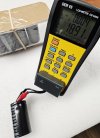
In my own measurements, this is becoming difficult to ignore. 2025 Examples include:
What interests me is that the parts within a lot are often very tightly matched. Whether I measure a few pieces or dozens, the spread can be small while the whole lot is centered toward the lower side of the allowed tolerance. So has this changed the way you actually recap equipment?
For example, if the original circuit specifies 10,000 µF and current production consistently measures around 8,500–9,000 µF, do you still order 10,000 µF, hand-select closer parts, or move to the next standard value?
And what about smaller capacitors used in coupling, bypass, tone, loudness or filter networks? Do you treat those differently and stay closer to the original nominal value?
I’m especially interested in actual shop practice from people doing a lot of recap work today, rather than whether a capacitor is technically “within tolerance.”
I’m curious about the practical consequence for recap work.
In my own measurements, this is becoming difficult to ignore. 2025 Examples include:
- Nichicon LLS 10,000 µF: 8,440 µF average (-15.6%)
- CDE 380LX 10,000 µF: 8,635 µF (-13.7%)
- Chemi-Con SMH 10,000 µF: 8,630 µF (-13.7%)
- Rubycon TXW 100 µF: 82.55 µF (-17.5%)
- Nichicon UKW 100 µF: 89.73 µF (-10.3%)
- Panasonic FR-A 47 µF: 43.0 µF (-8.5%)
What interests me is that the parts within a lot are often very tightly matched. Whether I measure a few pieces or dozens, the spread can be small while the whole lot is centered toward the lower side of the allowed tolerance. So has this changed the way you actually recap equipment?
For example, if the original circuit specifies 10,000 µF and current production consistently measures around 8,500–9,000 µF, do you still order 10,000 µF, hand-select closer parts, or move to the next standard value?
And what about smaller capacitors used in coupling, bypass, tone, loudness or filter networks? Do you treat those differently and stay closer to the original nominal value?
I’m especially interested in actual shop practice from people doing a lot of recap work today, rather than whether a capacitor is technically “within tolerance.”