• The move to the new server is done. There are some software and database maintenance updates in process. This has us passing the hat around to help out. We appreciate any donations. Seriously, even a dollar helps. The payment page may be found here - https://www.audiokarma.org/support.html

Luxman L-100 woes

So the noise is only in one channel or greater in one channel? If so, for sure not the filter caps as both power both channels. One for the positive voltage rail, the other for negative.

Filter caps are not a common failure point unless they have vented, and even then there aren't normally noticeable symptoms.
 
So the noise is only in one channel or greater in one channel? If so, for sure not the filter caps as both power both channels. One for the positive voltage rail, the other for negative.

Filter caps are not a common failure point unless they have vented, and even then there aren't normally noticeable symptoms.
The significant noise in one channel (left) was the main factor that was troubling my diagnosis, and why I was dismissing the filter caps from early on. As you mentioned, typically if it were filter caps the noise should be in both channel relatively even. There was always low level background noise in both channels (similar/even noise), but the amp developed a significant increase in noise on the left channel literally overnight.
 
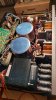
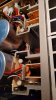
Can you post some pictures of the inside of the unit? Especially the amp boards and associated wiring.
I don't know if any of these will help, but here are some pics I took, unfortunately I don't have any really good ones throughout my maintenence of the power amp boards.
 

Attachments

  • 20220425_211249.jpg
    20220425_211249.jpg
    125.8 KB · Views: 24
  • 20220425_211416.jpg
    20220425_211416.jpg
    90.1 KB · Views: 24
Yeah, for sure not the main filter caps.
The left channel does not have the noise when coming directly out of the left Power amp section (PB-649). (Although the right does have noticable noise directly out of the right power section? Odd.) This stays the same after leaving the relay (directly after power amp section).

After leaving the relay, both audio channels follow a wire to the speaker switch, where oddly enough the significant noise issue then presents in the Left channel and the right becomes relatively clean... as if the opposite of after the relay? (I removed the wires from the speaker switch and no change).

One other odd observation is when I swap the signal inputs to the Left and Right power amp sections (PB-649), the noise follows the swap (presents in whichever power amp section has the left channel signal input). This is odd to me because all that is prior to the power amp signal input is, a relay, attenuator and 5 resistors per channel, which I have checked and replaced all with metal film.
Additionally, just swapping both the entire power amp sections do not change the noise, it remains on the same channel.

So you say the noise doesn't appear until after the power amp board and it changes channel when you swap channels at the preamp out/power amp in jacks? If so, one of those observations is flawed.

How are you following the noise out of the power amp board?

One other odd observation is when I swap the signal inputs to the Left and Right power amp sections (PB-649), the noise follows the swap (presents in whichever power amp section has the left channel signal input). This is odd to me because all that is prior to the power amp signal input is, a relay, attenuator and 5 resistors per channel, which I have checked and replaced all with metal film.
This is probably the correct of the two conflicting observations. This means the problem is in the preamp section. The entire preamp is before the power amp inputs, which is more than you say here.

Also, make sure all the molex connectors are clean, and check the solder on all the pins.
 
Yeah, for sure not the main filter caps.

So you say the noise doesn't appear until after the power amp board and it changes channel when you swap channels at the preamp out/power amp in jacks? If so, one of those observations is flawed.

How are you following the noise out of the power amp board?


This is probably the correct of the two conflicting observations. This means the problem is in the preamp section. The entire preamp is before the power amp inputs, which is more than you say here.

Also, make sure all the molex connectors are clean, and check the solder on all the pins.
I did rebuild the entire preamp board except resistors (which all tested fine). But, when I was mentioning the stage before the power amp sections, I was referring to the section from main-in to tye power amp boards. I had the pre-amp section disconnected while the noise still presented.

I have cleaned and checked all molex connectors and pin solder.

I was also checking the noise/signal directly out of the power boards (before and after relay). And yes, my observations sound like nonsense, but those observations I have checked multiple times, which was a huge reason for my confusion.
 
Small update:
Unfortunately I have been very busy and the Luxman project was put on hold, and partly because I just needed a break from the thing.

I replaced the main filter caps and they were NOT the issue. The amp is still behaving the exact same. I'm still at a complete loss for words and ideas...
 
Hi, Don't know if you got it resolved by now,
but in case of noise of like this, I would always replace the differential pair at the input of the poweramp. If you see any legs of the small signal transistors go black, you should check those. I've seen this often in older gear, where the corrosion (or whatever it is) "grows" into the die and destroys the transistor.

I am working on my own L100, which has weird behavior. It sometimes works, other times one or both channels will output some 40v to 50v DC without the protection kicking in.
 
Small update:
Unfortunately I have been very busy and the Luxman project was put on hold, and partly because I just needed a break from the thing.

I replaced the main filter caps and they were NOT the issue. The amp is still behaving the exact same. I'm still at a complete loss for words and ideas...
Did you ever managed to fix the amp?
 
Did you ever managed to fix the amp?
Unfortunately, I must report I never was able to fix this issue and the amp is essentially the most expensive paper weight I've ever had.

It pains me to look at it. After a long break for my mental health on this unit, I never got back to it.

I even tried to have it professionally serviced by a highly regarded tech in my area (GTA) and they flat out declined to even look at it! I informed him of its history and he said he wouldn't touch it because of the previous tech that worked on it before me (apparently he was aware of the other tech). Anyhow, after not being able to get a reputable tech to work on it, I just became disillusioned and permanently benched it. Professionals don't want to touch it, I spent a year on it, it's cost me twice what it should have by now (not counting my 100s of hours)... It's cursed. This is the part of vintage audio nobody mentions, they say only invest in the top-of-the-line to make the maintenance worth it, but then still nobody wants to touch it.
 
I'm really sorry to hear this.
All the vintage equipment that I bought was in bad shape and all of it needed a lot of work to sound as it should. Most of them were serviced by technicians so that it would be much, much better if they did not touch them at all.
Technicians that do proper work are usually booked or just cannot charge enough for the time to fix someone's mistakes.
I hope one day you will get the motivation and time to get it back to life.
 
Back
Top Bottom