• The move to the new server is done. There are some software and database maintenance updates in process. This has us passing the hat around to help out. We appreciate any donations. Seriously, even a dollar helps. The payment page may be found here - https://www.audiokarma.org/support.html

Made-in-China BBC LS-3/5A Monitor Speaker

It's interesting that the Ho's units use NP electrolytics in a number of positions whereas the BBC design only uses film caps throughout. OTOH, the Ho's uses air core inductors instead of the radio core inductors and autoformer of the original 15 ohm, or the ferrite cores of the later 11 ohm. The crossover design appears to be a version of the original 15 ohm but the speaker is rated at 8 ohm. The Gini as noted appears to be a Ho's version (or vice versa) and may be available in kit form.

Gini claims their LS3/5a is based on the original design, while the AudioSpace LS3/5a is "strictly adheres" to the LS3/5a design, mimicking the 11 ohm versions crossover with ferrite core inductors and film caps throughout.

The Mistrals also use NP electrolytics and a mix of air and ferrite core inductors and a resistor ladder copying the design of the 11 ohm version and is rated at 11 ohms.

I'm a bit peeved at all of them using the LS3/5a designation as they are simply riding on the coattails of that venerable speaker's name. The Mistrals carry that further by saying "British Hi-Fidelity", essentially copying Rogers slogan while not being British one iota. In the past, some have even put BBC license on the back label, but AFAIK, none of these China sourced copies / replicas have ever applied for or received BBC testing or licensure.

Only the Stirling Broadcast V2s, and the recent Falcon LS3/5a's using newly built bextrene FB110's and T27s have been tested and granted true BBC license. The Master Audio versions (Far East based) appear to be built from old or used KEF B110's and T27's (all likely not to BBC spec, because if they were, they would have been in LS3/5a's) and probably tweaked crossovers to compensate. A lot of older B110's need compensation at the 1-2Khz range due to changes in the Bextrene response over time. Rogers 65th Ann. edition sourced in China has been produced but curiously doesn't carry a BBC license.
 
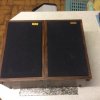
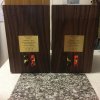
I acquired a pair of LS3/5as, built in the Far East, using drive units and crossovers from that part of the world.
They were built by an ex. BBC engineer.
I compared them with my reference 11ohm Rogers LS3/5as and it's difficult to tell which pair is playing.

I am keeping them...
 
Hi Martyn, can you provide photos and details of those Far East versions? What brand and brand of drivers?
 
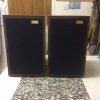
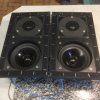
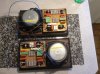
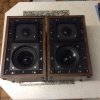
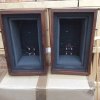
image.jpg View attachment 786704 image.jpeg image.jpg View attachment 786704 image.jpg image.jpg image.jpeg image.jpg image.jpeg Hello.
The make of the drive units are unknown to me, but they look very much like the ones used in the Rogers 65th. Anniversary LS3/5as.
I checked them out, along with the crossovers.
As the foam lining was somewhat 'thin', I bought the correct BBC spec. foam lining from Falcon Acoustics when I
recently called there.
I also fitted new speaker terminals, which also I collected from Falcon.

The results are very good.
I was thinking about selling them, as I've sold the last 3 pairs of LS3/5as I've built, but I have decided to
keep them on a bedroom system.
 
Last edited:
Theres always the often overlooked Kef Reference 101. An unlicensed variant made by KEF using the same drivers they sold to all the BBC licensees.
 
The KEF R101 is a good small loudspeaker but different from the LS3/5a. It uses the KEF B110 SP1057 midrange as used in the KEF R105 series. This unit is a later variant of the LS3/5a's SP1003, uses a slightly lighter cone and thinner PVC surround. The tweeters are the same T27. The big difference for the 101 is the crossover and cabinet. The crossover was computer designed and is a bit flatter in the bass mid area, and is voiced rather dryly. The S-STOP protection circuitry is a good idea but some users have felt it to be a sonic detriment and have disabled it.

The cabinet is built a bit thinner than the LS3/5a and IMO not as well damped. The base has a chamber underneath where the crossover resides, a good idea for crossover microphonics but some feel the base gives a slightly hollow sonic signature.

I have both speakers and the 101 is pretty good but not in the same league as the LS3/5a, IMO. Different voicing primarily. More accurate, perhaps. A little better in power handling, yes, but then matched by the 11 ohm LS3/5a.
 
I definitely heard some noticeable differences in comparing the 101 to a few different LS3/5a models. Rogers, Spendor and Chartwell. All running via Krell components. We had both the Chartwell and Kefs at local AK member social here in MA a few years back and considering the $2K+ cost delta between them, most everyone agreed that the 101 wasn't too shabby :) - I'd be curious to hear how it plays aganst the GINI, MISTRAL and others.

I certainly appreciate what the LS3/5a does and understand why it has received the praise it has over the years , given it's size in particular. The collector market has had a major affect on the pricing and when considering the current numbers it's hard to ignore other models and brands that also have some sonic qualities that are truly impressive for their size and market value vs the cost of the LS3/5a ( Chartwell version in particular, although, the Rogers and Spendor versions are moving north in value these days too).

Celestion SL700se, SL600si, ATC SCM 7, Acoustic Energy AE1 ( Classic / MKII) , Kef Reference 101, Tangent Acoustics TM3 and several others are all pretty nice sounding speakers, Are they Collectable? , sought after? or have "Love marks"? Probably not :) but they are solid performers in their own right. All probably well within the price range of far east knock offs of the LS3/5A.

I think that the Falcon acoustics (UK) version may be the heir to the throne for anyone looking for a modern day replicant of the famed BBC monitor. I'd love to hear those as well.
 
Yes, there's no doubt that in the 40 years since the LS3/5a was introduced, there have been many many small speakers and systems that can do many many things better than they can, especially in the area of power handling, ultimate loudness and even fidelity to some extent. In some cases, active power and crossovers help small speakers achieve a fantastic sonic ability that passives can't match. The LS3/5a, along with the ADS L300, Visonik David, and the M&K satellite, perhaps along with the Fried B series really set the small speaker world on fire.

The big problem with the cost argument is that for a long time the LS3/5a was pretty available for less than $800 up till the early 2000's, in many cases, still much lower. With the rise of the Internet, ebay, and the demand from the Far East, prices rose in fits and starts, and much flowery praise and even mythical status was heaped on the LS3/5a with particular makes and models magically given prominence. Is it merited? Maybe so, maybe not, but because of the design and manufacturing methods, most of them will deliver the specifications, notwithstanding some of the known aging effects (which in some cases can be addressed via the crossover values).

If we removed cost, the LS3/5a is still a pretty effective and honed design, and the fact that there are so many competitors in that size range suggests there's a lot to be said for folks who want excellent sounding small speakers. That there are many who coattail on the LS3/5a name, dimensions, design layout and cosmetics shows some makers to be more copiers. Yeah, I'll get flak for that, although the Spendor and Harbeth small units are very good derivatives in their own right.
 
The Falcon Acoustics seem like the best value with the weak British Pound. The kits are less than $600 shipped to your door with assembled crossovers.
 
Agree, currently the best and easily available built units are from Stirling Broadcast and Falcon, and Falcon is the only one with kits with BBC pedigree plus the use of Bextrene B110s. Both Stirling and Falcon have units using other drivers which have been specifically voiced to follow the BBC spec.
 
I have a pair of Ho's. Right now they are hooked up to my old Allied 426 receiver and a very vintage CD player. The sound is excellent, with the right music.
 
Back
Top Bottom