• The move to the new server is done. There are some software and database maintenance updates in process. This has us passing the hat around to help out. We appreciate any donations. Seriously, even a dollar helps. The payment page may be found here - https://www.audiokarma.org/support.html

Magnavox 8802 Help/Upgrades

SlyChung

New Member
I recently purchased a Magnavox 8802 from a friend of mine. My goals are to do a rebuild replacing the resistors and capacitors as necessary as well as add upgrades that improve the amp. I would like to use this amp as a guitar amp when all is said and done. I am an EE major but have never messed with an amp like this before and wanted to dig in and understand what I am doing. Could someone point me in the direction of some posts/other resources to help? As well as any recommended modifications.

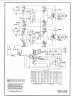
I created a diagram of what is actually in the amp for wiring and components. All the resistor and capacitor values are measures using a small components tester.

I read this post and it was interesting but I don't understand what the additions are actually doing

https://www.audiokarma.org/forums/index.php?threads/magnavox-8802-00-upgrades.96299/#post-13943445

-Andrew
 

Attachments

  • Bottom Before.jpg
    Bottom Before.jpg
    134.2 KB · Views: 90
  • Full Schematic.jpg
    Full Schematic.jpg
    109.4 KB · Views: 105
  • Schematic Before.jpg
    Schematic Before.jpg
    94.1 KB · Views: 87
  • Top Before.jpg
    Top Before.jpg
    111.3 KB · Views: 78
Register to hide this ad
This might be more along the lines of what you're after

https://audiokarma.org/forums/index.php?threads/rx-for-the-magnavox-8800-series.820189/

Dave also does a nice job explaining his reasoning behind the changes, which I honestly find even more useful than just the mod itself.


As for Gordon's mods in the first post (I assume thats what you're asking about)

390 ohm resistors - in stock form these have a balance control in the tuner that alters values in the feedback loop to change channel balance. When the tuner is not present, the feedback loop is incomplete. The resistors simulate the missing 750 ohm pot in a centered position and complete the feedback circuit so it works correctly.

coupling cap value change - made larger for better LF response. The cap and the grid resistor form a high pass filter, the larger the cap the more bass passes. Console amps tend to have limited LF capability because they sit in a box with speakers and a record player. Lots of bass makes for feedback issues.


I'd really vote for changing all the caps just for safety reasons. Electrical leakage tends to be the failure mode, and that doesn't show up unless you can check them at full working voltage. Add a fuse too, transformers will eventually turn themselves into fuses but it stinks like hell when they do.
 
I recently purchased a Magnavox 8802 from a friend of mine.... I would like to use this amp as a guitar amp when all is said and done.

Could someone point me in the direction of some posts/other resources to help?

-Andrew

Andrew,

Welcome to AK!!

This is a very popular amp and there are TONS of threads, posts and other resources that can be accessed via the "Search" feature here at AK.

Screen Shot 2020-10-28 at 8.02.54 AM.png


As to converting it to a guitar amp, your thread title make no mention of that in the future be more clear and succinct with what it is you're asking for help with.

Fwiw the amp (stereo) is too nice to butcher for a guitar amp, I would try and find a nice mono amp and go from there.
 
PA amps make better guitar heads. Single channel, and they are often not highly desired so the price is reasonable. They also usually have controls. Even if they aren't ideal for your goal, the knob and label is there so you can re-work the circuit as needed.
 
I would like to use this amp as a guitar amp when all is said and done.

Fwiw the amp (stereo) is too nice to butcher for a guitar amp, I would try and find a nice mono amp and go from there.
Welcome to AK.

As far as I know, all of the threads on here about this amp, including the extremely comprehensive thread by @dcgillespie, which Gadget linked, assume the amp will be used for stereo reproduction, not as a guitar amplifier.

One would expect them to be very different since the goal of a stereo amp is low distortion while a guitar amp is designed to produce distortion. Guitar amps are also, typically, not stereo.

Now if you plan to amplify an acoustic guitar, without any distortion, and use some type of stereo effects processor, it could work.

Or, many guitarists use a plethora of effects pedals to get "their sound". If that's the case, a clean amp can work because all you're doing is amplifying the output of the pedals.

But most guitarists want an amp that is capable of producing distortion with only the guitar plugged into it. If that's your goal, then Gadget's advice is on point, an old PA amp is much better suited for your intended use.
 
@gadget73 this post is absolutely awesome thank you for linking it. I am only a quarter through but it is very detailed. Thank you

@Dswankey would it be fine to run the guitar through both channels somehow? I want to keep it to use for music as well but using it for guitar is a priority.

@FlaCharlie I am trying to create a clean channel so I have a neutral base to make pedal effects off of. I own another amp made for guitar but it doesn't have a clean channel option.

Thank you again for the advice!
 
@Dswankey would it be fine to run the guitar through both channels somehow? I want to keep it to use for music as well but using it for guitar is a priority.

I'm not a guitarist but I would ask how would you plug into the amp using both channels? IINM you have a single cord running out of the guitar with it terminating into a single input.

If trying to connect to both channels is what you're considering then I would consult with other like minded guitar folks either here with a clearly defined thread topic maybe try a guitar forum.

A buddy of mine is a guitarist and one of his go to forums is https://www.tdpri.com/ (no affiliation), while it's focused on Telecasters I still think you might get better ideas and suggestions there regarding how to hook up your guitar to a stereo amp.
 
@gadget73 this post is absolutely awesome thank you for linking it. I am only a quarter through but it is very detailed. Thank you

@Dswankey would it be fine to run the guitar through both channels somehow? I want to keep it to use for music as well but using it for guitar is a priority.

@FlaCharlie I am trying to create a clean channel so I have a neutral base to make pedal effects off of. I own another amp made for guitar but it doesn't have a clean channel option.
That should work. And it can do double duty as a stereo amp.
I'm not a guitarist but I would ask how would you plug into the amp using both channels? IINM you have a single cord running out of the guitar with it terminating into a single input.

A buddy of mine is a guitarist and one of his go to forums is https://www.tdpri.com/ (no affiliation), while it's focused on Telecasters I still think you might get better ideas and suggestions there regarding how to hook up your guitar to a stereo amp.
I would think that a simple Y connector would work. I may be misinformed, but I've always been under the impression that splitting the signal using a simple Y is OK but that combining two signals into one using only a Y is not. It can be done but a couple of resistors need to be added.

I would be more concerned about the signal level output from the pedalboard. A guitar, by itself, does not put out a line level signal. If the output from the pedals is line level it should work though.
 
Looks like all the necessary mods are done, except for replacing the can cap. You'd need to disconnect it to test it, at which point it's just as easy to wire new ones in.

Looks like the coupling caps may have been replaced with equal values - this is a mistake. With this style phase inverter, there can be low-frequency instability if the values aren't staggered (say 5:1 or greater for the time constants of the 6V6 coupling networks). Equal caps are used with other phase inverter circuits.
 
Last edited:
I was hoping a Y connector would work

I would be more concerned about the signal level output from the pedalboard. A guitar, by itself, does not put out a line level signal. If the output from the pedals is line level it should work though.

As for line level signal I hadn't heard of that before so I did a quick google search. It says a line level signal can be found between the pre amp and the amp. I could be mistaken but arent the 6EU7 tubes used as a pre amp for the 6V6 tubes? Would this not be enough for a guitar signal? If not should I be considering making some sort of pre-amp pedal that is last in the chain to pre amp the signal up to requirements?

@Tom Bavis I was planning to place the can cap regardless, It seems like they are something of a wear piece so Id rather have something new that I know will last me a while
 
I was hoping a Y connector would work


As for line level signal I hadn't heard of that before so I did a quick google search. It says a line level signal can be found between the pre amp and the amp. I could be mistaken but arent the 6EU7 tubes used as a pre amp for the 6V6 tubes? Would this not be enough for a guitar signal? If not should I be considering making some sort of pre-amp pedal that is last in the chain to pre amp the signal up to requirements?

@Tom Bavis I was planning to place the can cap regardless, It seems like they are something of a wear piece so Id rather have something new that I know will last me a while
The signal going into the 6EU7 needs to be line level.

The original console may have also had another preamp tube before the 6EU7 that's mounted on the amp chassis. It may have been located on a separate tuner/preamp chassis. The sources used, tuner and/or turntable with a ceramic cartridge, both had line level ouputs, or close. A guitar's output from the pickups is lower, closer to that of a turntable with a magnetic cartridge, I believe. That type of turntable would need an additional "phono stage" preamp to bring it up to line level before it would be sent to the amp.

I don't know what level signal pedals put out. The signal may be hot enough, or not. Try it.
 
Exact specs are somewhere in Dave's thread but its around 3/4 of a volt to get full output. You need another gain stage or two for guitar use. Thats why I suggested a PA amp, the input for a microphone should be sensitive enough for use with a guitar.
 
Exact specs are somewhere in Dave's thread but its around 3/4 of a volt to get full output. You need another gain stage or two for guitar use. Thats why I suggested a PA amp, the input for a microphone should be sensitive enough for use with a guitar.

Would the PA amp be its own unit with speakers or would that get plugged into the 8802 after?

I'm a big fan of making things myself whenever possible so would it be worth it to make something of a pre amp pedal myself for the 8802? Make it something of a learning experience?

Thanks
-Andrew
 
you have to connect speakers to it, but typically they are a complete amp and preamp in one package, often with tone controls. There are some straight power amps with no controls for distributed sound, but thats not the kind you want. Power ranges from 5 watts to 50 or more, all depends on the specific amplifier.

sky is the limit as to what you can make, but a single channel amp with enough gain for what you are trying to do is a bit less of a square peg in a round hole than a hifi stereo amp is. If you don't want a tube stereo amp you could probably sell that off and pick up something that would be an easier conversion.
 
In my humble opinion, this amp is not good for any kind of guitar use. It is a high fidelity stereo audio amplifier and should be used for line in (tuner, cd, aux, phone) only.

Plus, the output transformers are only 3.2Ω and need to be replaced with more rugged guitar type of output transformers.

Mono is what you want for most guitar stuff.

People use old PA amps all the time for guitar playing because the microphone inputs are close to a guitar pick-up type of input.

Go to the bay and look up "Bogen Challenger". This is just one of a few brand PA amps that people like to use for guitar playing. :thumbsup:

Suppose you could buy a guitar amp but that would probably defeat your purpose of building your own and tweaking it! :D
 
Back
Top Bottom