I did a comparison between a Sansui AU9500 and Marantz 1060. Both highly rated integrated amps even today. Using a tubed Sonic Frontiers SFL-2 preamp, AudioNote Dac 1.1 Sig., and a modded Pioneer DV-525. Initial impressions are the SFL-2 is the superior preamp in every aspect. For the price $4500 (new) it should be. Using the Sansui (amp only), I was not impressed. The sound was lifeless, vague, weak bass, and poor dynamics. Then I substituted the Marantz (also amp only). I was amazed at the improvement. Everything came came together, especially clarity, and a more 3D soundstage. My only explaination is because the amps input impedance values are so different. The Sansui (80wpc) is 50 K ohms compared to the Marantz (30wpc) 220 K ohms. The SFL-2 output impedance is an astonishly low 160 ohms @ 1 kHz (single-ended). I have read that a tubed preamp can sound best with a lower power amp in the 20 t0 60 amp range.


You are using an out of date browser. It may not display this or other websites correctly.
You should upgrade or use an alternative browser.
You should upgrade or use an alternative browser.
Marantz 1060 is best, so far
- Thread starter neergan
- Start date
Register to hide this ad


wianieq
Well-Known Member
1060 is a great little integrated amp, I like how mine has zero issues too.
Thats a great avatar.

ejman
Super Member
The 1060 is a great integrated amp I've used it as a preamp and it does very well but I think the real strenght is in the power amp side. I have no idea why this would be so since its a capacitor coupled design and it really shouldn't sound as good as it does. Being only 30 watts/channel it should wimp out with my maggies which are notorious for needing a beefy amp but for reasons unknown it does just fine.

zenith2134
Lunatic Member
Cap-coupled SS amps sound very nice to my ear....almost as good as OPT-coupled amps! Warm, but still powerful and detailed versus a DC OCL amp.
I have the same conclusion about power side being superior. My impressions of the 1060 pre as compared to others is good but not spectacular. However, most reviewers seem to favor the pre side. My initial plan was to use the AU9500 integrated. I also had a 1060 integrated still laying around. But I was curious what another preamp, preferably tubed, would do for my system. After a lot of research, I found a mint SFL2 for an affordable price. After hearing all the possible combinations (both integrateds have pre/main jacks), the clear winner was the 1060/SFL2 combination.
ejman
Super Member
That's quite a combo you go there a $4,500 preamp with the power amp side of a 1060! It's realy funny how sometimes odd combinations and synergy's come to play and bingo you've got the best sound with a combination that nobody could have imagined would work. That's the beauty of our time we can go into sort of a time warp and pick up (sometimes for pennies!!!) what works the best for us.

I did a comparison between a Sansui AU9500 and Marantz 1060. Both highly rated integrated amps even today. Using a tubed Sonic Frontiers SFL-2 preamp, AudioNote Dac 1.1 Sig., and a modded Pioneer DV-525. Initial impressions are the SFL-2 is the superior preamp in every aspect. For the price $4500 (new) it should be. Using the Sansui (amp only), I was not impressed. The sound was lifeless, vague, weak bass, and poor dynamics. Then I substituted the Marantz (also amp only). I was amazed at the improvement. Everything came came together, especially clarity, and a more 3D soundstage. My only explaination is because the amps input impedance values are so different. The Sansui (80wpc) is 50 K ohms compared to the Marantz (30wpc) 220 K ohms. The SFL-2 output impedance is an astonishly low 160 ohms @ 1 kHz (single-ended). I have read that a tubed preamp can sound best with a lower power amp in the 20 t0 60 amp range.
Forgive me for replying to a 13 year old thread, but this post intrigued me. Specifically, the input impedance figure for the 1060. Where is this figure coming from? I've never seen it before. The only figure that I can find related to the 1060's input impedance is 100k ohm for the high level input. I ask because I've been using the 1060 amp with a McIntosh C11. It's manual stipulates it's best to use it with an amp of 50k Ohm or more. The C11 audibly sounds great with the 1060, so would love to know once and for all what the true input impedance is.
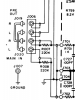
I think he's referring to the input Z of the amp section, as opposed to the regular inputs. The amp section does have 220k resistors across its input.
View attachment 2401563
So then can it be assumed that the main in section of the 1060's amp is 220k ohm?
Or, if I'm using a tube preamp that specifies it should be used with amps whose input impedance is 50kohm or better, would the amp portion of the 1060 qualify as a good match?

Artie
Super Member
So then can it be assumed that the main in section of the 1060's amp is 220k ohm?
Or, if I'm using a tube preamp that specifies it should be used with amps whose input impedance is 50kohm or better, would the amp portion of the 1060 qualify as a good match?
It should be fine. 220k is very little "load" on the preamp. On the other hand, you may need to have the preamp volume knob at a higher setting for the same loudness that some other amp might have. I had an old Dynaco ST-120 amp that had a 150k input Z. My preamp volume was close to "noon" for moderate room volume.
That's another I wish I hadn't sold.

I wouldn't describe 160 ohms as "astonishingly low" for an output impedance. Lots of other gear has an output impedance just as low, if not a lot lower.My only explaination is because the amps input impedance values are so different. The Sansui (80wpc) is 50 K ohms compared to the Marantz (30wpc) 220 K ohms. The SFL-2 output impedance is an astonishly low 160 ohms @ 1 kHz (single-ended).
50k is also plenty high enough to be a very easy load to drive, and certainly a very easy load for a 160 ohm source.
Whatever the sonic difference is between the two amps, I suspect the difference is due to the circuit details rather than the input impedance or power output.
It should be fine. 220k is very little "load" on the preamp. On the other hand, you may need to have the preamp volume knob at a higher setting for the same loudness that some other amp might have. I had an old Dynaco ST-120 amp that had a 150k input Z. My preamp volume was close to "noon" for moderate room volume.
That's another I wish I hadn't sold.
Thanks.
So to confirm the 220k figure is the 1060’s amp input impdance? Again McIntosh’s manual wants the amp that the C11 preamp is coupled with to have an input impedance of at least 50k so the higher the better. 220k would be perfect.
Artie
Super Member
So to confirm the 220k figure is the 1060’s amp input impedance?
Yes. Exactly.

Edit: I probably shouldn't say "exactly." That 220k is in parallel with the rest of the amp input circuitry, which includes a divider made up of a 1k and 56k resistor at the amp input. My math and theory isn't great. The measured input Z could easily be close to 50K when you consider the whole circuit. (Which you must.)
Last edited:
Yes. Exactly.
Edit: I probably shouldn't say "exactly." That 220k is in parallel with the rest of the amp input circuitry, which includes a divider made up of a 1k and 56k resistor at the amp input. My math and theory isn't great. The measured input Z could easily be close to 50K when you consider the whole circuit. (Which you must.)
Ok thanks that’s helpful.