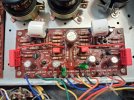
Classic case of some clown poking around with random capacitors and totally ignoring the semis, and the noisy old carbon comp resistors. For sure, no measurements, no testing and nothing other than a bag of caps and soldering iron.
I had two 1060's at the same time. Replacing the small value electrolytics with polypropylene film caps like Wima stack films did make a difference for the better. I didn't use any fancy Mudorf foil in oil caps though. I also left the fat brown film caps alone. I didn't replace them. Replacing the fat brown caps with Panisonic ECW's that are one of my go to film cops totally changed the house sound of the 1060 that I liked, especially the phono section. Same goes for replacing the small green "chicklet" mylar caps. I thought the amp sounded better with them.
I also replaced all the carbon comp resistors with either carbon film or metal film. I replaced the signal transistors that were known to go noisy. One had in one of the 1060's.
I used a parts list Leestereo came up with for these amps that included upping the electeolytic cap values a little in the power supply including the main filter cap and coupling caps. I also replaced the diodes in the power supply with low noise fast switching diodes. The bridge rectifier was replaced with a stouter one as well.
In the end the one 1060 I had done all that work to sounded great.
With the higher caps values used, especially the coupling caps, the amp had higher better controlled low end. The amp didn't run out of steam with flabby as fast at higher volume compared to the other stock cap coupled 1060.
When I restored the second 1060 I did test the original electrolytics. Only one was out of spec. These are nice little amps once restored. I use the one I kept as a preamp mainly connected to a Marantz power amp.
The 1030, 1060, and 2130 receiver are the only three Marantz pieces of equipment made with cap coupled amp sections if I remember right. Everything else was direct coupled.