• The move to the new server is done. There are some software and database maintenance updates in process. This has us passing the hat around to help out. We appreciate any donations. Seriously, even a dollar helps. The payment page may be found here - https://www.audiokarma.org/support.html

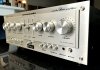
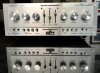
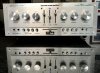
Marantz 1180DC vs Sansui AU9900

Jeff Jacob

New Member
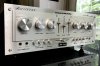
IMG_1486.JPG IMG_1487.JPG IMG_1485.JPG IMG_1491.JPG IMG_1483.JPG IMG_1484.JPG IMG_1474.JPG IMG_1481.JPG IMG_1478.JPG IMG_1479.JPG View attachment 1568163 View attachment 1568164 View attachment 1568166 View attachment 1568168 View attachment 1568170 View attachment 1568172 View attachment 1568173 View attachment 1568174 View attachment 1568176 View attachment 1568178

I happen to be lucky enough to have both of these amps. I spent 6 mo on each one restoring and upgrading what I was able to. After adequate burning in and other minor adjustments, I think I can speak intelligently and objectively about them. You can say I was the brains for the design upgrades, and Jimmy, from Electronics Service Center in Rockville MD, the technician that made it so. His willingness and ability to execute my extreme ideas have made for a super working relationship. Our coraboration was on the Marantz amp, and we have been going strong since.

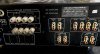
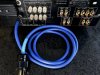
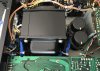
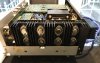
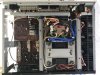
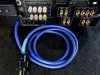
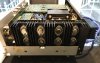
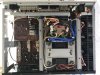
Let me start by saying that I love both the Marantz and the Sansui amplifiers. Both have good power, great sound, and awesome looks. Both amps received the full complement of Elna Silmic ii capacitors, and Nichicon Gold Through power filter caps. Of course many other resistors, relays, cleaning and solder work went in. Both got complete sets of gold RCA jacks, upgraded speaker binding posts, as well as real solid power cords. The Sansui got the better speaker connections and superior RCA jacks. The Marantz got the Kimber Kable PK14 gold power cord. Also both got all new power transistors. Here is where the Marantz continues beyond the standard restoration process. We replaced the flimsy, 40 yr old speaker wiring between the amp's connectors to the relay, and the switches, with Kimber Kable 8TC. Yes, a pain in the but. Also the flimsy 22 ga ground wiring with serious 12 ga pure copper. Also added a small heat sink on the back for additional cooling.

For A-B comparisons, I am using identical JBL 120ti speakers, Audio Research CD1 CD player, Kimber Kable 8TC speaker cables and Audioquest King Cobra for interconnects, all protected and fed by a Monster HTPS7000 power center.

So which is superior ? It depends on many things, the person, the speakers, and the signal they are receiving. Personally, I would lean towards the Marantz. The soundstage, or presence, seems a bit wider, and the bass slam has a little more authority. I also can feel the sound and place the space of the instruments and voices, better with the Marantz. You can almost cut the sound with a knife. A lot of air coming from those JBL's. I can't be sure if the internal wiring in the Marantz didn't produce this edge, but it's there. What I can say for sure, is that this 80 watt Sansui, and 90 watt Marantz, hits my JBL's better and harder than many 150-200 watt amps I've had before. I can also say definitively, that the average person buying one of these beautiful vintage amps from wherever, will not get to enjoy this level of performance.

Last, I will say that it has become a craze in the marketplace for scavengers to score a 40 yr old amp that has spent the last 10-20 yrs rusting in a garage or damp basement, for say, nothing, and turn around and sell for mega bucks to unknowing people wanting to live the dream. These scavengers, that wipe down a faceplate, replace a few light bulbs, and clean some switches, claim they have serviced or restored a vintage unit. Sorry for the unsuspecting buyers. If you want the quality that made a Marantz or Sansui famous, you have to consider spending real money, real effort, and real time to restore an old machine.
Every once in a while, I run into somebody that is both honest and talented, and loves audio. Their work and results are appreciated by few, lucky enough to come across them. Enjoy.
 
Last edited:
Register to hide this ad
Also added a small heat sink on the back for additional cooling.

Additional cooling for what exactly? Did you remote mount a regulator transistor? It looks terrible, tacked on, and the fins are horizontal...in short, the back panel is ruined IMO.

I think I can speak intelligently and objectively about them.

OK, so what objective measurements did you or "Jimmy, from Electronics Service Center in Rockville MD" perform on the amplifier before you undertook your modifications? What measurements did you perform after the modifications? Why did Jimmy change the output transistors?
 
As we all know, technical measurements do not always equate to music. I prefer to discuss the sound quality, power, or transparency of the respected piece of equipment, by listening before and after a repair or restoration is performed. Each person can then judge for themselves the improvements or differences. I am beyond pleased with the outcome and care more about the audio nirvana I am experiencing. I would love to do an A - B comparison with another 1180DC.
 
A lot of thought and no doubt money has gone into your resto-mods so I have to salute your commitment. Some of the mods will inevitably change the appearance and for the better. Marantz speaker binders are mostly worthless and RCA jacks are brittle and can't take a solid end connector. While I agree with the power cable mod, the color should have been black. And the additional external fins is definitely amateur hour. If anything, Marantz are over-transformered and therefore run conservatively with no heat issues whatsoever in a properly working example. I've owned dozens of them and none of them ran hot or even lukewarm. Not surprised the Marantz sound would harden because of the aforementioned large transformer. I wonder if some of the three martini sound is preserved.
 
I took a closer look at my Marantz, and the experts that arrived on the scene early on may have a point. The back plate does look kind of ugly, ruined as they say, with all the detail, attention and modern upgrades performed. Even the thought of replacing the original 22 ga lamp cord with a $500 Kimber 14 ga cable, with gold Wattgate connector seems to have been a mistake as the color is blue. Maybe the experts can post some pictures of their own Marantz amplifiers depicting better quality workmanship and detailing their own revered process. Then everybody could see the correct way to restore a vintage amplifier.
My intention was to share my journey and results with people that appreciate vintage audio. I certainly cannot compete with the experts that know the voltage and resistance reading of every component. But I do know what a good amplifier looks like and what it sounds like. Peace
 
IMG_1600.JPG IMG_1602.JPG

I thought adding these ViaBlue spikes for support gives the amplifier better support/insulation, as well as a more majestic stance.
 
Last edited:
I happen to be lucky enough to have both of these amps.

Let me start by saying that I love both the Marantz and the Sansui amplifiers.. I can also say definitively, that the average person buying one of these beautiful vintage amps from wherever, will not get to enjoy this level of performance.

Last, I will say that it has become a craze in the marketplace for scavengers to score a 40 yr old amp that has spent the last 10-20 yrs rusting in a garage or damp basement, for say, nothing.... These scavengers, that wipe down a faceplate, replace a few light bulbs, and clean some switches, claim they have serviced or restored a vintage unit. Sorry for the unsuspecting buyers. If you want the quality that made a Marantz or Sansui famous, you have to consider spending real money, real effort, and real time to restore an old machine.

A couple of things:

Why the double post of duplicate pictures?

"the average person..... will not get to enjoy this level of performance" who are these average people you speak of? how do you know this? and what "level" are you speaking of? there are plenty of people who have access to a competent tech not mention the folks who are competent in their own right who can restore & modify.

I see no mention of what was done to the Sansui, are you A/Bing a modified Marantz vs a not modified Sansui? if not what resto/mods were done to the Sansui?

With regards to "scavengers" how & where did you acquire your gear? as to the wiping down, replacing bulbs etc and claiming it as serviced or restored I couldn't agree more.
 
Last edited:
The AWG of 8TC Kimber Kable is 9, using 8 each 19.5AWG conductors. Nothing wrong with upgrading the internal power amp output wiring.

This is a tough crowd, many are so OCD that not putting the unit back to original means it is a downgrade even though that wiring was an improvement. If the original output transistors were fine, no reason to replace. If they were bad, a full replacement set is indicated. Why the amp heat sink would need an external additional heat sink, I don't know. Do the new transistors put out more heat than the stock units? That heatsink is on one end of the main sink, really only adding performance for those last two transistors. Folks complaining about a blue power cord, those you gotta look out for, electrons can't see the color of the cord and a better power cord is a nice upgrade and it is kinda matching the blue light on the unit. I might have put an IEC socket on the unit and used a detachable power cord if I was going to the work of replacing it.

It is your unit, you can do what you want to it. Now about that comparison...???
 
Last edited:
All-righty then..

George-Costanza-Popcorn.gif


......
 
Actually, I think it looks good and probably beats the hell out of the original plugs/connectors. Maybe the blue cord is a bit much and I would have asked for black. I'm sure there are plenty of black cords that could do the job.

Looks far better than the two Amphenol plugs that were added to my 170DC to use balanced plugs in the recording studio. They just made a couple holes next to the RCA plugs, removed the RCA plugs, and added the Amphenols on "stand-offs" behind the unit (uggghhh!). And, who knows what rash lies under the added rack plates/handles.

Haven't even turned on the 1180DC I bought from an A/K member yet to try it out.

BTW, in the automobile restoration world, this would be called a "resto-mod" and just as here, you will find people who believe it to be sacrilege while others relish in it.
 
Last edited:
A couple of things:

Why the double post of duplicate pictures?

"the average person..... will not get to enjoy this level of performance" who are these average people you speak of? how do you know this? and what "level" are you speaking of? there are plenty of people who have access to a competent tech not mention the folks who are competent in their own right who can restore & modify.

I see no mention of what was done to the Sansui, are you A/Bing a modified Marantz vs a not modified Sansui? if not what resto/mods were done to the Sansui?

With regards to "scavengers" how & where did you acquire your gear? as to the wiping down, replacing bulbs etc and claiming it as serviced or restored I couldn't agree more.
A couple of things:

Why the double post of duplicate pictures?

"the average person..... will not get to enjoy this level of performance" who are these average people you speak of? how do you know this? and what "level" are you speaking of? there are plenty of people who have access to a competent tech not mention the folks who are competent in their own right who can restore & modify.

I see no mention of what was done to the Sansui, are you A/Bing a modified Marantz vs a not modified Sansui? if not what resto/mods were done to the Sansui?

With regards to "scavengers" how & where did you acquire your gear? as to the wiping down, replacing bulbs etc and claiming it as serviced or restored I couldn't agree more.
A couple of things:

Why the double post of duplicate pictures?

"the average person..... will not get to enjoy this level of performance" who are these average people you speak of? how do you know this? and what "level" are you speaking of? there are plenty of people who have access to a competent tech not mention the folks who are competent in their own right who can restore & modify.

I see no mention of what was done to the Sansui, are you A/Bing a modified Marantz vs a not modified Sansui? if not what resto/mods were done to the Sansui?

With regards to "scavengers" how & where did you acquire your gear? as to the wiping down, replacing bulbs etc and claiming it as serviced or restored I couldn't agree more.
---
Double post was accidental. Still getting a handle on the use of the site. Sorry.
The "average person" refers to the many decent people that read these wonderful posts or reviews, and end up buying a 50 lb paper weight that has a Marantz badge on it. They get home, install and listen. Guess what. The amp doesn't work, pops, only gives output on one channel, or blows up a week later. But he parted with his money and the seller is gone. Now he has a $500 question in front of him. This doesn't happen all the time but often enough to be real. The comment doesn't take anything from the average person, rather it relates to the scavengers that buy the amp for $20 at a garage sale, squirt deoxit, wipe down, and then represent it as a restored piece of heaven, scoring $800 or more from nothing. That's just wrong.

On competent techs, I agree 100%. There are many out there. Or not. Like a good mechanic. If you find one though, you better hold on to him.

As for Sansui comparison, I thought I addressed that in the opening link. The Sansui came before the Marantz to me. I did all the caps, power filters and transistors, relays, switches etc., similar to the Marantz. I complimented it with better RCA jacks, and really nice banana/spade binding posts. I installed a heavy duty 12 ga power cord from some of my pro sound gear. Initially, I thought it was going to be boss, but once the Marantz came back from service, 30 hrs+ of burn in time, I switched camps. I have been and remain a loyal Sansui amp/receiver fan. But the Marantz just hits harder, and spreads the music wider. It has almost a holographic presentation, that you ususally have to get a Krell or Audio Research piece to deliver. I know this cause I own them. I never thought I would say this or spend over 1k in a 90 watt anything. Both rise to the occasion. The Sansui seems a little more linear with its power, while the Marantz rises quicker and slams with all its might faster. Looking at my JBL 120ti's move, both are getting pounded, but the Marantz drive is moving more air. The truth is, both pieces just sing. But again, the Marantz is sweeter. To me.
 
I took a closer look at my Marantz, and the experts that arrived on the scene early on may have a point. The back plate does look kind of ugly, ruined as they say, with all the detail, attention and modern upgrades performed. Even the thought of replacing the original 22 ga lamp cord with a $500 Kimber 14 ga cable, with gold Wattgate connector seems to have been a mistake as the color is blue. Maybe the experts can post some pictures of their own Marantz amplifiers depicting better quality workmanship and detailing their own revered process. Then everybody could see the correct way to restore a vintage amplifier.
My intention was to share my journey and results with people that appreciate vintage audio. I certainly cannot compete with the experts that know the voltage and resistance reading of every component. But I do know what a good amplifier looks like and what it sounds like. Peace

Have to agree with Blue Shadow, IEC socket would have been preferable. Although I am not a believer in the efficacy of power cables beyond upping gauge, rolling power cables adds value to the OCD and there are many out there.
 
The AWG of 8TC Kimber Kable is 9, using 8 each 19.5AWG conductors. Nothing wrong with upgrading the internal power amp output wiring.

This is a tough crowd, many are so OCD that not putting the unit back to original means it is a downgrade even though that wiring was an improvement. If the original output transistors were fine, no reason to replace. If they were bad, a full replacement set is indicated. Why the amp heat sink would need an external additional heat sink, I don't know. Do the new transistors put out more heat than the stock units? That heatsink is on one end of the main sink, really only adding performance for those last two transistors. Folks complaining about a blue power cord, those you gotta look out for, electrons can see the cord and a better power cord is a nice upgrade and it is kinda matching the blue light on the unit. I might have put an IEC socket on the unit and used a detachable power cord if I was going to the work of replacing it.

It is your unit, you can do what you want to it. Now about that comparison...???
---
I hear you in the tough crowd. But when Jimmy showed me the skinny little ground wires inside the amp, and we took a closer look at the lamp cord bringing in the juice from the outlet, I knew we needed to remedy the problem. As for the blue color in the cord, I am having a tough time discussing something so insignificant. Aside from the fact that it is just a cool looking cable that contrasts nicely on the black backplate, what else can we say.

Regarding the internal speaker wiring using the Kimber 8TC. Ok, this for the experts out there. So people spend thousands $'s for an amp, then CD player, record player, speakers. Let's say they have a kiler vintage system and about 5k into it. Now they spend $500-$1000 for moderate speaker cables and interconnects. Here we go. Your killer JBL speaker connects to your killer Marantz amp via killer Kimber Cables, and connects to hi end copper/gold connectors. Now what ?? Next link is the 18 or 22 ga crap wiring going from back plate to the switch or the relay. So what, pray tell, did you accomplish. I'll tell you my opinion...Squat. You're only as strong as your weakest link. But of course going this distance you need many components. You need somebody willing to front the cash for the components. Somebody with the knowledge to come up with the plan. Then a tech willing to do the painstaking work. Whether for their own machines or a customer's. Not many people will go this distance.
 
Have to agree with Blue Shadow, IEC socket would have been preferable. Although I am not a believer in the efficacy of power cables beyond upping gauge, rolling power cables adds value to the OCD and there are many out there.
---
I also thought of adding the IEC socket, but decided against it for future sake. I buy, sell, trade, upgrade, restore so much, as per my audio addiction, that using the IEC would mean that one day I would steal the Kimber cable for a different piece of gear. This way, my Marantz always has a really nice Kimber Kable PK14 attached to it.
 
---
I also thought of adding the IEC socket, but decided against it for future sake. I buy, sell, trade, upgrade, restore so much, as per my audio addiction, that using the IEC would mean that one day I would steal the Kimber cable for a different piece of gear. This way, my Marantz always has a really nice Kimber Kable PK14 attached to it.

I have to admit that if the 1180DC was a forever amp, then I was being too hard. ...buy, sell, trade, upgrade... Since you opened the door to value considerations, modifications that alter the external look harm value. About the only external mod that adds value is re-finishing the faceplate to black with white screen print. That works with the receivers but not sure with the integrateds. Even internal modifications that depart too much from the original hurt value. It doesn't matter if the amp is functionally better, the original Marantz look implies the original Marantz sound which is what the collectors are after. Admittedly, a lot of the original parts are poor quality with plastic that has deteriorated. With a stock unit, you can't accessorize with fancy speaker and IC cables. So, your binders and RCA jacks are justifiable. Power side wiring is fine but why not go all the way. Getting IEC socket and getting rid of the extra "CPU cooler " will maximize your value.
 
I have to admit that if the 1180DC was a forever amp, then I was being too hard. ...buy, sell, trade, upgrade... Since you opened the door to value considerations, modifications that alter the external look harm value. About the only external mod that adds value is re-finishing the faceplate to black with white screen print. That works with the receivers but not sure with the integrateds. Even internal modifications that depart too much from the original hurt value. It doesn't matter if the amp is functionally better, the original Marantz look implies the original Marantz sound which is what the collectors are after. Admittedly, a lot of the original parts are poor quality with plastic that has deteriorated. With a stock unit, you can't accessorize with fancy speaker and IC cables. So, your binders and RCA jacks are justifiable. Power side wiring is fine but why not go all the way. Getting IEC socket and getting rid of the extra "CPU cooler " will maximize your value.
---
I guess it would help you if you could sit in front of this Marantz and listen to it for a couple hours. I have had too many amps/receivers in my day. I am not saying this is the most or best of anything. I am saying it's just off the cuff bad ass. As for value, I guess if it's owner is impressed and all that see it or listen to it, drool, than Value is determined. Considering that I am not selling it, Value is mine to determine and others to argue or agree.
 
replacing the original 22 ga lamp cord with a $500 Kimber 14 ga cable, with gold Wattgate connector seems to have been a mistake

It was a mistake spending $500 on a power cable because it means wasting $475.

Just like spending a huge amount of money on upgrades to cars that the owner will never see when he sells it......do a bunch of "upgrades" and custom work on a valuable amp like yours and it will never add value.
 
Back
Top Bottom