• The move to the new server is done. There are some software and database maintenance updates in process. This has us passing the hat around to help out. We appreciate any donations. Seriously, even a dollar helps. The payment page may be found here - https://www.audiokarma.org/support.html

Marantz 1200- should I recap?

Hi Ernst,

Thanks so much for the thoughtful advice. I have the schematics/service manual for the 1200 and I'm in contact with someone who is sending me the service bulletin for the 1200. The addendum looks applicable to me (sn 5743), so I will be combing that in addition to the Echo Wars post and other posts on this site about the 1200 (my bookmarks folder is filling quickly).

I tested the bias and its 22 mV on both sides, which seems in line. Though, my DC offset is 67mV on the left and 49mV on the right. My deoxit is arriving tonight or tomorrow morning. I'm going to clean everything and then remeasure (though it doesn't seem that the DC offset should change much with cleaning?). If it stays that high, I will follow the manual and try resetting the DC offset with the pots on the amplifier boards. According a post by EchoWars, it seems this is not wildly high, but could indicate that the unit needs more TLC than a cleaning.
 
Last edited:
here it is in pdf format.
I also have the ms word format, but I cannot upload that format.

I also have the entire 1200 SM in word format. but still working of the OCR corrections.
 

Attachments

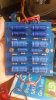
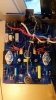
Some pictures of the amp boards. Looking nice! Adjusted the DC offset to zero.
 

Attachments

  • left channel Ps board real.jpg
    left channel Ps board real.jpg
    46.6 KB · Views: 68
  • right channel Ps board.jpg
    right channel Ps board.jpg
    50.5 KB · Views: 64
During last week, I did a bunch of research and got much more familiar with the layout of the 1200. I noticed also while running the unit, occasionally the right channel would dim out, but would return if I increased the volume. Given that I'd already cleaned the pots, the first thing I thought it would be was the relay for the right channel. A small tap on the relay returned the right channel if it faded. I found that the relay contacts for that channel were slightly oxidized and off-center. I cleaned the contacts and gently shifted the arm on-center, which has rectified the problem. I also found a resistor on the relay board with a good deal of oxidation hiding underneath it with a slightly out of spec value, and I replaced it. But, I think when I do more in depth maintenance when I have time off in a month, I will for sure be replacing the relay. At the same time, I'll go through and make sure parts are in spec (diodes, resistors, transistors) and start recapping the power amp portion, especially if I notice problems. When I do all of that, I'll make a post to show my progress (and to make sure I am as diligent as possible with my documentation).

Thanks again for all the help everyone!
 
So I finally had some more time recently and started thinking about recapping this guy.
When I was first running it, it sounded pretty good. But, over time little things began to bother me. This was compounded when I swapped out the decent polk speakers I had hooked up and plugged in a pair of B&W matrix 2 s2 speakers. The low mid felt bloated, the highs not detailed as they should have been, and the soundstage felt compressed. I knew what I had to do.

I replaced all the electrolytic caps in the power amp portion with Vishay 138 axials. I first recapped just the power supply board, and just to make sure I didn't destroy the amp, I powered it on first with the variac and my dim bulb, and then I plugged it into the wall and gave it a listen.psupply board.jpg

Just that made a huge improvement. So, I soldiered on and replaced the electrolytics on the power amp and relay boards. Wow! This thing really sings now. I'm kicking myself for not doing this earlier, as it really didn't take that much time either.

In the future, I'm planning to recap the pre-amp section, especially the phono stage. Currently, I prefer the sound of my Cambridge 640 pre to the Marantz, but thinking if it gets a recapping it may change my feelings.

The whole experience makes me want to say to people thinking about recapping to take the plunge (provided you have the soldering/electronics experience). Thanks for everyone in this thread and others for your words of advice!

 
I had a small problem with the relay when I first got it where I would lose the right channel periodically, but a small touch to the relay would get it back. Turned out the right channel relay contact was pretty dirty. I did a cleaning of it with sandpaper and deoxit and the problem has abated completely. I bought a replacement relay any way, and maybe when I get around to it I'll install it.

Before I recapped, the relay would take about 10s to engage, and maybe a quarter of the time I would get a little sound like the relay was struggling to click in. After the recapping, the relay snaps in crisply in a cool 4-5 seconds after turning the unit on.
 
2 year later update:

I did replace the relay, and the 1200 has been a great daily driver. Currently I have it hooked up to Thiel CS2s and it drives them with ease.

One thing I wanted to give other restorers as a heads up: the bias and DC offset pots on the amp boards have been unreliable in my unit. First, the bias on the right amp was going all over the place. I tested every component, subbed in new transistors, but not avail. Changed the pot, and bam. Solid. Then, recently I heard the left channel clicking as if the differential pair were going dead. I measured the DC offset, and it 10-20mV, but oscillating ~5mV up and down. Then, it would spike when I got the clicks. My gut said replace the pot first before going through the pain of hfe matching transistors. Threw a new pot in, and problem is completely solved.

Takeaway: the old pots on the amp boards were prone to failure in my unit. Think about testing and replacing them at the start of your repair process if you have issues with offset/bias.
 
Some of the older 250s, 240s and likely 1200s had germanium diodes in them and therein lies the problem--germaniums are unobtainium. Unless you know me. I have a few laying around because One of my two 250s maybe one of the oldest still running and it took me months to find some germaniums of the proper spec--and then I bought all he had. in 2001 I found a little radio repair shop in London that had them. His website was tiny and took forever to find and he may have had the last ones in existence--but these are the exact same type Marantz used. Yes--it is a wonderful 250. they both are. So is the one of the two 240s i have. the other one needs a rebuild/repair.
 
Back
Top Bottom