
• The move to the new server is done. There are some software and database maintenance updates in process. This has us passing the hat around to help out. We appreciate any donations. Seriously, even a dollar helps. The payment page may be found here - https://www.audiokarma.org/support.html

Marantz 2330 (non B) Triple Diode

ocdecio

The proof of the restoring is in the listening.
Subscriber
I have an otherwise clean 2330 here, but the left amp board looks like it was torched some time ago. It was repaired and it is working but a couple of things I'm noticing:

1. It has low bias and it is hard to get to 13.5mV
2. The bias diode was replaced but I think it isn't the correct one - it measures 1.02V across when it should have been 1.4V
3. Q706 and Q707 get a lot warmer than the corresponding on the right side.
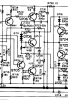
upload_2023-5-14_10-50-51.png

I wonder if having a double diode (apparently) could cause bias issues and overheating?
 
Register to hide this ad
Only to the extent that the bias can't be adjusted low enough. I'd try raising the value of R722 a bit if the pot is at it's 1K nominal resistance vs. the shorted out end. If Q708 were conducting a bit more, it should reduce the spread to the next stage base pins and on out to the outputs.
 
Only to the extent that the bias can't be adjusted low enough. I'd try raising the value of R722 a bit if the pot is at it's 1K nominal resistance vs. the shorted out end. If Q708 were conducting a bit more, it should reduce the spread to the next stage base pins and on out to the outputs.
Thank you Randy! Actually the bias can be adjusted very low, and it has some difficulty actually going up. Now that you mention Q708 - this unit had it swapped from 2SC1568 to 2SC1904 which is a transistor I know almost nothing about. I can still find original 2SC1568 I am wondering if I should try put them in instead. As I said, the amp works, but the extra warming of Q706/Q707 concern me a bit.
 
On a separate question - should I replace all the zeners on the P800? I had the power supply making a bit of noise for a couple of seconds which startled me but I can't make it happen again. All other transistors are new on P800.
 
Thank you Randy! Actually the bias can be adjusted very low, and it has some difficulty actually going up. Now that you mention Q708 - this unit had it swapped from 2SC1568 to 2SC1904 which is a transistor I know almost nothing about. I can still find original 2SC1568 I am wondering if I should try put them in instead. As I said, the amp works, but the extra warming of Q706/Q707 concern me a bit.
D'oh! I was thinking it was too high when you clearly said it was running low. Oh man - I'm just too chill on this Sunday afternoon. Try jumping across said resistor temporarily to see if it adjusts better. I think the base - emitter voltage may the most contributing factor. Swapping to the other may help, may make it worse. Possibly increasing the value of the multi-diodes current limiting resistor R721 could also help.

I wouldn't change the zeners at the least until the bias is adjustable and stable. What kind of noise? Physical noise or on the speaker outputs (but how would you know it's the p.s.)?
 
D'oh! I was thinking it was too high when you clearly said it was running low. Oh man - I'm just too chill on this Sunday afternoon. Try jumping across said resistor temporarily to see if it adjusts better. I think the base - emitter voltage may the most contributing factor. Swapping to the other may help, may make it worse. Possibly increasing the value of the multi-diodes current limiting resistor R721 could also help.

I wouldn't change the zeners at the least until the bias is adjustable and stable. What kind of noise? Physical noise or on the speaker outputs (but how would you know it's the p.s.)?
Because it's a buzz not hum on both channels. I sprayed some air on the PS and it went away. All transistors caps and double diodes are new.
 
I replaced the diode with a proper STV3H and replaced the servo bias transistor with a proper 2sc1568 and it now bias very easily. I am still concerned with the temperatures Q707 (2sc1953) gets - around 160-165F - but I've read and heard that could actually be normal? This is the first 2330 I work on so I am looking for some guidance - if it is OK I'll let it be.
 
Back
Top Bottom