

You are using an out of date browser. It may not display this or other websites correctly.
You should upgrade or use an alternative browser.
You should upgrade or use an alternative browser.
Marantz model 27 drivers
- Thread starter Mark_L
- Start date
-
- Tags
- marantz model 27
Register to hide this ad

USMC Spike
Well-Known Member
First, how do you know your tech is very talented?
He has google just like everyone else now days and can look up what he needs.
If he can't do that, I'm not so sure he's a very talented tech.
What are the driver transistors in the Model 27 and post them here.
And you shouldn't have to do your techs work for him after all you are
paying him for is knowledge, skills, and experience yes?
Good luck.
He has google just like everyone else now days and can look up what he needs.
If he can't do that, I'm not so sure he's a very talented tech.
What are the driver transistors in the Model 27 and post them here.
And you shouldn't have to do your techs work for him after all you are
paying him for is knowledge, skills, and experience yes?
Good luck.

JoseHH
Super Member
Please use the search button in this forum and read as many threads as possible. There are modern equivalent parts that will work well in your marantz27. If you search you will find this information. See for example this thread, post number 9.
EDIT:
In addition to those options in the linked thread, you can use fairchild KSA916/KSC2316 or KSA1013/KSC2383, KEC KTA1275/KTC3228, or even the old Toshiba 2SA965/2SC2235 which may still be found.
EDIT:
In addition to those options in the linked thread, you can use fairchild KSA916/KSC2316 or KSA1013/KSC2383, KEC KTA1275/KTC3228, or even the old Toshiba 2SA965/2SC2235 which may still be found.
Last edited:
USMC Spike
Well-Known Member
I didn't see that thread, thanks JoseHH. Yes and some good subs are available too.
Mark L, send me the contact info for your tech off line please.
Also have your tech provide you with the transistor numbers of the drivers
and their type. None of this is brain surgery in this day and age.
--Spike
Mark L, send me the contact info for your tech off line please.
Also have your tech provide you with the transistor numbers of the drivers
and their type. None of this is brain surgery in this day and age.
--Spike

In defense of that tech... It takes time to go searching for info, time that he's not making money. I did a search using 'Marantz 27 driver transistor' and going through the first four results I did not find any useful info. Maybe I'm being blind or not quite awake!
Let's be kinder to others.
Let's be kinder to others.

Mark_L
New Member
In defense of that tech... It takes time to go searching for info, time that he's not making money. I did a search using 'Marantz 27 driver transistor' and going through the first four results I did not find any useful info. Maybe I'm being blind or not quite awake!
Let's be kinder to others.
I have no reason to doubt his skills. He’s been at it a long, long time. That said, it is perplexing to me that he hasn’t come up with a substitute part.
JoseHH
Super Member
May be post a picture of the driver board so we can see what is installed in it. Perhaps a previous repair changed the parts to some hard to find replacements. In any event, has he seen the thread and the subtitutes i have suggested?. It cant be that hard to find replacements unless he wants to put the exact old part in it. If my japanese style parts are not preferred, then get the 2N3440/2N5416, or the 2N3439/2N5415. There are many options that will work.
2N3440/2N5416 will do fine, and still be able to use the original heat sinks.My tech is very talented, but he claims that driver transistors (?) for the Marantz model 27 are impossible to find. It’s holding up the repair. Any advice or leads on how to source parts to get this 27 up and running again would be appreciated. Thanks.

USMC Spike
Well-Known Member
At some point I'm going to be restoring my Marantz Twenty Three. I'ts a tuner.
I was looking at this thread thinking maybe the everything except the amp boards
might be the same or similar. Someone else where posted a clue about his,
He just replaced the crappy 2SC458BLGs with the KSC1815s I believe and
it's been working fine there after.
The Twenty Three has six of those transistors in her.
-- Spike
I was looking at this thread thinking maybe the everything except the amp boards
might be the same or similar. Someone else where posted a clue about his,
He just replaced the crappy 2SC458BLGs with the KSC1815s I believe and
it's been working fine there after.
The Twenty Three has six of those transistors in her.
-- Spike
JoseHH
Super Member
Yes, that is a good substitute. There may be other substitutes like the kec ktc3199 or the fairchild ksc945 (which used to come with center pin=collector ktc945cg or center base = ksc945g). The modern S9014 from fairchild is center base but is equivalent to the 2sc458. The old sanyo 2sc3330 or 2sc3331 can also be used if you find them.He just replaced the crappy 2SC458BLGs with the KSC1815s I believe and
it's been working fine there after.
That depends on the circuit. The 1815 has a lower gain, although in some circuits it doesn't matter. If the current is lower, the 1845 is better with higher gain. Most of the time, the 458 is replaced with the 1845F (highest gain now available) Although the 458 is a higher gain transistor, it was also widely used in a "general purpose" role as well. I recently rebuilt a Marantz 22 and used the 1845F along with those drivers I mentioned above. It sounded so goodAt some point I'm going to be restoring my Marantz Twenty Three. I'ts a tuner.
I was looking at this thread thinking maybe the everything except the amp boards
might be the same or similar. Someone else where posted a clue about his,
He just replaced the crappy 2SC458BLGs with the KSC1815s I believe and
it's been working fine there after.
The Twenty Three has six of those transistors in her.
-- Spike
 I didn't want to give it back.
USMC Spike
Well-Known Member
I'm getting thereIf my japanese style parts are not preferred, then get the 2N3440/2N5416, or the 2N3439/2N5415. There are many options that will work.
[QUOTE="Skywatcher, post: 14656366, member: 255849"
A. 2N3440/2N5416 will do fine, and still be able to use the original heat sinks.
B. That depends on the circuit. The 1815 has a lower gain, although in some circuits it doesn't matter. If the current is lower, the 1845 is better with higher gain. Most of the time, the 458 is replaced with the 1845F (highest gain now available) Although the 458 is a higher gain transistor, it was also widely used in a "general purpose" role as well. I recently rebuilt a Marantz 22 and used the 1845F along with those drivers I mentioned above. It sounded so good
I didn't want to give it back. [/QUOTE] Not trying to be dense here, even though I can be sometimes.Oh yeah, Transistor fun and games. 1845F...And those drivers were 2n3440/2n5416?
-- Spike
Not trying to be dense here, even though I can be sometimes.I'm getting there
[QUOTE="Skywatcher, post: 14656366, member: 255849"
A. 2N3440/2N5416 will do fine, and still be able to use the original heat sinks.
B. That depends on the circuit. The 1815 has a lower gain, although in some circuits it doesn't matter. If the current is lower, the 1845 is better with higher gain. Most of the time, the 458 is replaced with the 1845F (highest gain now available) Although the 458 is a higher gain transistor, it was also widely used in a "general purpose" role as well. I recently rebuilt a Marantz 22 and used the 1845F along with those drivers I mentioned above. It sounded so good
Oh yeah, Transistor fun and games. 1845F...And those drivers were 2n3440/2n5416?
-- Spike[/QUOTE]
Yep, those were the drivers.

USMC Spike
Well-Known Member
So in one of these old tuners, and issue while i'm in there replacing all the transistors with
modern transistors? Also, are new transistors less noisy then the old transistors?
modern transistors? Also, are new transistors less noisy then the old transistors?
If you replace transistors in a tuner circuit, you will more than likely need to do an alignment for peak tuner performance. Pretty much only the transistors in the audio out portion of the tuner (if any) won't hurt being changed. But if they are working fine I would leave them alone. Eventually all old transistors will become noisy at some point from breaking down. But it's hard to tell when that would be. So for the time being, only replace the already "known to go bad" transistors, and/or any transistors currently causing issues. If it's not "broke", don't "fix" it.So in one of these old tuners, and issue while i'm in there replacing all the transistors with
modern transistors? Also, are new transistors less noisy then the old transistors?
As far as "old vs new" in the "noise" category, some transistors are "low noise" and others aren't irregardless of their age. A phenomenon called growing "tin whiskers" happens to all silicon over time. Some grow them sooner (or later) than others to the point where they become conductive and begin the phase of "crackling" or other "sounds" right before outright failure. I have some really old transistors that are silent and functioning perfectly. Yet others have become degraded and had to be changed. A lot of it is the environment they are subject to. Higher humidity and "salt air" caused corrosion to start early and creep into the junctions. While the exact same transistor that lived in a dry clean environment lives on without a hiccup. But there are other factors such as contaminants in the silicon (or other materials) itself for any given batch when they were made. For that matter, I have had brand new transistors go bad, or were bad right out of the gate. Nothing is 100% "perfect".
Normally a metal-can transistor being hermetically sealed (glass seals) will last pretty much indefinitely unless something goes wrong like being over stressed by leaky caps, failed resistors, over cranking
 , etc. Plastic cased transistors such as TO-92, TO-126, TO-3P, TO-220, etc are more prone to their seal being broken because of the differences in thermal expansion coefficient between the plastic and metal leads allowing oxidation to creep inside. Transistors that run cool are less prone to the thermal differences than ones that run hot. So for the most part, unless you know a transistor is going bad, or is on the "hit list" of known to fail, leave them alone. (yes, I repeated myself
  )
)
USMC Spike
Well-Known Member
Yes, I like your post skywatcher, but I got the Twenty Three because it didn't work.
You and JoseHH are correct. However they ARE on the Scheisse List those 458s are.
Then that leads me to the complement of 2sa494s, the 2SA494 used in C-B configuration,
why aren't these failure prone also?
So is it best to use the KSC1815F OR KSC1845F?
I did the first level of troubleshooting as described in the manual and I still couldn't diagnose the issue.
I rewired the relay by switching the wiring, still same issue, no sound in one channel.
Here are snippets of the three boards along with the service manual so you don't need to go
hunting for it.
Manual is too large to post here, let me try and link it from within AK: LINK
It's always hard to find, it's with the 23xx receivers not with the 22, 27 etc
at the end of the Marntz data base.
P400 Tone and Pre Amplifier Assy:

P600 Main Amplifier Assy:
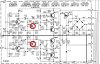
P700 DC Amplifier and FM Audio Amplifier Assy:

You and JoseHH are correct. However they ARE on the Scheisse List those 458s are.
Then that leads me to the complement of 2sa494s, the 2SA494 used in C-B configuration,
why aren't these failure prone also?
So is it best to use the KSC1815F OR KSC1845F?
I did the first level of troubleshooting as described in the manual and I still couldn't diagnose the issue.
I rewired the relay by switching the wiring, still same issue, no sound in one channel.
Here are snippets of the three boards along with the service manual so you don't need to go
hunting for it.
Manual is too large to post here, let me try and link it from within AK: LINK
It's always hard to find, it's with the 23xx receivers not with the 22, 27 etc
at the end of the Marntz data base.
P400 Tone and Pre Amplifier Assy:
P600 Main Amplifier Assy:
P700 DC Amplifier and FM Audio Amplifier Assy:
Last edited:
On the P700 you can use the KSC1845FTA for the 2SC458, and the KSA992FTA for the 2SA494
On the P400 the same. The collector current is less than 0.05 of the KSC1845/KSA992
On the P600 I would use the KSC1815 because of the 0.1A collector current of the 2SC458 there in that position. The KSC1845 has only 0.05A collector current rating and it could exceed that, and the 1815 will work just dandy anyways.
A note about the P700. The left portion is simply to drive the tuning meter. In the Marantz 22 it was horrible and caused wild swings of the meter. The 22R was revised and no longer used transistors to drive the meter. The board was redesigned for another use, and the meter connected directly to the tuner circuit. If your tuning meter works alright, there is no reason to revise the circuit. I have no idea if there was a service bulletin on the Model 23 for it, but I would guess there was. If you notice, below H705 and above H706 there are arrows labeled 7N and 7P. They (wires) go to a potentiometer that is used to "balance" L/R output from the tuner and is part of the alignment procedure. However the SM has a footnote that not all units have that pot. On the Model 22, the pot is mounted on the top side for access to it. I never saw a 23 so I have no idea how close they are to each other.
Curious though, the thread is labeled Model 27, but now we are discussing a 23?
Oh, the FTA decoded means... F is the gain group, and the TA means they come on TApe. The FBU is F group in BUlk (loose) packaging.
On the P400 the same. The collector current is less than 0.05 of the KSC1845/KSA992
On the P600 I would use the KSC1815 because of the 0.1A collector current of the 2SC458 there in that position. The KSC1845 has only 0.05A collector current rating and it could exceed that, and the 1815 will work just dandy anyways.
A note about the P700. The left portion is simply to drive the tuning meter. In the Marantz 22 it was horrible and caused wild swings of the meter. The 22R was revised and no longer used transistors to drive the meter. The board was redesigned for another use, and the meter connected directly to the tuner circuit. If your tuning meter works alright, there is no reason to revise the circuit. I have no idea if there was a service bulletin on the Model 23 for it, but I would guess there was. If you notice, below H705 and above H706 there are arrows labeled 7N and 7P. They (wires) go to a potentiometer that is used to "balance" L/R output from the tuner and is part of the alignment procedure. However the SM has a footnote that not all units have that pot. On the Model 22, the pot is mounted on the top side for access to it. I never saw a 23 so I have no idea how close they are to each other.
Curious though, the thread is labeled Model 27, but now we are discussing a 23?
Oh, the FTA decoded means... F is the gain group, and the TA means they come on TApe. The FBU is F group in BUlk (loose) packaging.
USMC Spike
Well-Known Member
Skywatcher, Thats good info to know. I know shame on us right? But sometimes discussions can get elliptical,
and now we are redeemed as you came back around and mentioned the Model 27.
Some where here I think I started a Model 23 thread but life happened and I never got back around to it.
I don't know if it good to start that thread again or new one, but I'm not yet ready for that yet as I'm upgrading my
little girls Marantz 2230 Receiver. Currently on the bench warming up to check the bias.
and now we are redeemed as you came back around and mentioned the Model 27.
Some where here I think I started a Model 23 thread but life happened and I never got back around to it.
I don't know if it good to start that thread again or new one, but I'm not yet ready for that yet as I'm upgrading my
little girls Marantz 2230 Receiver. Currently on the bench warming up to check the bias.