


-
Feeling lucky? Check out the AK 24th Anniversary Giveaway thread and join in the fun!
You are using an out of date browser. It may not display this or other websites correctly.
You should upgrade or use an alternative browser.
You should upgrade or use an alternative browser.
Maverick Audio TubeMagic D2 DAC: Upgrades and Hacks
- Thread starter junkscience
- Start date

Register to hide this ad
junkscience
New Member
Sparkos Labs - SS3602 Dual Op Amps

Maverick Audio TubeMagic D2 DAC: Upgrades and Mods
My journey to better digital sound starts with the Maverick Audio TubeMagic D2 DAC, and ends with the same DAC, albeit with upgrades and modifications.
I purchased the Maverick D2 DAC with the GE 5670 NOS tube some time ago. I greatly enjoyed the musically engaging sound from the tube output. Bringing life to many CDs. What the tube-out lacked in detail was, for me, made up for in a pleasant musical and warm sound.
As reviewer John Darko noted at the time, the TubeMagic “has taken its rightful place as the pick of the budget end of the DAC market.”
http://www.digitalaudioreview.net/2010/07/maverick-tubemagic-d1/
However, on critical review, the tube-out is a bit warm and the music lacking in ultimate detail.
Thus, I was delighted to find these new reviews of adding discrete component op amps. (My thanks to Mike Cox at tnt-audio):
http://www.tnt-audio.com/accessories/sparkos_ss3602_e.html
and:
http://www.tnt-audio.com/accessories/burson_supreme_e.html
The addition of the discrete component op amps is an easy to implement upgrade.
The sound improvement of the discrete component op amps is indeed category changing. WOW. I will leave you to read the further descriptions in the reviews above. My listening experience confirmed the meritorious conclusion that “the impact on the Maverick D2 DAC is to lift it from a very good $250 device to something equivalent to a $1500 DAC.”
I chose the Sparkos Labs - SS3602 Dual Op Amps, in part because of the excellent review they received. In addition, Sparkos has changed the op amps to thinner leg pins; thus resolving the fit problem with the sockets identified in the previously mentioned tnt-audio review. Also, the DAC will accommodate the op amps without the need for cut-outs in the top plate.
Burson Supreme Sound Discrete Opamp Modules, with excellent reviews, would be the other option. The tnt-audio review of the Bursons had indicated they pull additional power. However, on follow up with both Bursons and tnt’s Mike Cox, I learned that these op amps can indeed be plugged directly into the Maverick with no power supply modifications required.
Another concern was that the Bursons seemingly required enclosure cut-outs reminiscent of American 1970 muscle cars with their air scoops coming through the hood. (Although I also learned that available is the Burson Flexible Opamp Extension for varied installation options.)
My experience with the discrete component op amps confirms for me the previously stated professional reviews, "You will never want to use a regular op amp again after you have tried these devices."
Maverick Audio TubeMagic D2 DAC: Upgrades and Mods
My journey to better digital sound starts with the Maverick Audio TubeMagic D2 DAC, and ends with the same DAC, albeit with upgrades and modifications.
I purchased the Maverick D2 DAC with the GE 5670 NOS tube some time ago. I greatly enjoyed the musically engaging sound from the tube output. Bringing life to many CDs. What the tube-out lacked in detail was, for me, made up for in a pleasant musical and warm sound.
As reviewer John Darko noted at the time, the TubeMagic “has taken its rightful place as the pick of the budget end of the DAC market.”
http://www.digitalaudioreview.net/2010/07/maverick-tubemagic-d1/
However, on critical review, the tube-out is a bit warm and the music lacking in ultimate detail.
Thus, I was delighted to find these new reviews of adding discrete component op amps. (My thanks to Mike Cox at tnt-audio):
http://www.tnt-audio.com/accessories/sparkos_ss3602_e.html
and:
http://www.tnt-audio.com/accessories/burson_supreme_e.html
The addition of the discrete component op amps is an easy to implement upgrade.
The sound improvement of the discrete component op amps is indeed category changing. WOW. I will leave you to read the further descriptions in the reviews above. My listening experience confirmed the meritorious conclusion that “the impact on the Maverick D2 DAC is to lift it from a very good $250 device to something equivalent to a $1500 DAC.”
I chose the Sparkos Labs - SS3602 Dual Op Amps, in part because of the excellent review they received. In addition, Sparkos has changed the op amps to thinner leg pins; thus resolving the fit problem with the sockets identified in the previously mentioned tnt-audio review. Also, the DAC will accommodate the op amps without the need for cut-outs in the top plate.
Burson Supreme Sound Discrete Opamp Modules, with excellent reviews, would be the other option. The tnt-audio review of the Bursons had indicated they pull additional power. However, on follow up with both Bursons and tnt’s Mike Cox, I learned that these op amps can indeed be plugged directly into the Maverick with no power supply modifications required.
Another concern was that the Bursons seemingly required enclosure cut-outs reminiscent of American 1970 muscle cars with their air scoops coming through the hood. (Although I also learned that available is the Burson Flexible Opamp Extension for varied installation options.)
My experience with the discrete component op amps confirms for me the previously stated professional reviews, "You will never want to use a regular op amp again after you have tried these devices."
Attachments

Last edited:
junkscience
New Member
Installing a cathode follower buffer tube module

My initial hesitancy for "cut-outs in the top plate" were soon put aside so as to implement an additional modification:
The other available “plug and play” socket is the tube.
The sonic gains in upgrading the stock 6N3 tube with the GE 5760 is well worth the incremental costs.
Beyond “Tube rolling”, and inspired by the replacement of op amps with discrete circuits; I thus set out to replace the the GE 5760 tube with an entirely new tube circuit, installing a cathode follower buffer tube module.
I don’t know if the TubeMagic tube circuit is tuned for a slightly warm sound or if it's rather the limitation of a single stage tube output (likely both). However, in comparison, the cathode follower circuit is a proven two-stage tube buffer. It can indeed be, as advertised, “Frequency response is broadened, sounds accurate and analytic”.
Tube buffer stages are currently available at a relatively inexpensive price. My purchase from Amazon.com was as an “Assembled 6N3 Hifi Buffer Audio Tube Headphone Amplifier Pre-amp Kit with Transformer”.
Circuit installation is easily achieved: Remove the TubeMagic supplied internal tube, and tap into the signal inputs at pin-out 3 and 7. (I took care not to tap into the high voltage by mistake).


I am awaiting delivery of a 9 pin miniature socket saver that will make for a clean plug and play adapter; the signal leads will be soldered to the pins. Temporarily, for mechanical stability of the loose signal leads, I tied the leads' ground shields together to the socket retaining ring so as to keep the wires from being pulled out.
I then also switched in the now redundant GE 5670 NOS tube from the Maverick into the V1 position of the cathode follower, instead of the supplied Chinese 6N3. Another step up in improved sound. A second GE tube is on order to be switched into the V2 position.
My initial hesitancy for "cut-outs in the top plate" were soon put aside so as to implement an additional modification:
The other available “plug and play” socket is the tube.
The sonic gains in upgrading the stock 6N3 tube with the GE 5760 is well worth the incremental costs.
Beyond “Tube rolling”, and inspired by the replacement of op amps with discrete circuits; I thus set out to replace the the GE 5760 tube with an entirely new tube circuit, installing a cathode follower buffer tube module.
I don’t know if the TubeMagic tube circuit is tuned for a slightly warm sound or if it's rather the limitation of a single stage tube output (likely both). However, in comparison, the cathode follower circuit is a proven two-stage tube buffer. It can indeed be, as advertised, “Frequency response is broadened, sounds accurate and analytic”.
Tube buffer stages are currently available at a relatively inexpensive price. My purchase from Amazon.com was as an “Assembled 6N3 Hifi Buffer Audio Tube Headphone Amplifier Pre-amp Kit with Transformer”.
Circuit installation is easily achieved: Remove the TubeMagic supplied internal tube, and tap into the signal inputs at pin-out 3 and 7. (I took care not to tap into the high voltage by mistake).
I am awaiting delivery of a 9 pin miniature socket saver that will make for a clean plug and play adapter; the signal leads will be soldered to the pins. Temporarily, for mechanical stability of the loose signal leads, I tied the leads' ground shields together to the socket retaining ring so as to keep the wires from being pulled out.
I then also switched in the now redundant GE 5670 NOS tube from the Maverick into the V1 position of the cathode follower, instead of the supplied Chinese 6N3. Another step up in improved sound. A second GE tube is on order to be switched into the V2 position.
Last edited:
junkscience
New Member
Sound
The improved sound from the outboard tube buffer was immediately recognizable compared to the previous internal tube-out. Gone was the artificial warmth and “caramel” sweetness. Musical detail was notably improved. Dynamics improved. Bass was tighter.
Also, I found the sound was improved in comparison to the upgraded discrete component op amps, but more subtly so.
Thus, for more analytical auditioning I connected both outputs (“discrete component op amps” out put, and new “cathode follower” tube out) to the pre-amp inputs making it a simple matter of switching between the two outputs.

In listening tests, I was careful to re-adjust the volume, as the outputs are not the same levels. Another difference was that I used different interconnect cables. Only one pair was premium cables. Additional testing switching the cables, was only brief, but seemingly did not change the conclusions.
The buffer tubes upgrade provides both a detailed and rich sound without artificiality. Compared to the upgrade discrete component op amps; this newest upgrade with the tube buffer provides, in my reference system and to my ears, excellent detail and accuracy, and a more musically engaging experience. The summation is additional presence. My system’s front end reveals the improved signal. However, different systems may be more accommodating to one or the other choice. At these quality levels, many audio hobbyists may be equally satisfied with either the discrete component op amps or the addition of the tube buffer.
In summary, the tube buffer provides:
In CD playback, there is notable musical presence. The sound is dynamic, rich, musical, and detailed. Bass is tight. The instruments become corporal in space; the 3-D rendering of the musical instruments is the true meaning of “stereo”, and rather not just linear placement across the sound stage.
When instead fed 24/96 FLAC via USB, the sound is seemingly organic.
The Maverick Audio TubeMagic D2 DAC, with discrete component op amps, and now with the addition of substitution of the internal tube with a cathode follower tube buffer, is seemingly a further improved DAC. These upgrades, individually and/or together, notably improve the DAC to a much better performance. I find the music from the cathode follower buffer tube stage sounds richer while maintaining musical detail, than that from the very impressive discrete component op amps out-put.
I am no longer pining for the Lampizator or La Scala MKII, although their build qualities undoubtedly squeeze out incrementally better signals still.
The improved sound from the outboard tube buffer was immediately recognizable compared to the previous internal tube-out. Gone was the artificial warmth and “caramel” sweetness. Musical detail was notably improved. Dynamics improved. Bass was tighter.
Also, I found the sound was improved in comparison to the upgraded discrete component op amps, but more subtly so.
Thus, for more analytical auditioning I connected both outputs (“discrete component op amps” out put, and new “cathode follower” tube out) to the pre-amp inputs making it a simple matter of switching between the two outputs.
In listening tests, I was careful to re-adjust the volume, as the outputs are not the same levels. Another difference was that I used different interconnect cables. Only one pair was premium cables. Additional testing switching the cables, was only brief, but seemingly did not change the conclusions.
The buffer tubes upgrade provides both a detailed and rich sound without artificiality. Compared to the upgrade discrete component op amps; this newest upgrade with the tube buffer provides, in my reference system and to my ears, excellent detail and accuracy, and a more musically engaging experience. The summation is additional presence. My system’s front end reveals the improved signal. However, different systems may be more accommodating to one or the other choice. At these quality levels, many audio hobbyists may be equally satisfied with either the discrete component op amps or the addition of the tube buffer.
In summary, the tube buffer provides:
In CD playback, there is notable musical presence. The sound is dynamic, rich, musical, and detailed. Bass is tight. The instruments become corporal in space; the 3-D rendering of the musical instruments is the true meaning of “stereo”, and rather not just linear placement across the sound stage.
When instead fed 24/96 FLAC via USB, the sound is seemingly organic.
The Maverick Audio TubeMagic D2 DAC, with discrete component op amps, and now with the addition of substitution of the internal tube with a cathode follower tube buffer, is seemingly a further improved DAC. These upgrades, individually and/or together, notably improve the DAC to a much better performance. I find the music from the cathode follower buffer tube stage sounds richer while maintaining musical detail, than that from the very impressive discrete component op amps out-put.
I am no longer pining for the Lampizator or La Scala MKII, although their build qualities undoubtedly squeeze out incrementally better signals still.
Last edited:

Poultrygeist
Lunatic Member
Nice project.
If you like the GE 5670 you should try the Russian 6n3p-ev
If you like the GE 5670 you should try the Russian 6n3p-ev


240sx4u
Lunatic Member
Interesting; does this buffer support MM or MC phono input or more geared to cd?
It's a Digital/Analog converter.
junkscience
New Member
Interesting; does this buffer support MM or MC phono input or more geared to cd?
You propose an interesting application, indeed, contemplating the suitability of the 6N3 Hifi Buffer for impedance matching between the phono cartridge and phono preamp. Just as in the Maverick DAC, above, the buffer is after the DAC chip and feeding the outboard preamp.
Please be sure to post a thread on how this all turns out!
I have no experience with this tube buffer in such an application. Yet, the DAC chip output is generally a low level voltage. So it might well be worth giving it a try with a phono cartridge.
One might try using the buffer to match impedance into the phono preamp, as you propose.
Or, taking the experiment further, one might find if the buffer is able to directly feed into an A to D converter. As the RIAA equalization curve can also be implemented later in software.
So lots to consider!
Last edited:

Sparkos Labs - SS3602 Dual Op Amps
Maverick Audio TubeMagic D2 DAC: Upgrades and Mods
My journey to better digital sound starts with the Maverick Audio TubeMagic D2 DAC, and ends with the same DAC, albeit with upgrades and modifications.
I purchased the Maverick D2 DAC with the GE 5670 NOS tube some time ago. I greatly enjoyed the musically engaging sound from the tube output. Bringing life to many CDs. What the tube-out lacked in detail was, for me, made up for in a pleasant musical and warm sound.
As reviewer John Darko noted at the time, the TubeMagic “has taken its rightful place as the pick of the budget end of the DAC market.”
http://www.digitalaudioreview.net/2010/07/maverick-tubemagic-d1/
However, on critical review, the tube-out is a bit warm and the music lacking in ultimate detail.
Thus, I was delighted to find these new reviews of adding discrete component op amps. (My thanks to Mike Cox at tnt-audio):
http://www.tnt-audio.com/accessories/sparkos_ss3602_e.html
and:
http://www.tnt-audio.com/accessories/burson_supreme_e.html
The addition of the discrete component op amps is an easy to implement upgrade.
The sound improvement of the discrete component op amps is indeed category changing. WOW. I will leave you to read the further descriptions in the reviews above. My listening experience confirmed the meritorious conclusion that “the impact on the Maverick D2 DAC is to lift it from a very good $250 device to something equivalent to a $1500 DAC.”
I chose the Sparkos Labs - SS3602 Dual Op Amps, in part because of the excellent review they received. In addition, Sparkos has changed the op amps to thinner leg pins; thus resolving the fit problem with the sockets identified in the previously mentioned tnt-audio review. Also, the DAC will accommodate the op amps without the need for cut-outs in the top plate.
Burson Supreme Sound Discrete Opamp Modules, with excellent reviews, would be the other option. The tnt-audio review of the Bursons had indicated they pull additional power. However, on follow up with both Bursons and tnt’s Mike Cox, I learned that these op amps can indeed be plugged directly into the Maverick with no power supply modifications required.
Another concern was that the Bursons seemingly required enclosure cut-outs reminiscent of American 1970 muscle cars with their air scoops coming through the hood. (Although I also learned that available is the Burson Flexible Opamp Extension for varied installation options.)
My experience with the discrete component op amps confirms for me the previously stated professional reviews, "You will never want to use a regular op amp again after you have tried these devices."
You propose an interesting application, indeed, contemplating the suitability of the 6N3 Hifi Buffer for impedance matching between the phono cartridge and phono preamp. Just as in the Maverick DAC, above, the buffer is after the DAC chip and feeding the outboard preamp.
Please be sure to post a thread on how this all turns out!
I have no experience with this tube buffer in such an application. Yet, the DAC chip output is generally a low level voltage. So it might well be worth giving it a try with a phono cartridge.
One might try using the buffer to match impedance into the phono preamp, as you propose.
Or, taking the experiment further, one might find if the buffer is able to directly feed into an A to D converter. As the RIAA equalization curve can also be implemented later in software.
So lots to consider!
Thanks for taking the time to so thoroughly outline the various Maverick D2 mods. Specifically, I am seeking clarification of the D2 to buffer connection. What I'm unsure of is how exactly you tapped into pins 3 & 7 and where you connected to the buffer?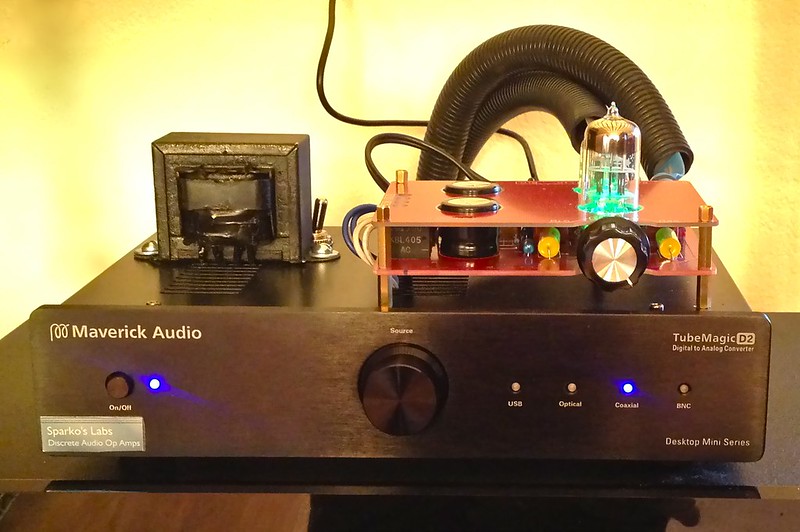
Maverick Audio TubeMagic D2 DAC with upgrades and modifications.
Simplest would be rca to tube pin adapters or jumpers from 3 & 7 to the outs on the D2.
I'd greatly appreciate a desciption of how you managed this mod and particularly the pin connection method.
Heres my number if it's easier
Thanks
Dave
323-251-8288
junkscience
New Member
Thanks for taking the time to so thoroughly outline the various Maverick D2 mods. Specifically, I am seeking clarification of the D2 to buffer connection. What I'm unsure of is how exactly you tapped into pins 3 & 7 and where you connected to the buffer?
Simplest would be RCA to tube pin adapters or jumpers from 3 & 7 to the outs on the D2.
I'd greatly appreciate a description of how you managed this mod and particularly the pin connection method.
Here's my number if it's easier
Thanks
Dave
YES, RCA to tube pin adapters or jumpers from 3 & 7 to the outs on the D2:
I used RCA cables as jumpers. I ran RCA cables (L&R) from the buffer pre-amp to the (empty) D2's tube socket. I cut the RCA connector off at that end, and striped off a short length of insulation. I tapped into the signal inputs at pin-out 3 and 7 by pushing the bare wire into the socket. ( take care not to tap into the high voltage by mistake.) I twisted the RCA cables ground shields together and then tied them to the socket retaining ring. This was so as to keep the wires from being pulled out, and also ties the ground circuit.
I subsequently ordered a 9 pin miniature socket saver so as to solder the RCA cable lead wire to the pins, but I have not got back to this project to upgrade the build hardware.
I subsequently ordered a 9 pin miniature socket saver so as to solder the RCA cable lead wire to the pins, but I have not got back to this project to upgrade the build hardware.

The system sounds sweet. Of note: for my system, I need to turn down the buffer pre-amp gain knob, as with upgraded tubes, there is over-amplification,
I am not an electrical engineer, so your mod efforts are at you own risk.
I think you will be pleased with the results. Good luck and good listening.


sKiZo
Hates received: 92644 43.20°N 85.50°W
Looks like fun, but don't you end up basically with a D1+ with these mods?
A lot of what you hear depends entirely on the tube used. I get much brighter and defined sound using a Tesla 6CC42, and I did get the OPA627 browndogs for op amps. Those are just plug 'n play as the board's socketed from the factory.

Not sure why as I use the tube output exclusively, and it's my understanding the op amps are completely out of the loop unless you're using a digital out or the headphone amps ...
Then again, the D1+ IS a different animal ... and ya, discrete amps do tend to require modding the cover.
Speaking of which ... Handiest mod I've done here is to slice off the wings on the top cover. Trying to slide it off was a real PITA.
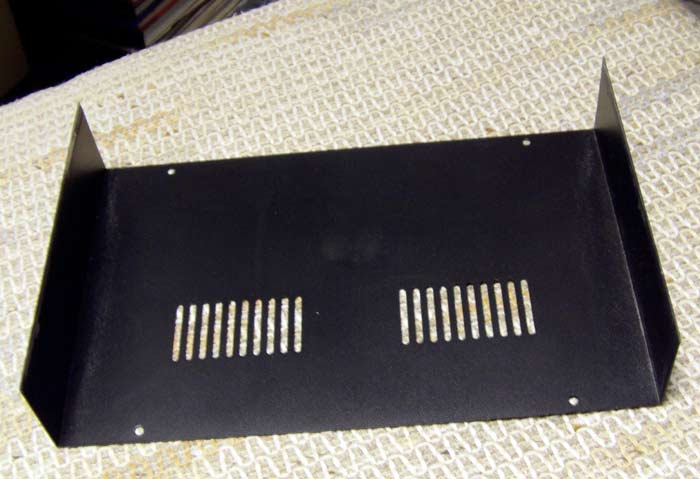
Just drop it on ... don't even need to screw it in place as it still locks on tight.
Oh. DO keep an eye on the big caps ... or maybe just go ahead and replace them. Seem a few complaints about those blowing out with fairly low mileage. Mine look good with several hundred hours on the DAC, but I do keep an eye on them ... which is a lot easier with the cover mod done.
And ya ... this is a killer DAC, performing WELL above it's price point. Haven't felt a need to upgrade since replacing my original D1 with the D1+ ...
A lot of what you hear depends entirely on the tube used. I get much brighter and defined sound using a Tesla 6CC42, and I did get the OPA627 browndogs for op amps. Those are just plug 'n play as the board's socketed from the factory.
Not sure why as I use the tube output exclusively, and it's my understanding the op amps are completely out of the loop unless you're using a digital out or the headphone amps ...
Then again, the D1+ IS a different animal ... and ya, discrete amps do tend to require modding the cover.
Speaking of which ... Handiest mod I've done here is to slice off the wings on the top cover. Trying to slide it off was a real PITA.
Just drop it on ... don't even need to screw it in place as it still locks on tight.
Oh. DO keep an eye on the big caps ... or maybe just go ahead and replace them. Seem a few complaints about those blowing out with fairly low mileage. Mine look good with several hundred hours on the DAC, but I do keep an eye on them ... which is a lot easier with the cover mod done.
And ya ... this is a killer DAC, performing WELL above it's price point. Haven't felt a need to upgrade since replacing my original D1 with the D1+ ...
VintageRoger
New Member
Hi, your post is really intersting, I am ussing a Maverick D1+ and performs really nice, do you know?, this maverick units are Oversampled or NON over sampled??......

Lman
Active Member
Here is the link to the Maverick thread.
http://audiokarma.org/forums/index.php?threads/supercharged-maverick-audio-tubemagic-d2-dac.698877/
http://audiokarma.org/forums/index.php?threads/supercharged-maverick-audio-tubemagic-d2-dac.698877/

Guillaume53
New Member
OK guys, this is my first post, so pls be gentle .. I learnt a lot from you about the D2 and i took my own route of mods so o speak, which took me to such amazing results, that i'll be easy with selling a highly regarded DAC. The D2 with the todays upgrades stays in the main system, and im considering a 2nd one for the HT setup.. I can only reconfirm the OPA627, im actually quite happy with it a this point.. What i did earlier today, and cannot stop the D2 - that s how impressed i am now - is change the output caps to Auricap, a well burnt-in pair from a previous integrated valve amp. Not sure what exactly did the trick but all soundstage qualities, as well as detail and microdetail, as well as decay in the highs - improved so drastically compared to a highly regarded DAC which i has in the system, that i am still in disbelief. I did a 2-3 very well recorded compositions back and fro with both DACS, could not believe my ears ..
Well done Ryan !
Well done Ryan !
Did you ever get back to the socket saver adapter thing? I tried this without success, got very weak and warbled signal. Probably related to using balanced rca for no good reason but would be interesting to hear of others results.
YES, RCA to tube pin adapters or jumpers from 3 & 7 to the outs on the D2:
I used RCA cables as jumpers. I ran RCA cables (L&R) from the buffer pre-amp to the (empty) D2's tube socket. I cut the RCA connector off at that end, and striped off a short length of insulation. I tapped into the signal inputs at pin-out 3 and 7 by pushing the bare wire into the socket. ( take care not to tap into the high voltage by mistake.) I twisted the RCA cables ground shields together and then tied them to the socket retaining ring. This was so as to keep the wires from being pulled out, and also ties the ground circuit.
I subsequently ordered a 9 pin miniature socket saver so as to solder the RCA cable lead wire to the pins, but I have not got back to this project to upgrade the build hardware.
The system sounds sweet. Of note: for my system, I need to turn down the buffer pre-amp gain knob, as with upgraded tubes, there is over-amplification,
I am not an electrical engineer, so your mod efforts are at you own risk.
I think you will be pleased with the results. Good luck and good listening.


